



Winterizing the Iseki TM15 & TM17
Winterizing and storing the Iseki TM15 & TM17
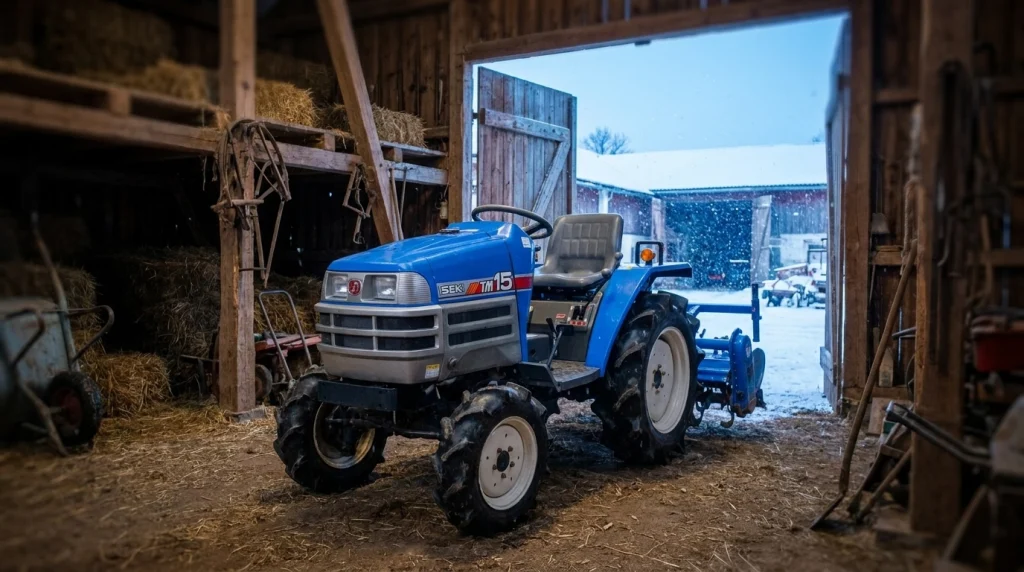
An Iseki TM15 or TM17 that gets through winter properly will start up trouble-free in spring. The factory manual gives a clear procedure for long-term storage as well as guidance for use in frosty conditions. This blog covers both: winterizing for storage, and the winter rules if you keep working through the season with snow clearing or feeding.
Suitable for the whole series: Iseki TM15 and TM17, all versions.
Winterizing the Iseki TM15 & TM17: the storage procedure
| Step | Task |
|---|---|
| 1. Cleaning | Thoroughly clean the machine and let it dry; caked-on dirt holds moisture and causes rust. Touch up bare spots. |
| 2. Check the antifreeze | Test the cooling system (5 litres) for strength or refresh it annually with LLC antifreeze. Without proper antifreeze, the block or radiator can crack in frost. |
| 3. Fill the fuel tank | Fill the tank (13.5 litres) completely with winter diesel: a full tank prevents condensation and thus water in the fuel system. |
| 4. Oil and filters | If a service is due, do it before storage — old, acidic oil attacks bearings while the machine is standing still. |
| 5. Battery | Disconnect or remove the battery (12V 28Ah), store it in a frost-free place and top up the charge every 4–6 weeks. A flat battery will freeze and will then need replacing. |
| 6. Lubricating | Grease all lubrication points, and lightly oil bare metal parts (lift arms, track rods). |
| 7. Tyres and storage | Bring tyre pressure up to spec (front 1.2 / rear 1.6 bar), store the machine in a dry, ventilated place, lower the implement and lock the hydraulics. Remove the key. |
| 8. Run it monthly | During long-term storage, start the engine occasionally and let it reach operating temperature — this lubricates the engine and keeps the fuel pump and seals supple. |
Using the Iseki TM15 & TM17 in winter
If you keep working through winter, the manual's winter rules apply. Use winter diesel (called "JIS 3" in Japan, simply winter-grade at the pump here) — summer diesel waxes up in frost and clogs the fuel filter. Preheat properly and follow the warm-up table: at 0 to −10 °C, that's already 10–20 minutes at around 1500 rpm. That may sound long, but the shared transmission/hydraulic oil gets so thick in frost that the hydraulic pump will otherwise suffer damage. Check the battery more often: cold cuts starting capacity in half, and the small 28Ah battery has little reserve.
Taking the Iseki TM15 & TM17 out of storage
In spring: reconnect the battery, check oil levels and coolant, check tyre pressure, check the fuel system for water (sediment bowl of the fuel filter), grease everything and let the first start warm up gently. Then check the lights and the operation of the brakes and clutch before heading out to the field.