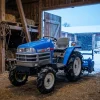




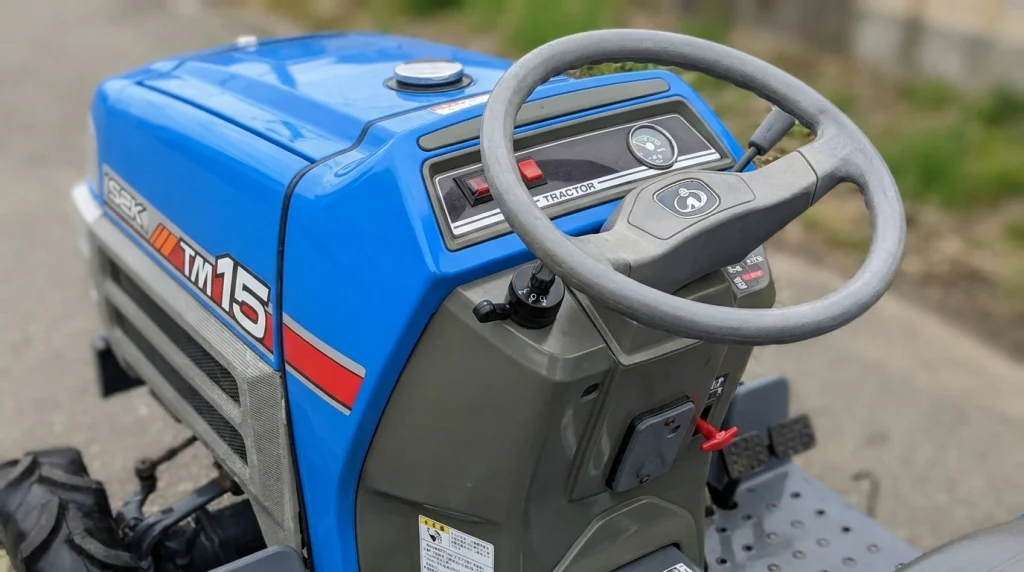
Iseki TM15 & TM17 operation and starting
Iseki TM15 & TM17 operation and starting: how to do it right
Starting and operating the Iseki TM15 and TM17 isn't difficult, but the factory manual contains a few rules that make the difference between an engine that lasts thousands of hours and one that wears out prematurely. In this blog: the complete starting procedure, the preheating and warm-up times, proper stopping and the starter safety lock — all straight from the original manual.
Suitable for the entire series: Iseki TM15 and TM17, all versions.
Iseki TM15 & TM17 starting procedure step by step
| Step | Action |
|---|---|
| 1 | Sit in the seat and check that the parking brake is engaged. |
| 2 | Lower the implement to the ground using the lift lever. |
| 3 | Press the clutch pedal all the way down. Without the clutch pressed in, the engine won't start — that's the built-in starter safety lock. |
| 4 | Put the main gear lever in neutral. |
| 5 | Put the PTO lever in neutral. |
| 6 | Pull the throttle lever to about halfway. |
| 7 | Turn the key to the "drive/preheat" position. Check that the oil pressure light, the charge light and the glow plug light are on. |
| 8 | Wait until the glow plug light goes out, then turn the key further to "start". Release the key immediately once the engine is running. |
| 9 | Check that the oil pressure light and charge light are now off. If either one stays on: switch off the engine immediately and find the cause. |
Two starter rules from the manual that protect the starter motor and battery: run the starter motor for no more than about 10 seconds, and if the attempt fails, wait about 10 seconds before trying again. Never turn the key to "start" while the engine is already running.
Iseki TM15 & TM17 warm-up: mandatory, not optional
After starting, let the engine warm up at about 1500 rpm. The manual provides this table for that purpose:
| Outside temperature | Warm-up time |
|---|---|
| Above 0 °C | 5–10 minutes |
| 0 to −10 °C | 10–20 minutes |
| −10 to −20 °C | 20–30 minutes |
| Below −20 °C | At least 30 minutes |
Why so strict? The hydraulics of the TM series run on the transmission oil. In cold weather, that oil is thick: the hydraulic pump can't draw it in properly, starts to "whine", and can even seize up. Driving off and lifting immediately with a cold machine therefore shortens the lifespan not only of the engine, but also of the hydraulic pump. Always keep the parking brake engaged while warming up.
Stopping the Iseki TM15 & TM17
First bring the engine down to low idle speed. On the standard TM15, then pull the separate stop knob towards you; on the TM15-U, TM15-S and all TM17 models, simply turn the ignition key to "stop". Two rules from the manual: never stop the engine from high revs, and after long or heavy work, let the engine idle for 5–10 minutes before switching it off — otherwise the heat won't dissipate in a controlled way. Always remove the key. If the engine fails to stop due to a fault, there is an emergency stop under the side cover: on the TM15 this is a stop lever you pull backwards, on the other versions a pressure point on the fuel shut-off valve.
Iseki TM15 & TM17 dashboard and warning lights
The dashboard has three important warning lights: oil pressure, charge and preheat. The first two should light up when the ignition is switched "on" and go out once the engine is running. If the oil pressure light comes on during operation: stop immediately and check the oil level. If the charge light comes on: the alternator isn't charging — often due to a loose or worn V-belt (8–10 mm deflection is the standard).
Running in the Iseki TM15 & TM17 after an overhaul
For a new or overhauled engine, the rule is: take it easy for the first 50 hours — no full load, no prolonged maximum revs. Conclude this running-in period with the 50-hour service: replace the engine oil, oil filter and transmission oil, and clean the suction filter. This removes running-in debris before it can cause damage.