




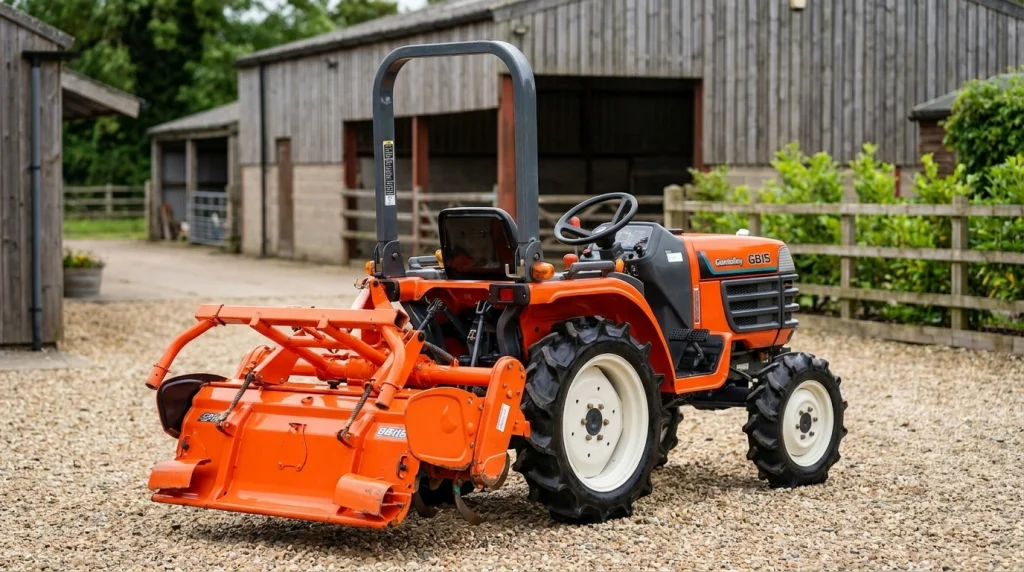
Kubota GB13 – GB20 winter storage and seasonal maintenance
A Kubota GB13, GB14, GB15, GB16, GB18 or GB20 that's properly prepared for storage will start without any hassle in spring. Improper storage, on the other hand, is the number one cause of the two most expensive problems with this series: a seized clutch and a sulfated battery. Here's how to do it right, according to the manual — and to practice.
Suitable for the entire series: Kubota GB13 (D9/DA5/N), GB14 (B9), GB15 (B9/S), GB16 (K/FK/H), GB18 (K/FK) and GB20 (K/FK).
Preparing your Kubota GB for winter storage: step-by-step plan
1. Fill up the tank. Store the machine with a full fuel tank: moisture condenses in a half-empty tank, and water in the diesel means starting problems and corrosion in the fuel system. Check the tank cap ventilation right away.
2. Check the coolant strength. Measure the antifreeze concentration; Kubota specifies a 50% mixture. Replace coolant older than two years now — this also protects immediately against internal corrosion. Check hoses for cracks and soft spots.
3. Fresh engine oil. Storing the machine with old, acidified oil damages bearings and cylinder walls. Change the oil before storage and consider switching straight to 10W-30 winter oil if you use the machine in winter (snow clearing!) — see the oil guide.
4. Lock the clutch. The most important practical tip for this series: lock the clutch pedal in the depressed position with a block or tie-down strap. This prevents the clutch plate from rusting solid to the flywheel. Also drain the clutch housing via the drain plug — rain and wash water tend to collect there.
5. Remove the battery or connect it to a trickle charger. At minimum, disconnect the ground cable. A battery that sits half-charged all winter will likely need replacing come spring. Check the fluid level before putting it away.
6. Tires and lift. Inflate the tires to the correct pressure (front 1.2 / rear 1.6 bar) to prevent flat spots. Lower the implement or drop the lift, and grease bare metal parts, the ball joints of the lift arms, and the PTO shaft stub with chassis grease. Fit the PTO cap.
7. Store dry and clean. Wash the machine, let it dry thoroughly (or take it for a short drive) and store it indoors. Storing it outside under a tarp actually traps moisture — better to avoid this.
Starting your Kubota GB again in spring
Check the oil level, coolant, and tire pressure, reconnect the battery, and inspect the wiring for rodent damage. Preheat generously (5–10 seconds on a cold morning) and let the engine warm up gently — not hours of idling, but a quarter hour of light work. If it smokes white-blue for the first few minutes, that's usually just moisture in the muffler burning off under load. Starting problems after storage? Go through the checklist in our troubleshooting guide : nine times out of ten it's air in the fuel, a weak battery, or a faulty glow plug connection.
Schedule the annual service right at the start of the season: engine oil plus filter, inspect the air filter, fuel filter at 400 hours, V-belt tension (± 7 mm at 10 kgf), and all grease nipples — you'll find the complete schedule in the maintenance article.
Getting ready for summer: cooling comes first
Ahead of the mowing season: blow out the radiator screen and grille (from inside to outside), check the coolant and V-belt tension. In chaff and dry grass conditions, the screen should be cleared out daily — overheating on the GB series is almost always simply down to a clogged cooling system.
Storage service in one order
The engine oil filter set + 5 L 15W-40 (SKU-15W402/5, € 39.50) plus the filter set (SKU-10050, € 34.50) for the GB15–GB20 cover the complete autumn or spring service.