



Yanmar 2TNV70, 3TNV70 & 3TNV76 cooling: preventing overheating
Overheating is the fastest way to destroy a Yanmar 2TNV70, 3TNV70 or 3TNV76: a blown head gasket or warped cylinder head can happen in no time. Fortunately, the cooling system of these water-cooled engines is simple and easy to maintain. In this blog we go through all the components — water pump, thermostat, radiator, V-belt — with the factory values and the known weak points from practice.
Suitable for the entire series: Yanmar 2TNV70, 3TNV70 and 3TNV76 (Komatsu 2D70E, 3D70E, 3D76E).
Yanmar TNV cooling system: how it works
The system consists of a radiator with a pressure cap, a water pump and cooling fan driven by the V-belt, a thermostat and a reserve tank. The water pump pumps coolant through the block and head; the thermostat blocks the flow to the radiator until the engine reaches operating temperature. Important to know: radiator, cap and reserve tank are machine-specific — Yanmar supplied the engine without a radiator, and each machine manufacturer chose its own radiator. Always top up via the reserve tank, not via the radiator cap.
Yanmar TNV thermostat and temperature monitoring
| Component | Value |
|---|---|
| Thermostat starts to open | 70–73 °C |
| Thermostat fully open (valve lift ≥ 8 mm) | 85 °C |
| Temperature switch (warning) triggers | 107–113 °C |
| Coolant engine content | 0.9 L (all three) |
| Coolant radiator circuit | 2TNV70: 0.6 L · 3TNV70/3TNV76: 0.9 L |
You can test a thermostat in a pan of water with a thermometer: if it doesn't start opening around 70–73 °C, replace it. Never remove a faulty thermostat "as a solution": without a thermostat, the engine won't reach operating temperature, will wear faster and will get dirty internally. The manual lists both a thermostat that opens too early ("excessive cooling") and one that doesn't open at all as sources of malfunction.
Yanmar TNV water pump: the well-known leak
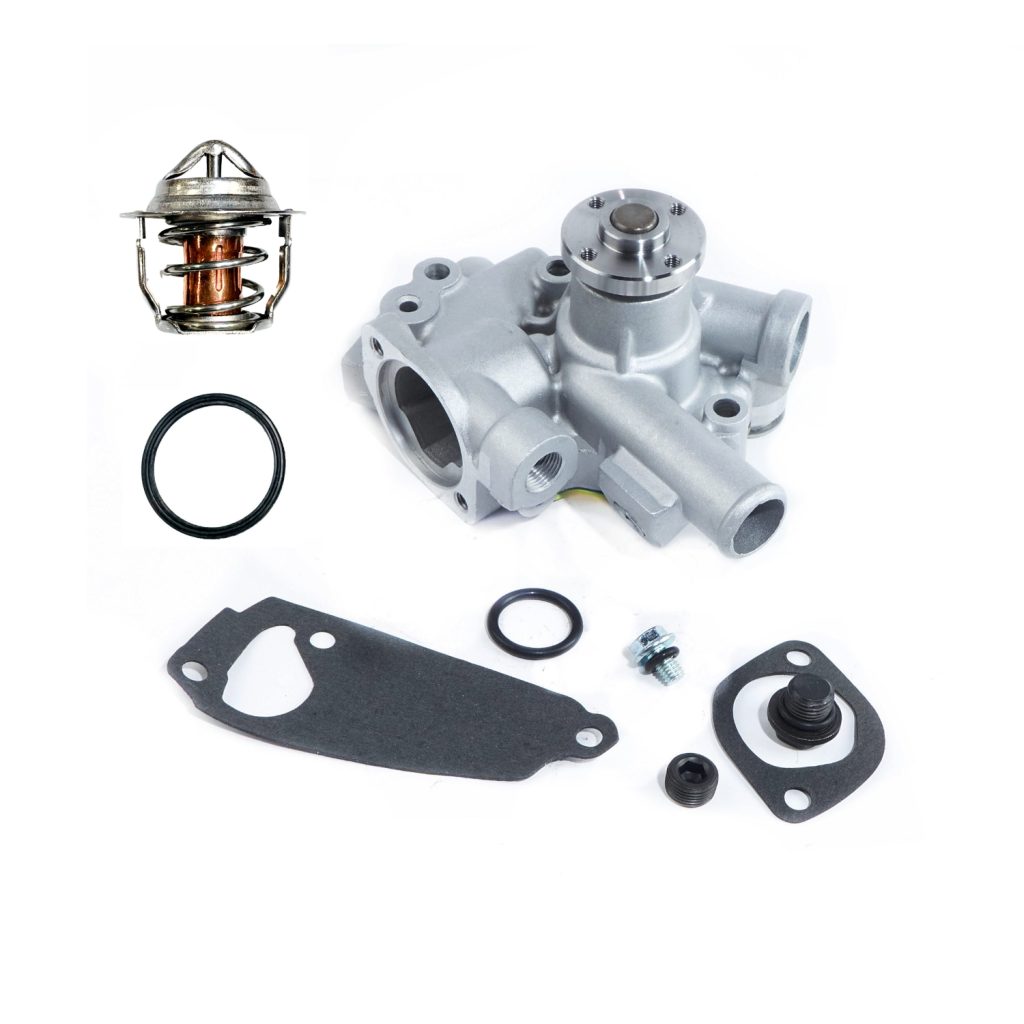
The water pump is the cooling component that most often fails with age on these engines. In practice: the shaft seal starts leaking (drops or coolant traces at the inspection hole under the pump shaft), or the bearing develops play, causing the fan to visibly wobble. A leaking pump always gets worse — replace it at the first signs and replace the V-belt and thermostat at the same time:
- Water pump Yanmar 3TNV70 / 2TNV70 (SKU-40070) — fits, among others, 2TNV70-NBK, 2TNV70-PTB and 2TNV70-HE
- Water pump Yanmar 3TNV76 including thermostat (SKU-351-T) — also for 3TNA76, 3TNV76-KW and Komatsu 3D76
- Thermostat Yanmar 3TNV70 / 3TNV76 (SKU-45016) — 44 mm, opens at 71 °C, gasket included
Yanmar TNV radiator and V-belt
Check the radiator fins every 250 hours and blow them clean with compressed air (never high pressure up close — the fins will fold shut). A radiator that's clean on the outside but clogged internally can be recognized by an engine that only overheats under load. The radiator is machine-specific; we supply radiators for various Yanmar machines — send us your machine type and we'll look up the right version in our radiator range.
The V-belt drives both the water pump and the alternator. So a slipping belt means poor cooling and poor charging at the same time — two birds with one stone as a source of symptoms. The tension values (8–12 mm deflection new, 10–14 mm used, at position A) and the tensioning procedure can be found in Yanmar TNV maintenance.
Yanmar TNV overheating: causes at a glance
| Cause | Check / solution |
|---|---|
| Coolant level too low | Check level in reserve tank daily; check system for leaks (pressure test) |
| Stretched or slipping V-belt | Measure tension and retension; replace worn belt |
| Faulty thermostat | Test in hot water; replace if in doubt |
| Leaking water pump | Check inspection hole and bearing; replace pump |
| Contaminated radiator (external or internal) | Clean fins; flush system; if stubbornly clogged, replace radiator |
| Faulty radiator cap | Cap doesn't hold pressure → boiling point drops; replace cap |
| Blown head gasket | Bubbles in the coolant, oil in water or vice versa; replace head gasket (see overhaul blog) |
| Cracked water channel (frost damage) | Repair or replace; prevent this with the correct antifreeze mixture |
Replace coolant every 1000 hours or annually, always as a mixture of LLC/ELC coolant with (preferably demineralized) water — never pure water, and never mix types. If the engine did overheat, let it cool down at idle instead of switching it off immediately, and then check compression and coolant for oil contamination before driving on.
Preventive package: replacing the water pump + thermostat + fresh coolant + V-belt all at once takes an afternoon and prevents almost every overheating fault. The 3TNV76 pump (SKU-351-T) is even supplied with a thermostat as standard.