



Buying a Mitsubishi K3A–K3F Diesel Engine: What to Look For
The Mitsubishi K3 diesel engine is a compact, water-cooled three-cylinder engine found in a huge range of compact tractors and machines: Iseki TU and TX models (including the Iseki TX1410 with the K3A and the TX1510 with the K3B engine), the Mitsubishi MT series, Satoh, Bolens, and countless rebadges from Vetus, Solé, Ferrari, Hanix, Pel-Job, Toro, and Weidemann. Are you considering a tractor or machine with such an engine, or unsure which version you have? Then this is your starting point. Here you'll learn the real differences between the K3 variants, and what to look out for when buying so you don't end up with the wrong parts later.
Suitable for the entire series: K3A, K3B, K3C, K3D, K3E and K3F, plus the supplementary versions K3H and K3M.
Mitsubishi K3: One Three-Cylinder, Two Configurations
All K3 engines share the same basic design: four-stroke, water-cooled, upright three-cylinder diesel with forced lubrication via a trochoid oil pump and a paper full-flow oil filter. The stroke is the same for every K3 (78 mm); the bore increases with the model letter, and so does the displacement.
The most important distinction within the K3 series is the difference between indirect injection (IDI) and direct injection (DI). The older K3 versions (K3A through K3E) are indirect-injection (swirl chamber) engines with a compression ratio of 23 and a throttle-type injector. The later versions (K3C through K3F) have direct injection with a combustion bowl in the piston crown, a lower compression ratio of 18, and a hole-type injector. This distinction determines which pistons, cylinder head, head gasket, and injectors fit — a DI and an IDI engine with the same bore do not use the same parts. That's the first thing to check when buying and when ordering overhaul parts.
Mitsubishi K3 Variants Compared
Below are the indirect-injection (IDI) versions and the later direct-injection (DI) versions as listed in the workshop manuals. The displacement per bore is the same for IDI and DI; only the combustion chamber, compression, and injector differ.
| Model | Bore × Stroke | Displacement | Injection | Compression |
|---|---|---|---|---|
| K3A | 65 × 78 mm | 776 cc | Indirect injection (IDI) | 23 |
| K3B | 68 × 78 mm | 849 cc | Indirect injection (IDI) | 23 |
| K3C | 70 × 78 mm | 900 cc | IDI and DI | 23 / 18 |
| K3D | 73 × 78 mm | 979 cc | IDI and DI | 23 / 18 |
| K3E | 76 × 78 mm | 1,061 cc | IDI and DI | 23 / 18 |
| K3F | 78 × 78 mm | 1,118 cc | Direct injection (DI) | 18 |
| K3H | 78 × 90 mm | 1,290 cc | Indirect injection (IDI) | 23 |
| K3M | 84 × 90 mm | 1,496 cc | Indirect injection (IDI) | 23 |
Further shared features from the manual: firing order 1-3-2, Bosch M-type injection pump, centrifugal flyweight governor, forced lubrication, and a paper full-flow oil filter. The K3H and K3M stand out due to their longer stroke (90 mm instead of 78 mm) and larger displacement; they otherwise share most of the parts and mainly differ in injection pump and adjustment data. Power output isn't listed in the manual as a single figure, but in performance curves per version. As an indication, depending on displacement and tuning, the K3 series roughly ranges from about 15 to 27 hp. These horsepower figures are indicative; the type plate and specifications of your machine are always leading.
Mitsubishi K3: What to Look Out for When Buying
A Mitsubishi K3 is known for being tough and long-lasting, but the purchase price says little without a quick check. Go through this list before you buy:
- First determine DI or IDI. Check the piston crown or ask for the serial number: does the engine have a combustion bowl in the piston (DI) or a flat piston with a swirl chamber in the head (IDI)? This determines which gaskets, pistons, head, and injectors you'll need later.
- Compression and starting. A healthy K3 starts up promptly when cold with the glow plugs and smokes clean within a few seconds. Persistent white or blue smoke, difficulty starting, or low compression indicates wear on piston rings, valves, or the head.
- Cooling. Check the coolant for oil and rust, and check whether the radiator, water pump, and thermostat are dry. Overheating is the number one killer of these compact diesels.
- Oil pressure and leaks. At idle, watch the oil pressure light and check for leaks at the head gasket, the crankcase, and the front oil seal.
- Note the complete type number. Not just "K3E", but the full code from the type plate (for example K3E-31DS or K3D-61TG). Gray-market imports come in many versions; with the full number you can order the correct parts in one go.
Useful for purchase and the first service:
- Workshop manual Mitsubishi K3A–K3E (SKU VAR-0066) — all specifications, tolerances, and torque settings at hand.
- Filter set Mitsubishi K3 engine: oil, fuel, and air filter (SKU-100149) — a complete service in one go.
- Water pump K3 series, including gasket (SKU-323) — 1-to-1 replacement in Snel Parts packaging.
- Thermostat K3 series, 82 °C, with gasket (SKU-45004) — prevents both overheating and undercooling.
Mitsubishi K3 Parts and Overhaul: Always by Serial Number
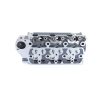
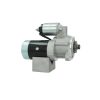
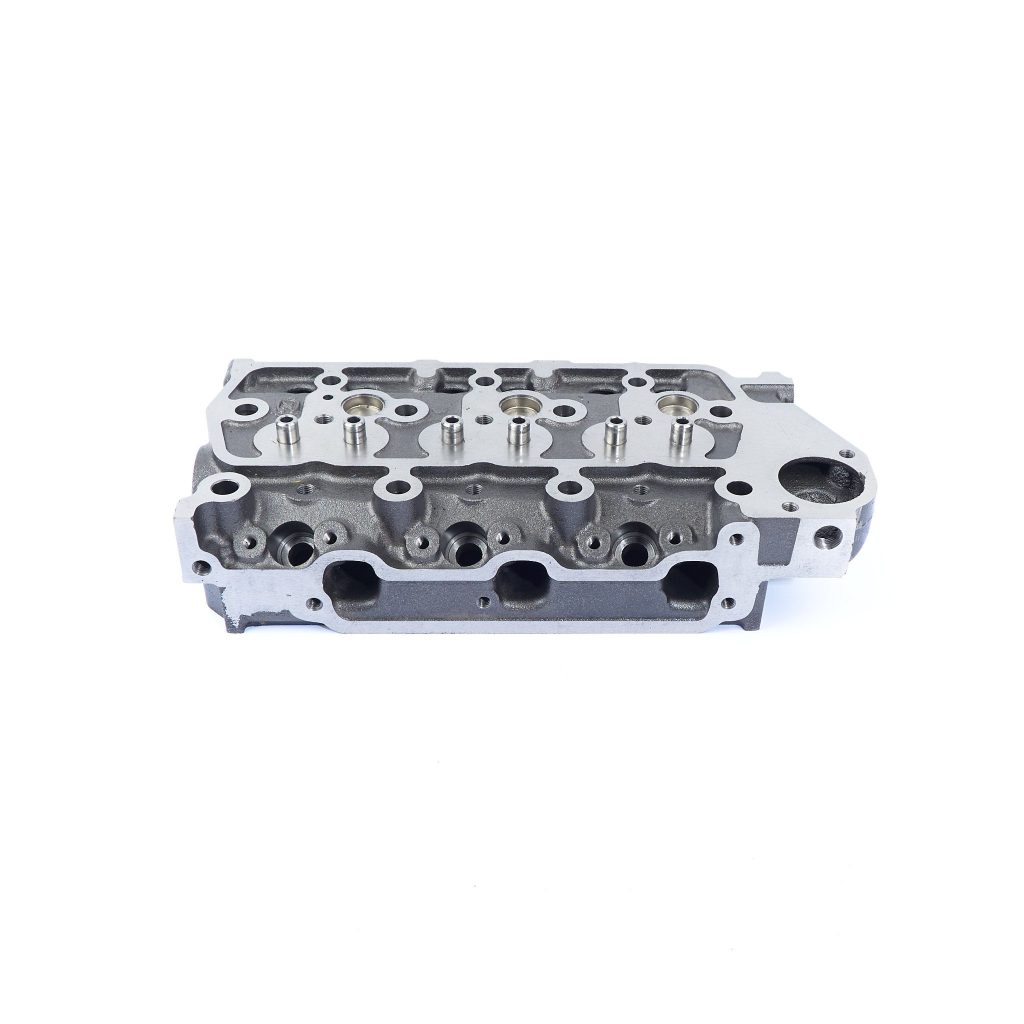
For the K3 series, cylinder heads, head gaskets, complete gasket sets, overhaul kits, pistons, piston rings, main and connecting rod bearings, water pumps, thermostats, radiators, injectors, lift and fuel pumps, filters, V-belts, glow plugs, starter motors and alternators are available. Because there are both IDI and DI versions and many machines come from gray-market imports, one rule applies when ordering: always check the fit against the full serial number of your engine. If you're unsure about the correct version, provide the complete type number and we'll find the exact matching part for you.