




Troubleshooting the Mitsubishi L2A, L2C, L2E, L3A, L3C and L3E
Is your Mitsubishi L3E smoking, starting poorly, or running unevenly? Most faults on the L-series have a surprisingly simple cause. Below we go through the best-known problems, including the symptom you'll notice, the likely cause, and what to do about it. We combine the workshop manual with what owners and mechanics most commonly encounter in practice.
Suitable for the entire series: Mitsubishi L2A, L2C, L2E, L3A, L3C and L3E. Always verify dimensions and parts against your own engine number.
The engine won't start or starts poorly
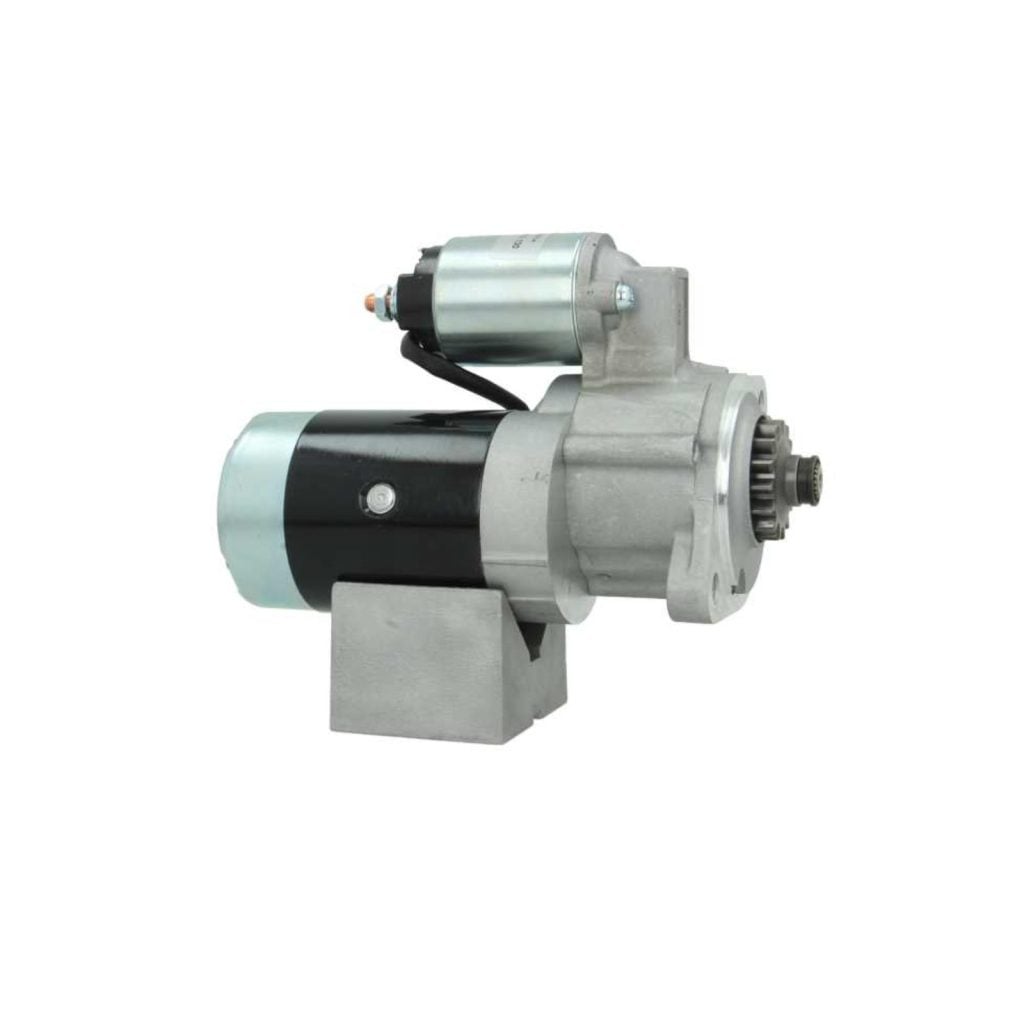
Poor cold starting is usually caused by worn glow plugs, a weak battery, or insufficient preheating; always wait for the full preheat indication. A starter motor that turns too slowly also complicates diagnosis, so first make sure you have a healthy battery and starter. If it won't start after a filter change, there's air in the system: bleed the fuel system properly. If it suddenly starts poorly after working on the injection pump, check the shims under the pump, which determine the timing; don't add an extra gasket under the pump.
Cylinder head and head gasket
The head gasket is known as a weaker point of the L-series. There are two complaints you'll encounter most often.
- A thin layer of oil in the radiator, without white smoke. Cause: a very fine leak from the oil gallery to a coolant gallery along the head gasket. Note: this leak usually doesn't produce bubbles and is often not detectable with a standard pressure test. Solution: remove the head, check the head and block for cracks, fit a new head gasket, and correctly torque the head bolts.
- White, sweet-smelling smoke with coolant loss, usually after overheating. Cause: a cracked head or blown head gasket. Solution: first eliminate the cause of the overheating, then have the head machined flat and checked for cracks, and fit a new gasket.
Always use a new head gasket without sealant, retorque the head bolts before adjusting the valves, and set the valve clearance to 0.25 mm cold.
Piston rings, cylinder bore and oil consumption
- One cylinder clearly lower in compression, with blow-by and grey-white smoke. Cause: wear of the cylinder bore and/or piston rings. Test: drip some oil into the suspect cylinder and measure again; if compression rises significantly, the issue lies with the rings/bore, if it stays the same, check the head/valves. Solution: hone the cylinder or bore it to oversize and fit new piston(s) with rings. Reference: standard piston ring end gap 0.15–0.30 mm, service limit 1.5 mm.
- Persistent blue smoke with oil consumption. Cause: worn or stuck piston rings, bore wear, or valve stem seals. Solution: distinguish between these using a compression and blow-by test.
- Knocking noise with loss of power. Cause: loose or stretched connecting rod bolts. Solution: new bearings alone are not enough; measure the rod eye and crank pin and replace the rod bolts.
Fuel, injection and rough running
- Rough running on one cylinder that doesn't follow when you swap injectors. Cause: a loose delivery valve holder on the injection pump. Solution: check that the delivery valve holders are tight and torque them to 34.3–39.2 N·m.
- Irregular running; an injector sometimes sprays well and then dribbles. Cause: worn injector needles/springs. Solution: have the injectors tested and set to 140 kgf/cm², replace worn ones.
- The engine only fires briefly after adding a splash of oil to the cylinders. Cause: too much fuel or prolonged cranking has washed the oil off the cylinder walls. Solution: remove the injectors, add some oil to the cylinders, crank the engine, and try again; check the crankcase oil for diesel dilution.
Overheating and cooling system
Overheating is the most damaging fault, as it almost always results in head or gasket damage. If coolant leaks from the water pump's weep hole or you hear a grumbling bearing, replace the water pump. If it runs too hot, check the thermostat, coolant level, a clogged radiator, and the V-belt tension. For marine applications with raw water cooling, first check the intake and the raw water impeller.
Uneven idling or racing/overspeeding
Does the engine race as soon as it starts, or stall as soon as the rpm rises, with no stable low idle? Then the governor is often out of adjustment. Over the years, the throttle screw has sometimes been turned in further as compression dropped, which is counterproductive; a bent throttle lever arm or a weakened spring can also play a role. Reset the throttle spring to the standard setting, align the throttle arm, and readjust low and high idle. In practice, this often solves both the rough running and the non-idling issue in one go.
The engine won't stop, or won't run, due to the stop solenoid
A diesel engine is stopped by cutting off the fuel supply. If the engine keeps running after the key is turned off, or conversely won't start, a sticking or contaminated stop solenoid, a faulty relay, or a worn ignition switch may be holding the fuel supply incorrectly. Test the stop solenoid and relay and check the control rod locking mechanism.
Note on grey imports: which engine do you actually have?
The L-series is found under many brands and in many machines. With grey imports, it's not uncommon for a nameplate not to match the actual block, or for the same machine model to have been supplied with a completely different engine. Therefore, never rely purely on the brand: read the engine number stamped on the injection pump side of the block and order parts based on that number and the bore size.
Parts for these faults: L2E head gasket or L3E gasket set, overhaul kit, pistons, injectors, feed pump, water pump, thermostat, glow plugs, starter motor and stop solenoid. Order using your engine number.
Frequently Asked Questions
Why is my Mitsubishi L3E emitting white smoke?
White, sweet-smelling smoke usually indicates coolant entering the combustion chamber due to a cracked head or blown head gasket, often after overheating. White smoke can also be caused by an injection issue; check the cooling system first.
My L2E/L3E is running unevenly on one cylinder. What now?
Measure the compression per cylinder. If one cylinder lags behind, it could be bore/ring wear (oil-in-cylinder test) or an injector/delivery valve holder issue. Swap an injector: if the fault follows, it's that injector.
Why is my engine racing/overspeeding?
Usually due to a misadjusted governor or a loose locking plate on the fuel control rod. Reset the throttle adjustment to standard and check the throttle linkage and control rod.


