



Yanmar RS-240 to RS-330 engine oil and fluids: which and how much?
Which engine oil does the Yanmar RS-240, RS-270, RS-300 or RS-330 need , how many liters go into the transmission and which coolant should you use? In this article we've listed all the fill quantities and specifications from the original manual, including the antifreeze mixing table and the often forgotten front axle oil.
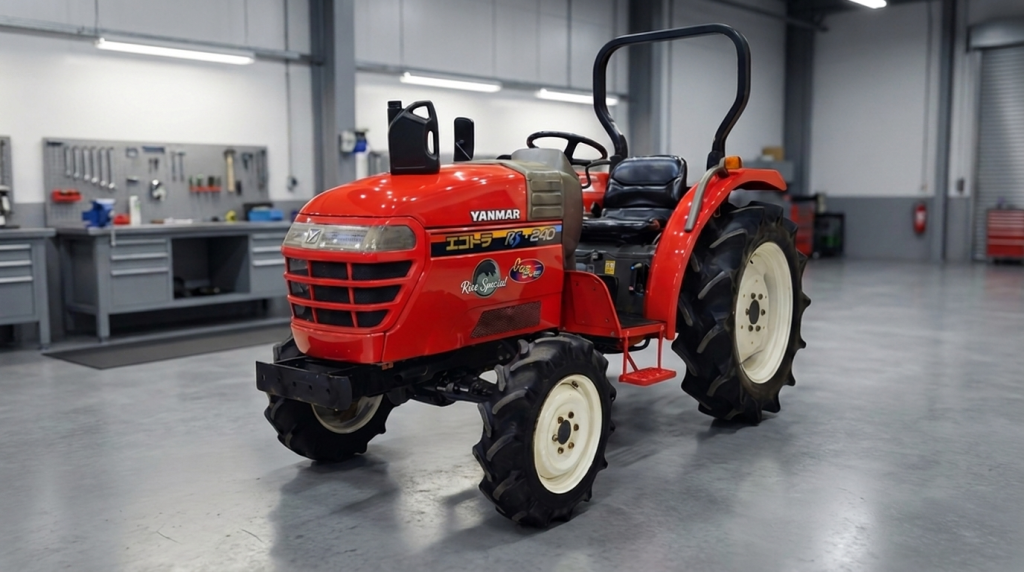
Suitable for the entire series: Yanmar Forte Rice Special RS-240, RS-270, RS-300 and RS-330 (also known as RS24, RS27, RS30 and RS33), including the R, S, J, U, V and Q versions.
Yanmar RS series: all fill quantities
| Fluid | RS-240 / RS-270 | RS-300 / RS-330 |
|---|---|---|
| Engine oil | 4.0 liters | 4.0 liters |
| Transmission oil (incl. hydraulics and power steering) | 25 liters | 25 liters |
| Front axle oil | 5.3 liters | 5.9 liters |
| Coolant — radiator | 5.2 liters | 5.2 liters |
| Coolant — expansion tank | 0.4 liters | 0.4 liters |
| Fuel tank (diesel) | 30 liters (cab: 32 liters) | 30 liters (cab: 32 liters) |
Yanmar RS series: which engine oil?
The manual specifies a SAE 10W-30 diesel oil of API class CC or higher (JIS type 2, DG/DM quality). In practice, a modern 15W-40 diesel oil is a great choice for our climate during the summer season; if you work in low temperatures often or the engine starts sluggishly in winter, stick with the thinner 10W-30. More important than the exact brand is that you use an oil designed for diesel engines and respect the service interval: change every 100 hours (first time after 50 hours), oil filter every 300 hours. Check the level with the dipstick located to the right of the engine block — the level should be between the upper and lower marks, check with the engine cold.
Draining is done via the drain plug at the bottom of the engine block; filling via the fill cap on top of the engine. After replacing the oil filter, start the engine and let it run until the oil pressure light goes out; then check the level again and top up if necessary.
Yanmar RS series: transmission oil is ALSO steering and hydraulic oil
Important to know: on the RS series, the transmission shares its oil with the hydraulic lift AND the power steering. Yanmar specifies a TF500-type transmission fluid (UTF/UTTO) for this — not regular engine oil and not pure hydraulic oil. You'll notice the wrong oil immediately here: heavy steering, a slow lift, or rattling noises from the pump.
Check the level with the dipstick between the footboards. Draining is done via three plugs: two at the bottom of the gearbox and one under the 4WD center housing. Drain while the oil is still warm — this way the dirt drains out best. When changing the oil, also clean the oil strainer in the transmission and replace the spin-on line filter (every 300 hours), otherwise the hydraulic pump will draw in air through a clogged filter.
Yanmar RS series: front axle oil — the often forgotten oil
The driven front axle has its own oil supply: 5.3 liters (RS-240/270) or 5.9 liters (RS-300/330), also TF500 transmission fluid. Check the level via the fill cap on the top right of the front axle: insert the dipstick without screwing it in. Draining is done via three plugs (center and left/right at the bottom), filling via the three fill points on top of the axle. Especially on tractors that have worked a lot in wet land, it's worth checking this oil's color: milky oil means water in the front axle and requires immediate replacement.
Yanmar RS series: coolant and antifreeze
The system holds 5.6 liters (radiator + expansion tank). Use a permanent antifreeze (LLC) mixed with clean water; from the factory, the RS series was filled to protect down to −25 °C. The mixing table from the manual:
| Outside temperature down to | −5 °C | −10 °C | −15 °C | −20 °C | −25 °C | −30 °C |
|---|---|---|---|---|---|---|
| Antifreeze proportion | 18% | 27% | 34% | 39% | 45% | 51% |
Replace the coolant every year — the antifreeze's corrosion protection is limited over time. Never open the radiator cap when the engine is hot, flush the radiator when changing the coolant until clean water comes out, and let the engine run for a while after filling so the antifreeze and water mix properly. If you need to top up in between because the level has slowly dropped, only add clean water.
Grease and lubrication points
Every 50 hours, grease the lubrication nipples on the brake pedal shaft, the clutch shaft and the center pin of the front axle with multipurpose grease (EP2). After working in wet land or mud: always grease immediately, so the grease pushes the water out of the bearing points.