



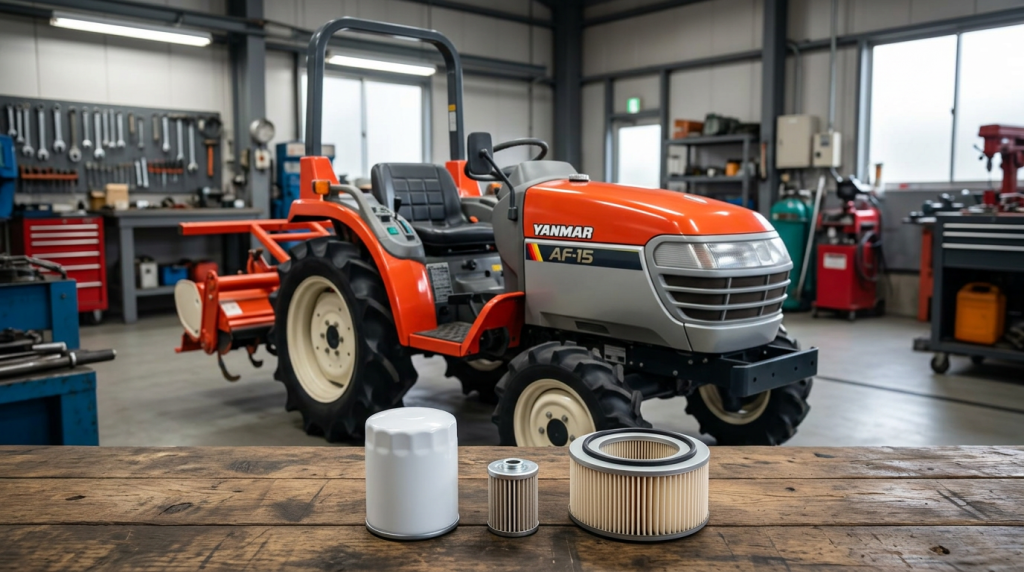
Yanmar AF-15 to AF-18 filters: oil, fuel, and air filter
The filters of the Yanmar AF-15, AF-16, AF-17, and AF-18 are cheap, quick to replace, and decisive for the lifespan of the engine and hydraulics. In this article we go through all four filters — engine oil filter, line filter (transmission), fuel filter, and air filter — with the intervals from the manual and the correct procedure for each filter.
Suitable for the entire series: Yanmar Forte AF-15, AF-16, AF-17, and AF-18, with the 3TNA72 (AF-15/16) and 3TNE74 engine (AF-17/18). The filters are the same for all four models.
Yanmar AF series filter overview and intervals
| Filter | Type | Interval |
|---|---|---|
| Engine oil filter | Spin-on cartridge (M20×1.5) | Every 300 hours, or every 2–3 oil changes (first time: 50 hours) |
| Line filter (transmission/hydraulics) | Spin-on cartridge | Every 300 hours, together with the transmission oil (first time: 50 hours) |
| Fuel filter | Element in filter housing with sediment bowl | Clean strainer every 100 hours, replace element every 300 hours |
| Air filter | Dry paper element | Clean every 100 hours (dusty: 50 hours); replace every 1000 hours (dusty: 400 hours), at least once a year |
Replacing the Yanmar AF series engine oil filter
The engine oil filter is a spin-on cartridge with M20×1.5 threading that you loosen counterclockwise with a filter wrench — do this right after draining the engine oil, so you spill the least. Lightly coat the rubber sealing ring of the new filter with fresh engine oil, tighten the filter hand-tight plus a quarter turn, and then fill the engine with 2.4 liters of fresh oil. Start the engine, wait until the oil pressure light goes out, and check the filter for leaks and the oil level on the dipstick.
Yanmar AF series line filter: the forgotten filter
Many owners don't know that this series has a second oil filter: the line filter in the transmission/hydraulic circuit. Because the transmission oil also feeds the lift and power steering, this filter catches the dirt that would otherwise end up in the hydraulic pump and control valves. A clogged line filter is a classic cause of a slow or failing lift. Replace it every 300 hours, at the same time as the transmission oil: loosen counterclockwise after draining, oil the sealing ring of the new cartridge, and tighten by hand . Then let the engine idle for a moment and check the transmission oil level again.
Yanmar AF series fuel filter and water separation
The fuel filter is located in a filter housing with a sediment bowl beneath the fuel tap. Water and dirt collect at the bottom of the bowl — check it regularly, especially with an older tank. To replace or clean it: turn the fuel tap to "C" (closed), remove the bowl, remove water and sediment, clean the strainer or replace the element, put everything back, and turn the tap back to "O" (open). Then bleed the system — with this series that happens almost automatically: let the filter housing fill up, open the throttle, and run the starter motor.
With a tractor of this age, the fuel filter is only half the story: hardened lines and a contaminated tank strainer cause fuel problems at least as often in practice. See our article on troubleshooting the Yanmar AF series.
Cleaning and replacing the Yanmar AF series air filter
You clean the dry paper element by removing the cover, taking out the element, and blowing it out from the inside out with compressed air (or carefully tapping it out). Do not damage the pleats and never install an oiled or wet element. In dusty conditions, clean every 50 hours and replace every 400 hours; under normal conditions, clean every 100 hours and replace every 1000 hours. In all cases: install a new element at least once a year, even if the hours haven't been reached. Also don't forget the pull-out dust screen in front of the radiator — that should be clean before and after every working day.