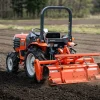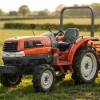




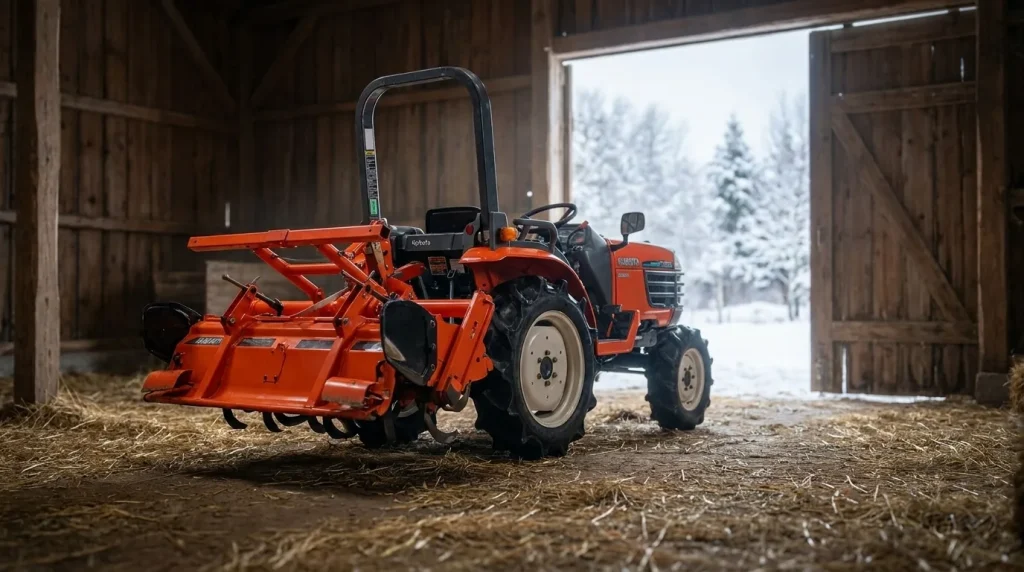
Winterizing the Kubota GB110-GB200
Winterizing the Kubota GB110-GB200: from storage to spring start-up
Want to winterize your Kubota GB ? Most damage to these tractors doesn't happen during work, but during the months they sit idle: frozen cooling systems, degraded diesel, seized clutches, and dead batteries. The step-by-step plan from the factory manual helps you prevent all of this.
Suitable for the entire series: Kubota GB110, GB130, GB140, GB150, GB160, GB170, GB180 and GB200.
Kubota GB storage plan (idle for more than a month)
| Step | Action | Why |
|---|---|---|
| 1 | Clean the machine and let it dry | Caked-on soil retains moisture and speeds up rust |
| 2 | Fill the fuel tank completely | A full tank can't condense — condensation is a major cause of starting problems and filter contamination |
| 3 | Check the antifreeze concentration (50% mixture) | A frozen block or radiator is a total loss; also check the reservoir tank |
| 4 | Change the engine oil if the interval is (almost) due | Combustion acids in old oil attack bearings during idle periods |
| 5 | Drain water from the clutch housing and don't leave the clutch pedal depressed | Prevents the clutch plate from seizing — the classic spring complaint |
| 6 | Disconnect the battery (negative terminal first) or connect a trickle charger; store indoors during frost | A dead battery freezes and is then permanently ruined |
| 7 | Lower the implement, put all levers in neutral, engage the parking brake | Relieves pressure on the hydraulics and springs |
| 8 | Bring tire pressure up to level, jack up the machine if necessary | Prevents flat-spotting of the tires |
| 9 | Grease bare metal parts (lift rods, cylinder rods) | Chassis grease or acid-free petroleum jelly protects against rust |
| 10 | Store in a dry, ventilated area, not under a plastic tarp on the machine | A tarp resting directly on the metal traps condensation and actually causes rust |
Using the Kubota GB throughout winter? Here's what changes
If you keep using the tractor through winter (snow plowing, feeding work), adjust three things. One: use 10W-30 engine oil instead of SAE 30 — the manual explicitly specifies this, because thick oil makes starting difficult in frost. Two: stick to the preheat times (5 seconds in light frost, 10 seconds below −5°C) and let the engine warm up gently after starting before putting it under load. Three: check the antifreeze concentration before the first night frost, not after. Also avoid prolonged idling in cold weather: this causes condensation in the exhaust and the blue-white smoke that won't seem to go away.
Starting up the Kubota GB in spring
After months of standing idle, the rule is: check first, then start. Check the oil level and coolant, look through the fuel filter glass (water or dark residue → replace the filter and bleed the system), check the V-belt tension (7 mm deflection at 10 kgf), connect the battery and preheat as normal. Then let the engine run gently for five minutes before testing the hydraulics, brakes, and clutch. If the clutch slips or feels "sticky" after winter, drive carefully a few times in a low gear — this often frees up a slightly rusted plate on its own. If the engine runs unevenly on the old diesel, a tank of fresh fuel plus injector cleaner is the first step.