



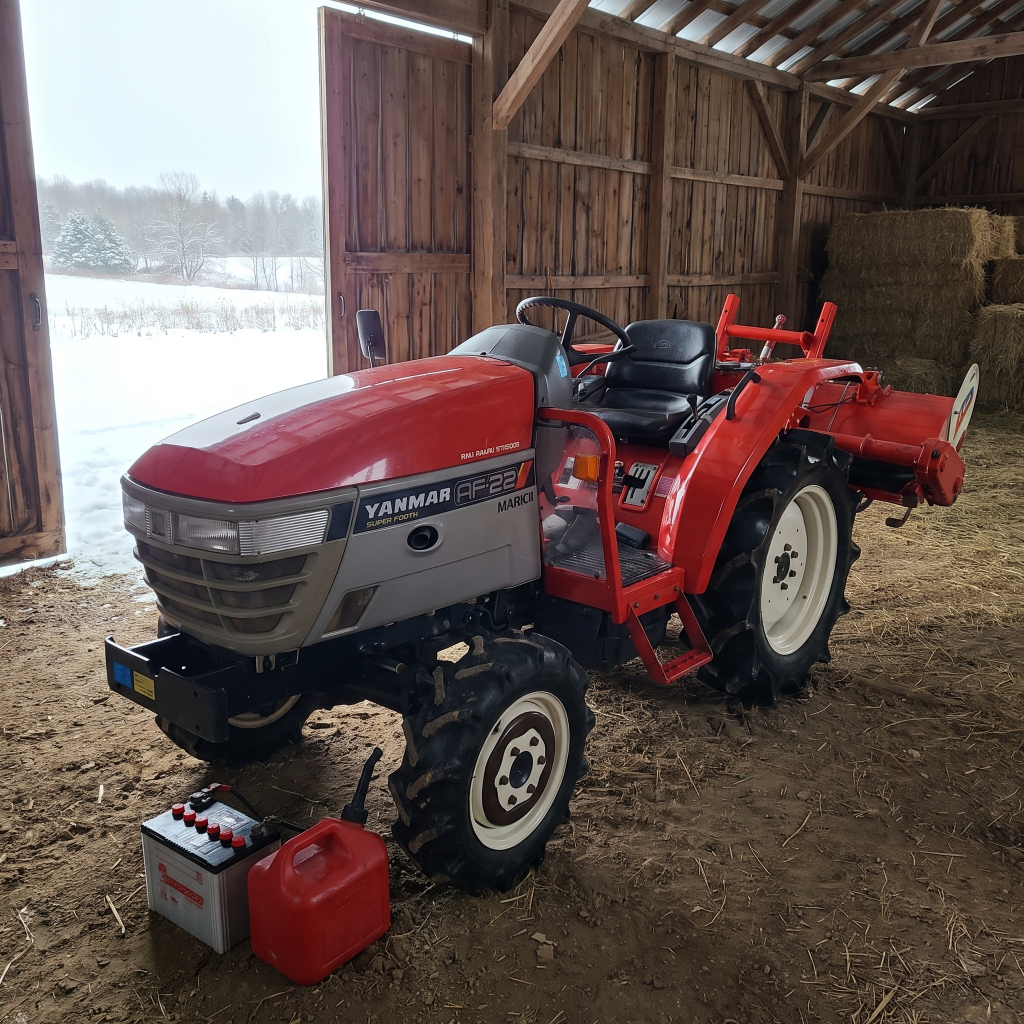
Winterizing and Storing the Yanmar Super Forte AF-22 through AF-33
Want to winterize your Yanmar Super Forte AF-22 through AF-33 or store it for a while? A few hours of preparation now prevents starting problems, rust, and freeze damage in spring. Below you'll find how to properly store the AF series and how to safely put it back into use afterward.
Suitable for the entire series: Yanmar Super Forte MARK III AF-22, AF-24, AF-26, AF-28, AF-30, and AF-33.
Why storage matters so much
Most starting problems in spring aren't caused by wear, but by poor storage: old fuel that has separated, a drained battery, or condensation and rust after months in a damp shed. A tractor that's properly put away almost always starts up hassle-free in spring.
Checklist: winterizing the Yanmar AF series
| Step | Why |
|---|---|
| Clean and dry the tractor | Dirt and crop residue retain moisture and cause rust |
| Change the engine oil and oil filter | Old oil contains acids and moisture that cause damage during downtime |
| Check the coolant / antifreeze | Insufficient antifreeze can cause the block and radiator to freeze |
| Fill the tank or add a fuel stabilizer | A full tank limits condensation; fresh diesel separates less |
| Disconnect the battery or keep it on charge | Prevents the battery from draining and freezing |
| Grease all lubrication points | Fresh grease displaces moisture from the bearings and pivot points |
| Lower the lift and implements to the ground | Relieves the hydraulics and cylinders during downtime |
| Store the tractor in a dry, covered place | Protects against moisture, frost, and UV |
Pay attention to antifreeze and cooling
The AF series holds about 6 liters of coolant in the radiator plus a small subtank. Before winter, check whether the antifreeze concentration matches the lowest temperature you expect; the standard mix is good down to about -10°C, but in an unheated shed during a harsh winter you'll want a higher concentration. Insufficient antifreeze is a costly mistake: freezing coolant can crack the radiator and even the engine block.
After storage: putting it back into use
Before getting back to work in spring, run through a quick check: connect the battery (or check its charge), inspect the oil and coolant levels, check the fuel for contamination, and drain any water from the filter if needed. Check the V-belt tension (deflection 10–15 mm) and tire pressure. Start the engine and let it warm up gently before putting it under load — just like after break-in, the rule is: warm up first, then work.