



Iseki TX1410 & TX1510 storage and winterizing
Iseki TX1410 & TX1510 storage and winterizing
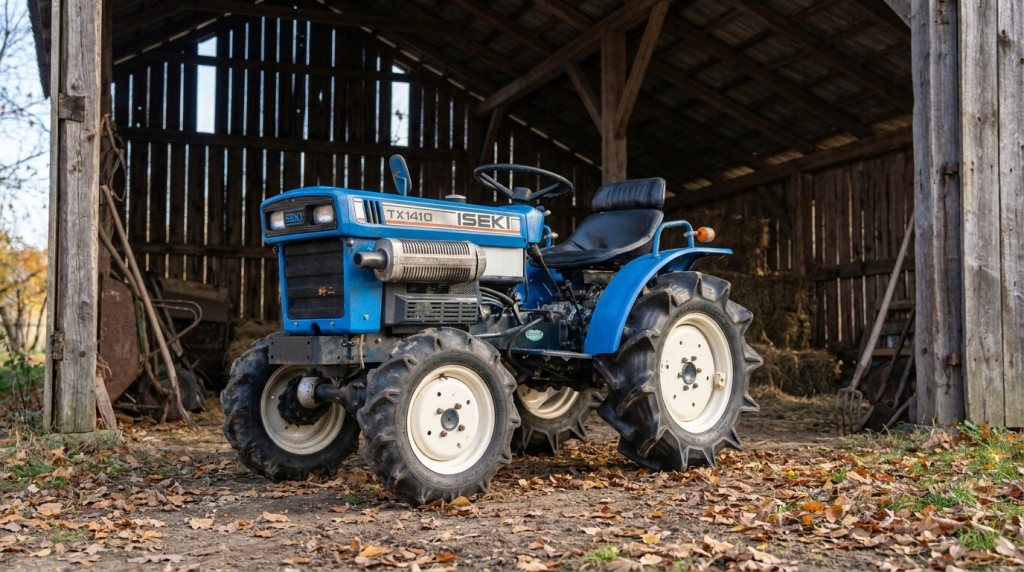
Is your Iseki TX1410 or TX1510 going into storage for a while? With the right preparation, you can prevent frost damage, a flat battery, and starting problems after winter. In this blog you'll find the storage advice from the original Iseki manual — for both daily storage and longer winter layup.
Suitable for the entire series: TX1410, TX1410F (4WD), TX1510 and TX1510F (4WD).
Daily and short-term storage
If you're parking the tractor after a workday or for a few days, the manual advises the following:
- Clean the tractor, especially after wet or muddy work. When washing, don't spray high-pressure water directly onto the electrical components.
- Fill the fuel tank. A full tank limits condensation and therefore water in the diesel.
- Lower the implement before leaving the tractor.
- Store the tractor indoors if possible. If it has to stay outside, cover it with a tarp.
- In severe frost: remove the battery and store it in a warm space — this extends its lifespan and keeps starting power up.
Coolant and frost: the most important thing to watch
If the outside temperature drops below 0°C, coolant without antifreeze can freeze and crack the engine block. The manual is clear on this: use antifreeze or drain the coolant completely in freezing conditions. This is by far the most costly mistake you can make when winterizing an old tractor — a cracked block is virtually irreparable.
Long-term storage (2 to 3 months or longer)
If you're putting the tractor away for a longer period, the manual recommends a more thorough approach. First clean the tractor properly, then carry out these steps:
- Drain the coolant completely. Remove the radiator cap and pull the radiator drain plug, so that both the radiator and the engine block are empty.
- Hang a "no water" sign on the steering wheel after draining. This prevents anyone from starting the tractor without coolant.
- Fill the fuel tank to prevent condensation and rust in the tank.
- Remove the battery and store it charged in a dry, frost-free location. Recharge it periodically.
- Lubricate the moving parts and leave the implement in its lowest position or disconnected.
Coming out of winter storage
Before getting back to work after winter:
- top up with the correct coolant (capacity 4.8 liters) and check for leaks;
- only remove the "no water" sign after you've filled the cooling system;
- put the charged battery back in and check the terminals;
- check the engine oil level, the transmission/hydraulic oil, and (for 4WD) the front axle oil;
- let the engine warm up gently after starting before putting it under load.
A tractor that's been properly put away will start up almost immediately after months of standing still. It takes half an hour of work and saves you a lot of hassle — and in the worst case, a cracked engine block.
These tractors have the Mitsubishi K3 engine. More about the engine: Mitsubishi K3A–K3F engine: cooling.