



Mitsubishi MT160–MT240 won’t start or losing power? Troubleshooting
Mitsubishi MT160–MT240 won't start or losing power? Troubleshooting
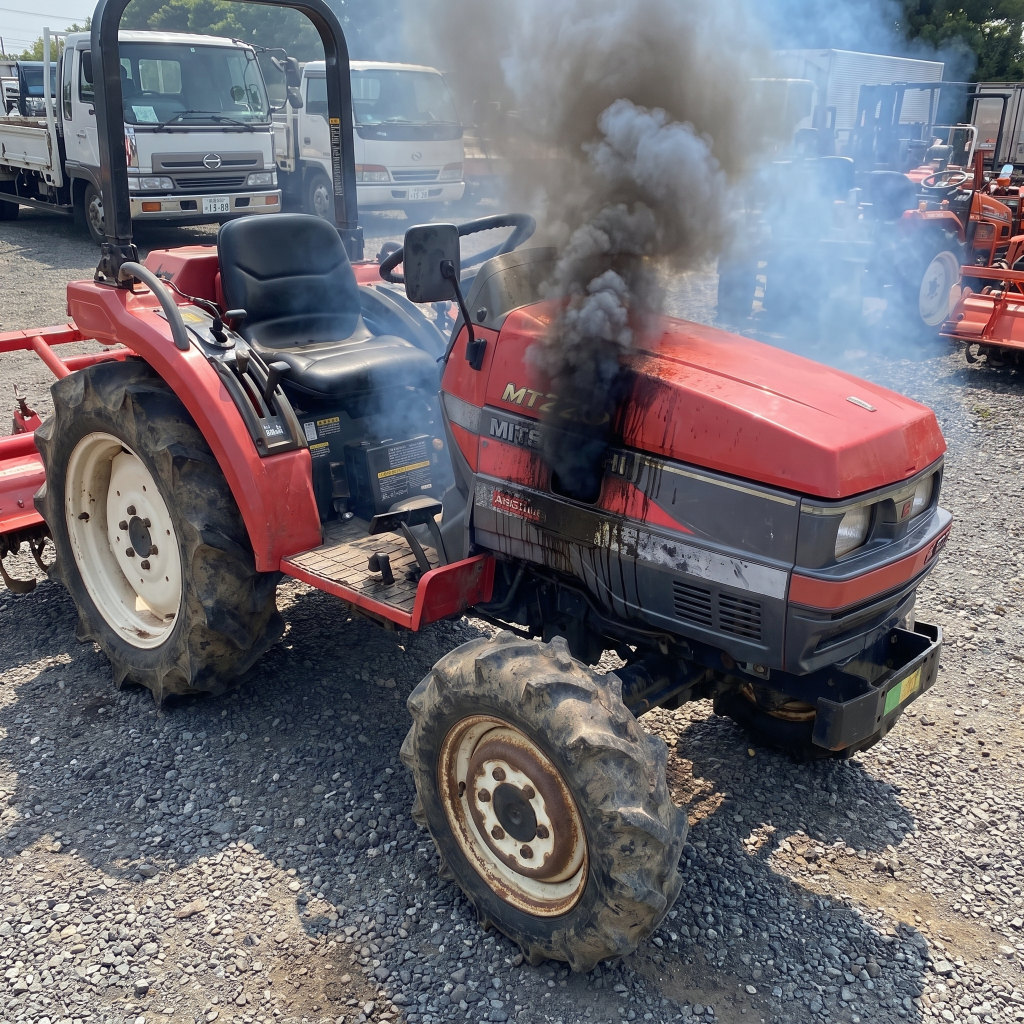
Does your Mitsubishi MT160, MT170, MT190, MT200, MT220 or MT240 not start, stall, or lose power? Below you'll find the most common causes and solutions from the manual and from practical experience, organized by complaint. Many issues lie in the fuel supply, the pre-glow system, or the electrical connections.
Suitable for the entire series: Mitsubishi MT160, MT170, MT190, MT200, MT220 and MT240 (all 4WD).
The starter motor turns, but the engine won't fire up
| Cause | Solution |
|---|---|
| No fuel in the tank | Refill |
| Fuel valve is not set to ON | Open the valve |
| Fuel filter clogged | Clean or replace |
| Air in the fuel system | Bleed the system |
| Fusible link blown | Check the wiring and replace |
| Faulty fuel pump or internal engine problem | Have it inspected at a workshop |
The starter motor doesn't turn at all
If the starter motor doesn't turn at all, check the electrical side: a dead or weak battery, a blown fusible link, loose or corroded battery terminals, or a poor ground connection. Check and repair the connections, and charge or replace the battery. A loose or worn V-belt can prevent the battery from charging properly.
Unstable RPM or loss of power
| Cause | Solution |
|---|---|
| Air in the fuel system | Bleed the system |
| Water or dirt in the fuel filter | Clean or replace |
| Fuel leak at a hose | Tighten the clamp or replace the hose |
| Injector(s) dirty or spraying unevenly | Have it inspected at a workshop |
Stalls at idle, dies suddenly, or races out of control
If the engine stalls as soon as it idles, the injection pump, valve clearance, or an injector could be the cause — this requires workshop attention. If the engine suddenly dies during operation, first check the fuel supply (refill and bleed) and the fusible link. Watch for one serious warning sign: stalling due to lack of oil or poor lubrication can indicate the engine is seizing up — have this checked immediately. If the engine races out of control instead, this is usually caused by dirt in the governor; have this inspected.
Runs hot
Overheating is common at this age. Check in order: a dirty radiator screen and cooling fins, too little or old coolant, a stretched or hardened V-belt (reducing water pump circulation), hardened or leaking hoses, and finally the thermostat and water pump. Never open the radiator cap when the engine is hot.
The lift won't go up
If the lift won't rise, this could be due to the control valve, the PAC depth control, or a disconnected linkage in the lift mechanism. If the relief valve makes noise, the stopper needs to be adjusted. If in doubt, this is workshop work.
Known practical issues reported by owners
In addition to the faults listed in the manual, a number of recurring issues emerge from practical experience and owner feedback regarding this MT series and the S3L/S3L2 engine. Below are the most commonly reported cases, along with the likely cause and solution. Part numbers are for reference only — always verify them against your serial and engine number before ordering.
| Symptom | Likely cause | Solution |
|---|---|---|
| Overheating, followed by white smoke and/or coolant loss | Blown head gasket or cracked cylinder head due to previous overheating — the S3L/S3L2 is prone to this | First fully restore the cooling system; then replace the head gasket and have the cylinder head checked/resurfaced (head gasket reference OEM 31B01-23200) |
| Blue smoke, especially after having overheated once | Oil in the combustion chamber due to damage from overheating | Resolve the cause of the overheating and have the engine inspected for wear |
| Pre-glow indicator no longer lights up; resistor behind the dashboard gets hot or starts smoking | Faulty glow relay or glow timer — a known weak point | Replace the glow relay/timer and check that the glow plugs aren't continuously burning |
| Battery not charging or electrical faults after years of use | Worn ignition switch damaging the (mechanical) voltage regulator; a loose V-belt also contributes | Replace the ignition switch and voltage regulator (often with an electronic regulator) and tension the V-belt |
| Lift or front loader does nothing while the engine/pump is running | Clogged hydraulic strainer/suction filter, air in the system, or an accidentally turned control knob under the seat | Clean or replace the strainer and filter, bleed the system, and check the settings under the seat |
| Lift operates slowly or weakly, especially when the tractor is warm | Slipping pump drive belt, oil level too low or foamy (air in the oil), or a worn cylinder seal | Check the V-belt and oil level, bleed the system, and inspect the lift cylinder seal |
| Front axle leaks at the wheels or makes a humming/whining noise | Damaged oil seals, often caused by sand being sprayed behind the seal with a pressure washer | Replace the oil seals; never spray directly onto the hub seals and keep the front axle oil at the correct level |
| Wet clutch won't release, even after adjustment | Clutch plate stuck after a long period of inactivity (rust/varnish on the plate) | Free up or replace the clutch and set the pedal play to 20–30 mm |
The common thread: many complaints arise after a period of inactivity or after a single overheating incident. Keeping the cooling system, fuel supply, and oils in good condition prevents most of these issues.
Watch out for naming confusion (grey imports)
Many of these tractors arrived through grey imports, causing model designations to overlap. An "MT200" from this Pulseed series is different from, for example, an older "MT2001". Part numbers you'll come across in practice are for reference only: always verify fitment against the chassis and engine number (S3L or S3L2) before ordering.
Frequently replaced parts for the MT160–MT240
The parts most often needed for the complaints listed above are still readily available for the S3L/S3L2 engine:
- Glow plugs and — in case of poor charging — an alternator or starter motor
- Water pump and thermostat to prevent overheating
- Gasket set with head gasket after overheating, or a complete overhaul kit for the S3L/S3L2
- Injector for irregular running or loss of power
Always order engine parts based on the engine type (S3L or S3L2) and check fitment against the chassis and engine number.