



Iseki TU167 engine oil and fluids: what goes where?
Iseki TU167 engine oil and fluids: what goes where?
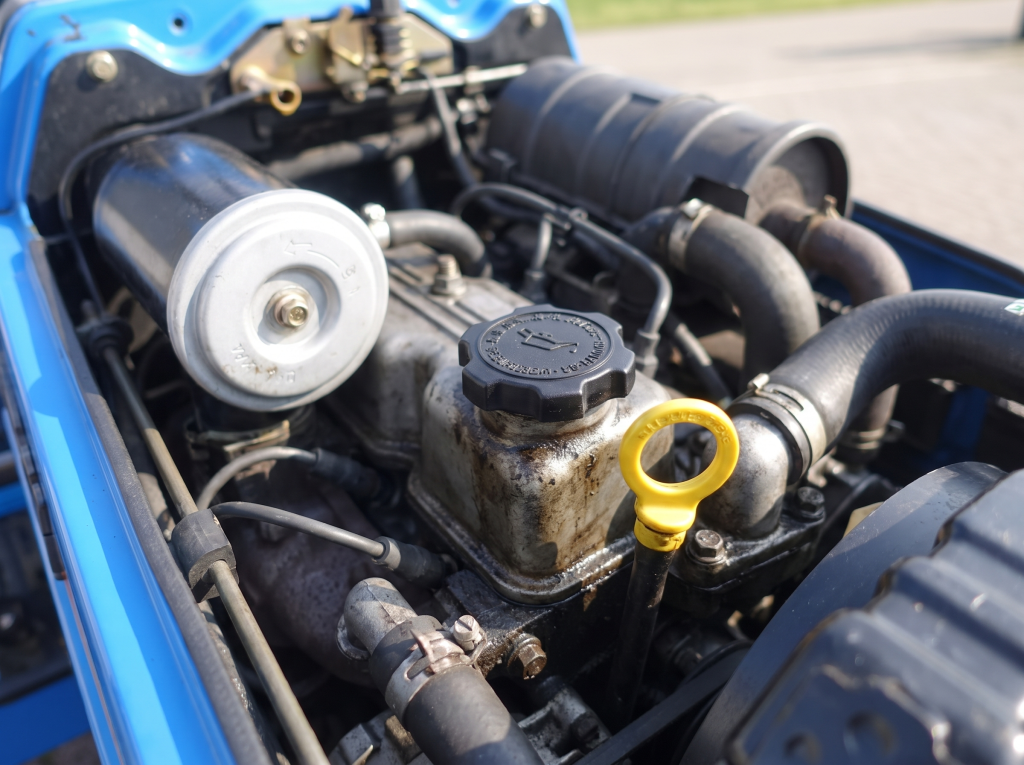
Your Iseki TU167 (or TU147, TU157, TU177) runs on a number of different fluids, and it's important to know which one goes where — especially since hydraulic oil and transmission oil share the same system on this tractor. Below you'll find all capacities and types at a glance.
Suitable for the entire series: Iseki Landhope TU147, TU157, TU167 and TU177 (2WD and 4WD versions).
Iseki TU167 fluid capacities
| System | Capacity | Fluid type | Applicable to |
|---|---|---|---|
| Engine oil | 2.7 liters | Diesel engine oil | All models |
| Transmission/gearbox (= hydraulics) | 12 liters | Giro oil | All models |
| Radiator (coolant) | 5.5 liters | LLC coolant | All models |
| Front gearbox | 0.5 liters | Giro oil | 4WD only |
| Front axle | 3 liters | Giro oil | 4WD only |
| Power steering (PS version) | 1.0 liter | Hydraulic oil | Power steering versions only |
| Fuel tank | 16 liters | Diesel JIS #2 (JIS #3 in severe frost) | All models |
In addition, a number of lubrication points require grease instead of oil: the steering axle/kingpin and the center pivot (2WD only), the clutch and brake pedal pivot points, and on the X version, the 2P lift bracket point.
Iseki TU167: why hydraulic oil and transmission oil are the same
This is a point many owners run into: this Iseki generation has no separate hydraulic system with its own oil. The transmission (gearbox) and the hydraulics for the lift mechanism share the same 12-liter giro oil reservoir. In practice, this means two things:
- If you change the transmission oil, you automatically change the hydraulic oil as well — and vice versa.
- A too-low oil level in this system doesn't just affect shifting, but also whether the lift mechanism and power steering (if fitted) work properly. Hydraulic pressure that won't build up is therefore one of the first things you should check the oil level for — see our troubleshooting page.
Iseki TU167 warm-up times after a cold start
Before fully loading the tractor after a cold start, the engine must first be warmed up sufficiently. The factory manual provides the following guidelines for this:
| Outside temperature | Recommended idle warm-up time |
|---|---|
| 0°C and above | 5-10 minutes |
| 0°C to -10°C | 10-20 minutes |
| -10°C to -20°C | 20-30 minutes |
| Below -20°C | 30+ minutes |
Note: the factory manual explicitly warns that loading the tractor too quickly after a cold start can lead to seizing or damage to the hydraulic pump. Especially in winter, it therefore pays to be patient before putting load on the lift or the PTO.
Shop4trac tip: changing the transmission/hydraulic oil? Check the hydraulic filter (€38.50) right away — a contaminated filter restricts flow to both the gearbox and the lift mechanism.