



Iseki TU165 operation and starting: how to do it right
Iseki TU165 operation and starting: how to do it right
Starting an Iseki TU165 correctly may seem obvious, but especially in cold weather, following the right procedure makes a big difference for the lifespan of your engine and hydraulic pump. In this article, we'll walk you through the starting procedure, the preheating times, and the meaning of the dashboard warning lights.
Suitable for the entire series: Iseki Landhope TU145, TU155, TU165, and TU175 (2WD and 4WD versions).
Iseki TU165 starting procedure
The basic procedure is the same for all models in this series:
- Put the gear lever in neutral and fully press the clutch pedal (on this tractor, the starter motor will not engage if the clutch pedal is not pressed — this is a built-in safety switch).
- Turn the ignition key to the preheat position and hold it there for the appropriate preheating time (see table below), depending on the outside temperature.
- Turn the ignition key further to the start position until the engine starts. Release the key immediately once the engine is running.
- Let the engine warm up at idle before putting it under load — see the warm-up times below.
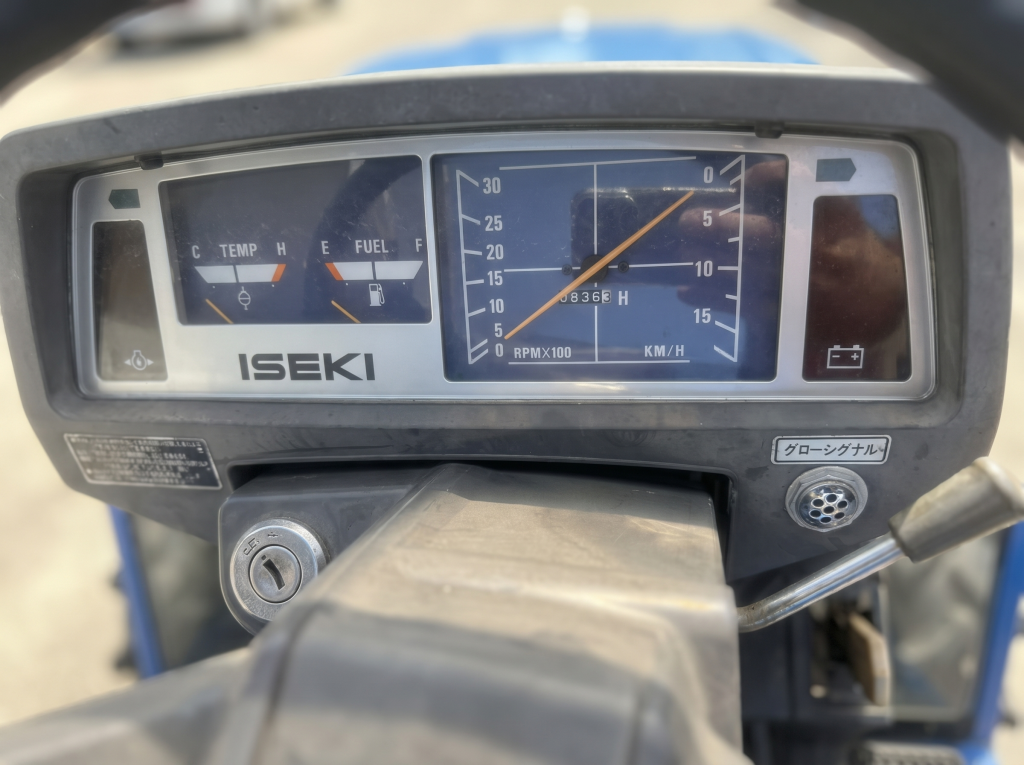
- Immediately after starting, check the oil pressure light and the charge light: these should go out as soon as the engine is running.
Iseki TU165 preheating times
| Outside temperature | Preheating time |
|---|---|
| Above 5°C, or with a warm engine | Preheating not necessary |
| 5°C to -5°C | About 20 seconds |
| Below -5°C | About 30 seconds |
Iseki TU165 warm-up times after a cold start
Before putting the tractor under heavy load (for example with an implement on the PTO or lift), the engine must first be sufficiently warmed up. The factory manual provides the following guidelines for this:
| Outside temperature | Idle warm-up time before full load |
|---|---|
| 0°C and above | 5-10 minutes |
| 0°C to -10°C | 10-20 minutes |
| -10°C to -20°C | 20-30 minutes |
| Below -20°C | 30 minutes or more |
Warning: driving off too quickly or applying heavy load right after starting can lead to seizing or damage to the hydraulic pump. Because the transmission and hydraulic oil share the same system on this tractor (see our engine oil & fluidsblog), sufficient warm-up time is especially important: cold, thick oil can put unnecessary strain on the hydraulic pump before it flows properly.
Iseki TU165 dashboard warning lights
| Light | Meaning if it stays on while driving |
|---|---|
| Oil pressure light | Indicates insufficient engine oil, oil that is too thin, a faulty pressure switch, a faulty oil pump, or a clogged oil filter element. Stop immediately and check the oil level. |
| Charge light | Indicates a wiring fault, a faulty alternator or regulator, a dead or defective battery, or a loose or broken fan belt. |
Both lights should light up briefly when starting and go out immediately once the engine is running. If they stay on while driving, stop and investigate the cause — see our Iseki TU165 faultsblog for the full causes and solutions.
Having trouble starting in cold weather? First check the Mitsubishi K3A-K3D glow relay (€34.50) and the Iseki TU Landhope 150-177 glow plugs (€19.50) — a worn glow plug is a common cause of difficult cold starting. If the charge light stays on, the Iseki TU145-TU175 alternator (€138.50) or the V-belt/fan belt (€16.50) is a logical next step.