



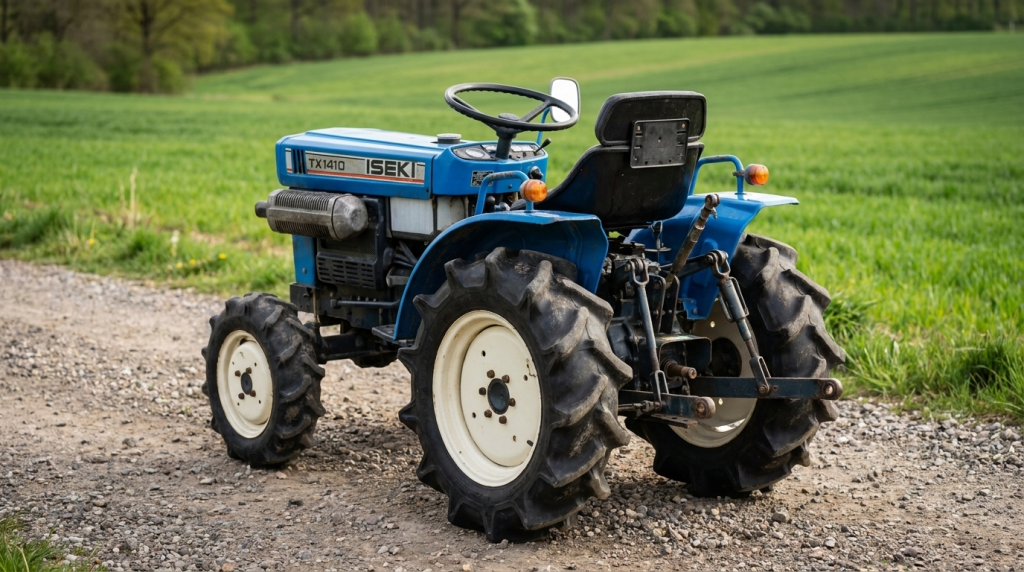
Iseki TX1410 & TX1510 operation, starting and preheating
Iseki TX1410 & TX1510 operation and starting
The Iseki TX1410 and TX1510 are wonderfully simple to operate, but a few habits make the difference between smooth driving and unnecessary wear. In this blog we'll go through the controls: starting, clutching, shifting, braking and parking — with the key points as they appear in the original Iseki manual.
Suitable for the entire series: TX1410, TX1410F (4WD), TX1510 and TX1510F (4WD).
Starting the diesel engine
The TX1410 and TX1510 have an electric start with a 12V battery (type NS60). A safe starting sequence for this diesel:
- Put the gearbox in neutral and fully depress the clutch — the starter motor only turns with the clutch pedal pressed in.
- Open the fuel tap if necessary and check that there is enough diesel in the tank.
- Preheating: let the glow plugs do their job before you start. The colder the weather, the longer you should preheat — so longer in freezing conditions than on a warm day.
- Start the engine and, after a cold start, let it idle gently to warm up before putting it under load.
If the engine doesn't start while the starter motor is turning, this is usually due to air in the fuel system, a clogged fuel filter or a closed fuel tap. If the starter motor doesn't turn at all, first check whether the clutch is fully depressed and whether the battery is fully charged.
Clutch and gear shifting
The TX1410/TX1510 has a dry single-plate clutch and a sliding-gear transmission. Because it is not a synchromesh gearbox, a few fixed rules from the manual apply:
- Disengage the clutch quickly, engage it slowly. This prevents jolts and wear.
- Always shift with the clutch fully depressed. With a sliding-gear transmission, the tractor shifts most smoothly from a standstill or at matching speeds.
- Keep your foot off the clutch pedal while working. "Riding" the clutch burns out the plate unnecessarily.
The gearbox has 6 forward gears and 2 reverse gears, with speeds ranging from about 1 km/h in its creeper gear to over 12 to 13 km/h in the highest gear. The low gears are ideal for tilling and ground work, the high gears for transport around the yard or on the road.
Braking and parking
A typical feature of this tractor: the TX1410/TX1510 has independent left and right brakes on the rear axle. Press the left pedal and the left rear wheel brakes; the right pedal brakes the right rear wheel. This is handy for making a tight turn in the field.
For road driving or loading onto a trailer, separate braking is actually dangerous. Therefore, link the two pedals together with the coupling plate, so that both brakes work simultaneously. To park, press the linked pedals and pull up the parking lever. Regularly check that the left and right brakes engage evenly — an unevenly adjusted brake will pull the tractor sideways when braking.
Common points of attention
- Check the oil level, coolant level and tyre pressure before every workday.
- Always let a cold engine warm up briefly before putting it under load.
- When washing, do not spray high-pressure water directly onto the electrical components.
- Lower the implement after working before leaving the tractor.
These tractors have the Mitsubishi K3 engine. More about the engine: Mitsubishi K3A–K3F engine: fuel, injection and starting.