



Buying a Yanmar RS-240 through RS-330: experiences, strengths and weaknesses
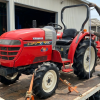
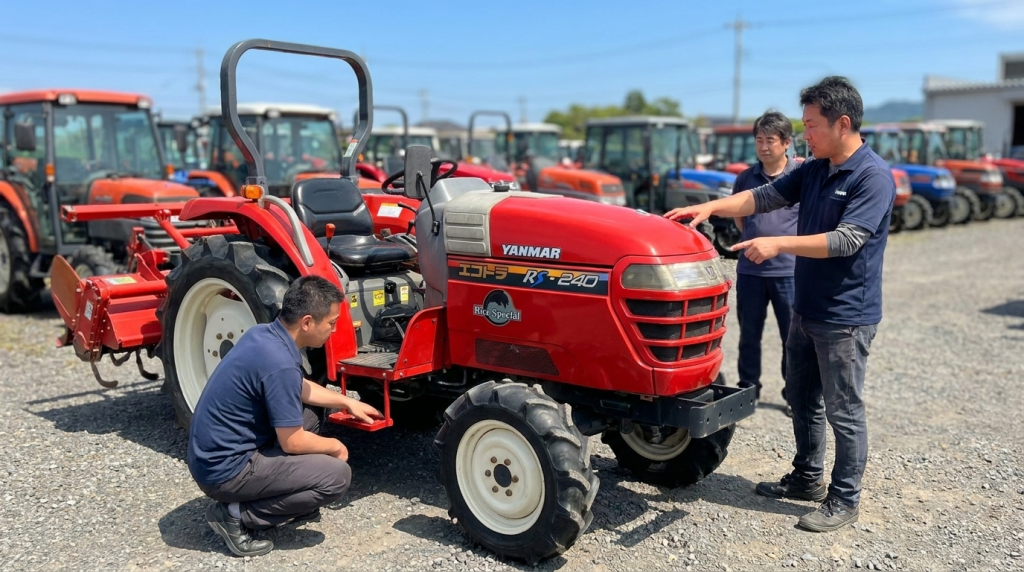
Considering buying a Yanmar RS-240, RS-270, RS-300 or RS-330 ? This series — full name Yanmar Forte Rice Special — is a family of compact 4WD diesel tractors from the late 1990s originally built for the Japanese rice paddy. In the Netherlands you'll find them as grey imports under the names RS24, RS27, RS30 and RS33. In this buying guide we compare the four models side by side, explain the crucial engine difference, give a value indication, and tell you what to look out for with a used example.
Suitable for the whole series: Yanmar Forte Rice Special RS-240, RS-270, RS-300 and RS-330 (also known as RS24, RS27, RS30 and RS33), including the R- (Ecotra), S- (Special), J- (High Speed), U- (UFO), V- and Q- (cab) versions. The number in the type name represents the engine power: 24, 27, 30 or 33 hp.
Yanmar RS series: one family, four power classes
The RS series is built on a single chassis with a wheelbase of 1580 mm; the difference lies in the engine, the tyres and the ground clearance. The higher the type number, the heavier the tractor and the bigger the tyres — and you'll notice that under a heavy rotary tiller or on wet land.
| Model | Power | Engine | Weight (3P) | Ground clearance |
|---|---|---|---|---|
| RS-240 | 24 hp @ 2600 rpm | 3TNE82 (1425 cc) | 1140 kg | 310 mm |
| RS-270 | 27 hp @ 2600 rpm | 3TNE84 (1496 cc) | 1165 kg | 325 mm |
| RS-300 | 30 hp @ 2800 rpm | 3TNE84 (1496 cc) | 1230 kg | 350 mm |
| RS-330 | 33 hp @ 2800 rpm | 3TNE84 (1496 cc) | 1250 kg | 370 mm |
All four models are four-wheel drive, feature full hydraulic power steering, mechanical wet disc brakes, a dry single-plate clutch and a three-point hitch with position control. The name "Rice Special" explains the high ground clearance and the standard hi-lug tyres: these tractors are built to handle both dry and wet land.
The engine difference you really need to know
As with other Yanmar series, this is the key point of attention for parts. The series runs on two different three-cylinder diesels from the Yanmar 3TNE family:
| Engine | Models | Bore × stroke | Displacement |
|---|---|---|---|
| 3TNE82 | RS-240 | 82 × 90 mm | 1425 cc |
| 3TNE84 | RS-270, RS-300, RS-330 | 84 × 90 mm | 1496 cc |
The RS-240 therefore has a smaller bore (82 mm) than the rest (84 mm). This has a practical consequence: engine gaskets — and the head gasket in particular — are not interchangeable between the 82 mm and the 84 mm engine. When ordering parts for the engine block, always check the engine number on the block first. Within the 84 mm group (RS-270 through RS-330) the block is the same; the difference lies in the tuning and the rpm. The RS-300 and RS-330 get their extra power from a higher rpm (2800 rpm) than the RS-270 (2600 rpm), while sharing the same block.
The versions: R, S, J, U, V and Q
Yanmar supplied the RS series in several versions, and you'll find them mixed together in the Netherlands. The most important ones: the J version (High Speed) has 16 forward and reverse gears instead of 12, with a top speed of about 22 to 25 km/h instead of 13 to 15 km/h — noticeably more pleasant for transport work. The U version (UFO) fully automatically controls the working depth and the horizontal position of the rotor via sensors, the V version lets the front wheels turn faster in corners for a smaller turning circle, the R version (Ecotra) has an economical eco mode, the S (Special) is a simplified version that only exists for the RS-270 and RS-300, and the Q version has a cab (sometimes with air conditioning). You can recognise the version on the type plate by the letter after the type number.
Strengths
Owners appreciate the RS series for its combination of light controls and solid build quality. The full hydraulic power steering makes manoeuvring effortless, even with a heavy rotary tiller on the back — the measured turning circle of 2.06 to 2.15 metres is remarkably small for this class. The wet disc brakes require little maintenance and keep working well even in wet conditions. The three-cylinder Yanmar diesels are known for being torquey and fuel-efficient; the RS-330 delivers its maximum torque as low as 1500 rpm. And because the series was designed for rice paddies, it has plenty of ground clearance and isn't fazed by wet, heavy soil — exactly what you want for yard work, garden landscaping, flail mowing and tillage on smaller plots.
Weaknesses and points of attention
Let's be honest: these are machines 25 years or older, built for the Japanese market (grey import). The dashboard and stickers are often in Japanese, and the electronics are actually quite extensive for their time: the hitch is controlled electro-hydraulically, and the UFO versions have sensors and actuator motors that can stop working after years. From practical experience and owner reports, the following points stand out most: a stuck or corroded sensor cable on the rotor cover causing the hitch or automatic depth control to stop responding, a clogged radiator screen or worn V-belt leading to overheating, starting problems due to old fuel, a leaking fuel shut-off solenoid, or a worn safety switch on the clutch pedal. These are not design flaws — they are the result of ageing and deferred maintenance. We cover them one by one in our troubleshooting blog.
A second point of attention is naming confusion: an "RS27" and an "RS-270" are the same tractor, but Yanmar also built other series with similar numbers. If in doubt, always check the type plate and the engine number, so you're sure to order the correct parts.
What should you look out for with a used RS series?
When viewing a tractor, be sure to check the following points: does it start promptly once the glow plug indicator goes out, and does it idle smoothly? Is there no persistent black or white smoke at full throttle? Does the electrically operated hitch respond promptly to both the lever and the switch, and does the rotor lower smoothly when you set the switch to "lower"? Does the four-wheel drive work and does the diff lock engage? Does the clutch feel free of slipping (pedal play: 20–30 mm), and do both pedals brake evenly? Finally, check the coolant and engine oil for contamination or mixing — this says a lot about the maintenance the tractor has received.
What is a Yanmar RS series worth?
A fixed price cannot be given — the value depends heavily on the model, the hours run, the version (cab!) and whether implements are included. As an indication, based on the used market for comparable Japanese grey-import compact tractors (not a fixed valuation):
| Class | Models | Indicative price range |
|---|---|---|
| Small | RS-240, RS-270 | ± €4,000 – €7,000 |
| Large | RS-300, RS-330 | ± €5,500 – €9,000+ |
Cab versions (Q) with air conditioning and clean High Speed examples (J) are usually priced above this. The biggest price factors are the number of hours run, whether the electric hitch and 4WD work properly, the condition of the tyres and bodywork, demonstrably recent maintenance, and the implements included. A tractor with a maintenance history is almost always worth the extra cost compared to a cheap but unknown example. (Amounts are indicative and may vary by time and region — last checked July 2026.)