



Solving Mitsubishi K4 problems: symptoms, causes and solutions
Is your Mitsubishi K4 not running well — hard starting, lack of power, smoking or overheating? Diesels usually show multiple causes at once, so it pays to work systematically: start with the most likely and easiest to check points. This troubleshooting guide follows the diagnostic sequence from the Mitsubishi workshop manual, supplemented with what we see in practice on these engines.
Suitable for the entire K4 series: K4A, K4B, K4C, K4D, K4E, K4F, K4G, K4M and K4N (four-cylinder diesel). Part numbers are for reference only — always verify against your serial number, as fitment varies by version and between direct and indirect injection.
First, know this: what's normal for a K4?
A diesel engine like the K4 naturally has certain characteristics that aren't a fault: its own combustion rattle (diesel knock), some black smoke under heavy load, a noticeable torque vibration due to the high compression, slight "hunting" when quickly releasing the throttle, and some white smoke right after a cold start. Only when these symptoms are excessive or persistent is something wrong.
Known practical problems with the Mitsubishi K4
From the experience of owners and mechanics, a few complaints keep recurring with this engine family. Here's how to recognize and address them:
- Long crank on the first start of the day, then starts fine the rest of the day. This classic pattern often points to fuel bleed-back: overnight the system drains due to air entering through a leaking injector return line, a fuel filter seal, or the hand pump. Often combined with weak glow plugs. Approach: test glow plugs one by one, check the fuel system for air leaks and bleed it, and inspect the injector return and filter seals.
- White smoke and the engine won't fire. A K4 won't start without working glow plugs — you'll only get white smoke and no ignition. Measure each glow plug individually; one faulty plug out of four is enough to cause poor starting and a wet cylinder.
- White smoke at operating temperature / one cylinder not contributing. Usually an injector with poor atomization or too low an opening pressure. Test by slightly loosening one injector line at a time while idling: if the RPM doesn't change, that cylinder isn't contributing. Have the injectors tested (opening pressure 220 kg/cm²) and reconditioned or replaced.
- Wet, oily glow plug upon removal. This indicates oil in the combustion chamber: think worn valve stem seals, a leaking head gasket, or worn piston rings.
- Blue smoke and oil consumption. Almost always valve stem seals, piston rings, or a head gasket letting oil through.
- Creeping temperature after years of faithful service. Often a contaminated radiator, aged coolant, or a thermostat that no longer opens fully — see the cooling guide.
Part numbers you encounter online are for reference; always verify against your serial number, as fitment differs between versions and between direct and indirect injection.
The K4 is hard to start or won't fire
First check the basics: battery voltage, fuel in the tank, and the fuel valve open. Then work through these points: pre-glow system (glow plugs and glow relay), air in the fuel system (bleeding), a clogged fuel filter, worn or poorly atomizing injectors, and finally compression. If the engine still starts poorly with good compression and glow, that points toward the injection pump or injection timing.
Lack of power
In case of power loss, check in order: a clogged air filter or fuel filter, incorrect fuel, injection timing, the injectors (spray pattern and opening pressure), valve clearance (0.25 mm), and compression. If compression is too low, the valves, piston rings, or head gasket are the likely culprits. Address the injection pump last — it can only be adjusted on a pump test bench.
Excessive knocking or pinging
First check the air filter and fuel quality. Then check: injection timing that's too advanced (adjust), the governor/regulator, the injectors (opening pressure too low or poor atomization), and compression (valve, piston ring, or head gasket). If the knocking persists, the injection pump comes into play.
Overheating
Check coolant level and leaks, V-belt tension, and clogged radiator fins. Then work through: the cooling system (leaking head gasket, clogged water pump/hoses/radiator, faulty thermostat), injection timing, and the lubrication system (oil level, oil filter, oil pump). Measure the difference between coolant and ambient temperature: if it's more than 60°C, the cause often lies outside the engine (excessive load or an incorrect engine-machine combination). Read more about this in our cooling guide.
Black smoke
Black smoke means incomplete combustion — too much fuel or too little air. First check the air filter and fuel. Then check: engine adjustment (excessive valve clearance or too-advanced injection timing), the injectors (spray pattern and too-high opening pressure), and compression (valve, piston ring, or head gasket). Finally, the injection pump.
Blue or white smoke
Persistent blue smoke indicates oil consumption: worn piston rings, valve stem seals, or valve guides. White smoke at operating temperature points to unburned fuel (injectors, timing) or — more troubling — coolant in the combustion chamber due to a leaking head gasket or a cracked head. Some white smoke right after a cold start is normal and dissipates.
Low oil pressure or oil pressure light stays on
If the oil pressure light stays on with the engine running and warm, stop immediately. Check the oil level and oil quality, the oil filter, and the oil pressure switch itself. If pressure stays low, the oil pump may be worn, or the main and connecting rod bearings may have run out — the latter requires a rebuild. When reassembling, torque the main bearing caps to 5.0–5.5 kgf·m.
Watch out for gray imports and naming confusion
The K4 is found in many imported machines and rebadges. Nameplates don't always match, and the same engine code exists in both a direct and indirect version with different pistons and injectors. So always determine the exact version and bore before ordering parts, and verify part numbers against your serial number.
Parts often needed for troubleshooting
- Injector nozzle K4 direct injection (SKU-47003-s) — for smoke, poor starting, or rough running.
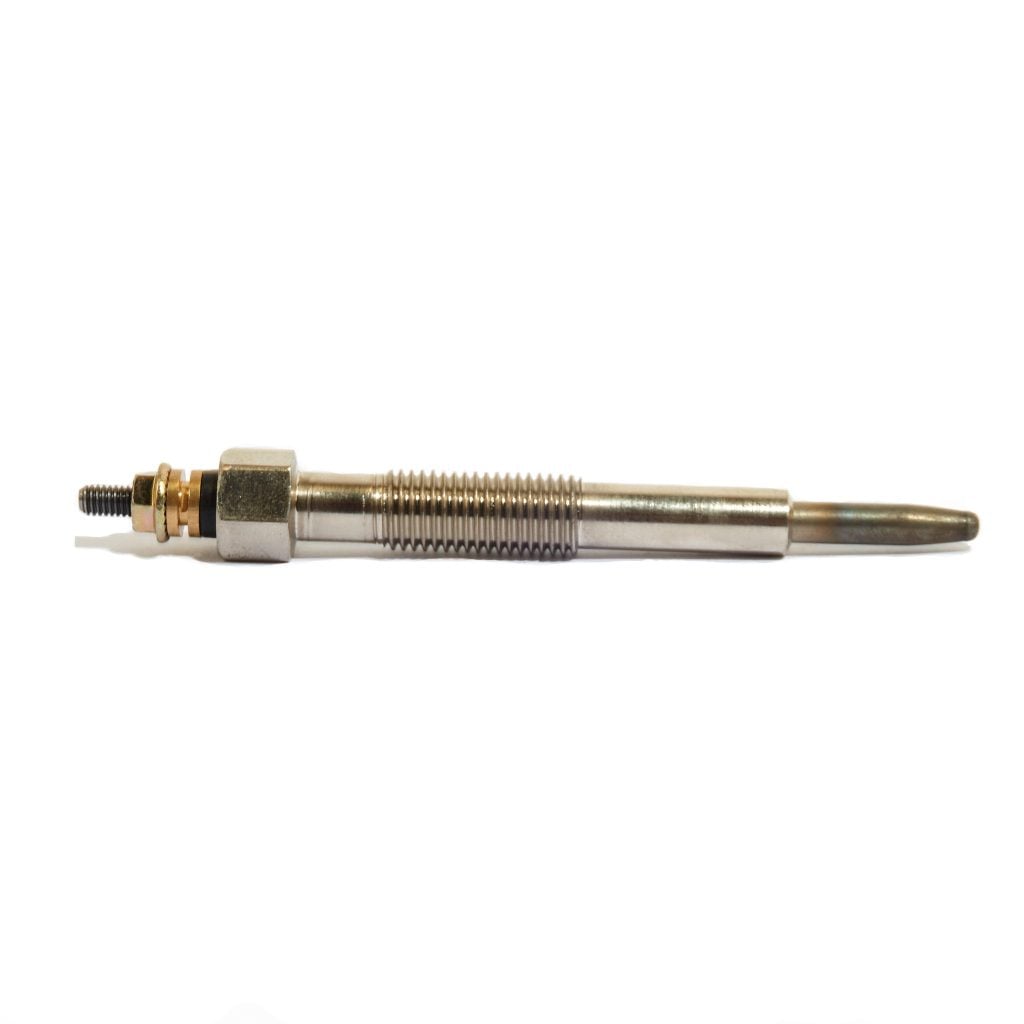
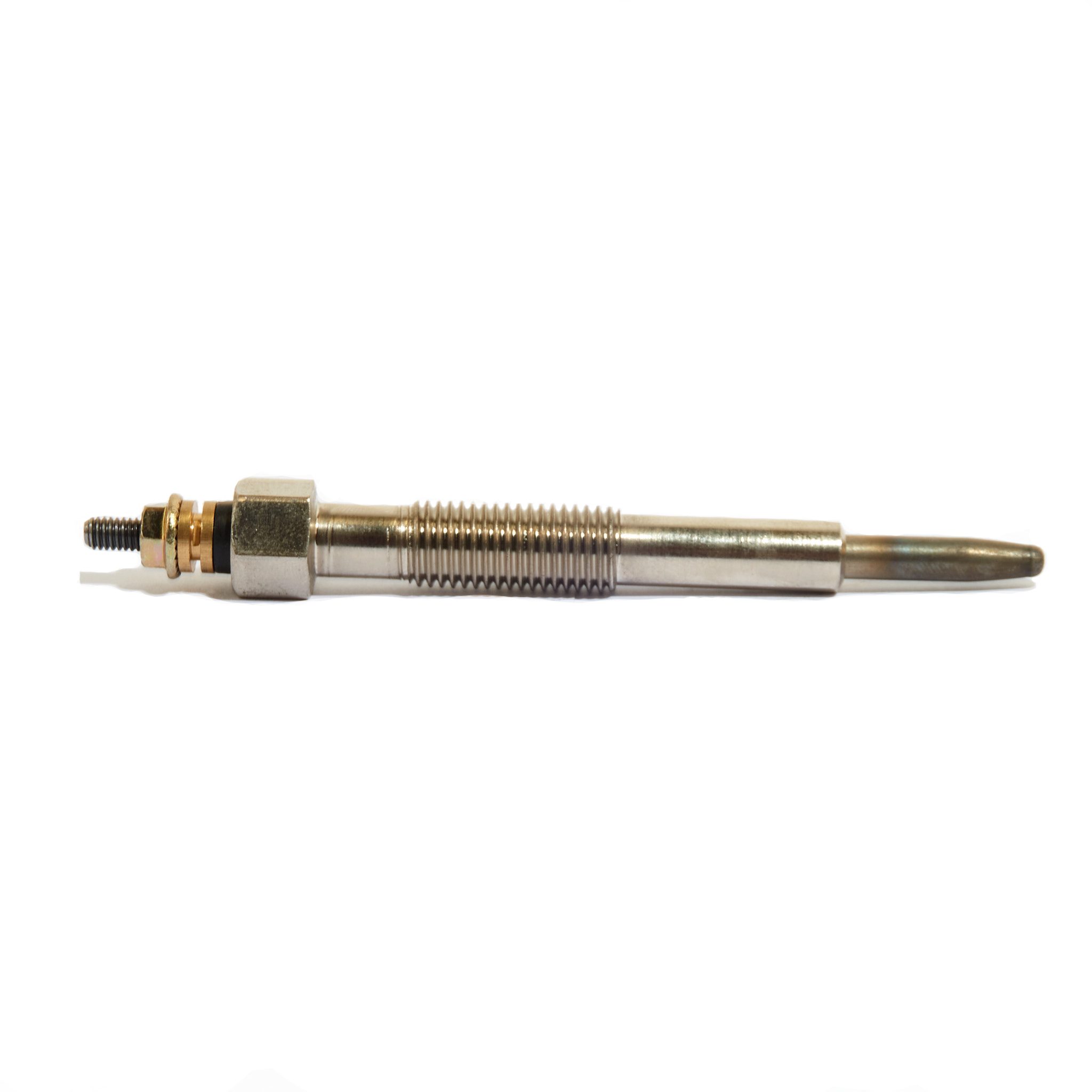
- Mitsubishi K4 glow plug direct injection (SKU-551012) — for white smoke and poor cold starting.
- Valve seals / valve stem seals K3 / K4 (VAR-410006) — for blue smoke and oil consumption.
- Head gasket Mitsubishi K4E / K4F (SKU-194) — for compression loss or coolant in the combustion chamber.
- Connecting rod bearing / bearing shells K3 / K4 (VAR-0035) — for low oil pressure or worn bearings.
- Water pump Mitsubishi K3 / K4 (SKU-323) — for overheating or leaks.
- Rebuild kit Mitsubishi K4E (SKU-850051) — for blow-by, oil consumption, or low compression.
Frequently asked questions
My K4 smokes black under load — is that bad?
A bit of black smoke under heavy load is normal. Persistent heavy black smoke points to a clogged air filter, incorrect injection timing, or worn injectors.
Why is my K4 losing power?
Usually a clogged filter, incorrect valve clearance or injection timing, or worn injectors. Then check the compression.
The oil pressure light stays on — can I keep driving?
No. Turn off the engine immediately and find the cause (oil level, oil filter, oil pressure switch, oil pump, or bearing wear) to prevent serious damage.
This is a technical information article. Work safely, have fuel and injection work performed by a professional if in doubt, and always verify part numbers against your serial number.