



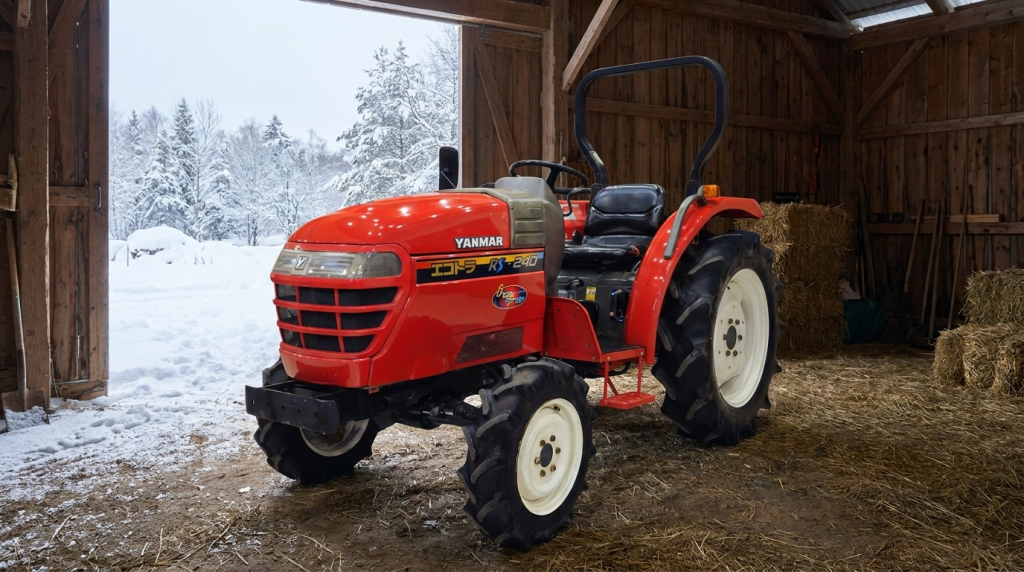
Yanmar RS-240 through RS-330 storage: winterizing in 10 steps
Is your Yanmar RS-240, RS-270, RS-300 or RS-330 going into the shed for a few months? It's precisely during storage that most problems arise: a dead battery, a seized clutch, old fuel, and frozen coolant. With this step-by-step plan — based on the storage instructions from the original manual — your RS will start up in spring as if it worked just yesterday.
Suitable for the entire series: Yanmar Forte Rice Special RS-240, RS-270, RS-300 and RS-330 (also known as RS24, RS27, RS30 and RS33), including the R, S, J, U, V and Q versions.
Winterizing the Yanmar RS series: the step-by-step plan
1. Clean the tractor thoroughly. Spray away mud and crop residue — especially around the radiator grille, the battery and the lift arms. Let everything dry properly; dried-on dirt retains moisture, and that means rust.
2. Fill up the tank completely. A full tank can't condense, preventing water in the fuel and a clogged filter come spring. Use winter diesel for the cold season (regular diesel starts to gel below −10 °C).
3. Change the oil on time. If an oil change is due around storage time, do it beforehand: acidified, contaminated oil attacks bearings and seals throughout the winter. Check the maintenance schedule to see which service is due.
4. Check the antifreeze. The cooling system (5.6 liters) needs to be protected down to at least −15 to −25 °C in our climate; you'll find the mixing ratios in the fluids blog. Antifreeze older than a year: replace it, even if it still seems "good enough" against frost — the corrosion protection has worn off by then.
5. Remove the battery. The manual is explicit about this: disconnect the battery (negative terminal first), take it to a frost-free location and recharge it monthly. Also remove the ignition key and store it separately.
6. Lock the clutch pedal in the depressed position. The RS series has a lock for this purpose: it keeps the clutch plate clear of the flywheel, preventing it from seizing up — the classic storage ailment for tractors standing still for months.
7. Grease all lubrication points and bare parts. Grease the brake pedal shaft, clutch shaft, and center pin, apply grease to the PTO splines and put the cap on, and lightly oil or grease bare parts such as the lift arm piston rod and the tie rods.
8. Lower the implement to the ground and the lift arms down. Never leave an implement hanging in the lift arms for months: it puts strain on the hydraulics and is dangerous with children around the yard. Set the parking brake and, if needed, chock the wheels.
9. Store it dry and cover it smartly. Indoor storage is best. If you use a tarp, let air circulate — a tight tarp over a damp tractor acts like a greenhouse. Don't park the tractor with the tires on wet ground; increase the tire pressure slightly and set it on boards or, for very long-term storage, on stands.
10. Run it briefly every month. If possible, start the engine every four to six weeks and let it come up to temperature (not just three minutes of idling, but really warmed through). Drive it a short distance so the brakes, clutch and tires get some movement. If starting isn't possible (battery removed), at least roll it forward a bit so the tires don't develop a flat spot.
Restarting the Yanmar RS series after storage
Reinstall the battery (positive terminal first), check all fluid levels — engine oil, transmission oil, coolant, front axle oil — and check underneath the tractor for any leaks that may have occurred during storage. Check that mice haven't nested in the air filter housing or the wiring: rodent damage to cables is a notorious cause of vague electrical faults in stored tractors. Unlock the clutch pedal, preheat and start. Let the engine warm up for five minutes at around 1500 rpm, then calmly test the brakes, clutch, steering and lift arms before heading out to the field. A bit of smoke in the first few minutes is normal after long standstill; if it persists, check the troubleshooting blog.
Seasonal rhythm for the RS series
Handy mnemonic for the year: spring = major service (oil, filters, adjustment) before the season starts; summer = keep an eye on the radiator grille and cooling during mowing and tilling work; autumn = grease everything after wet work and go into winter clean; winter = storage according to the step-by-step plan above, or if still working: winter diesel and extra attention to the battery and preheating.