




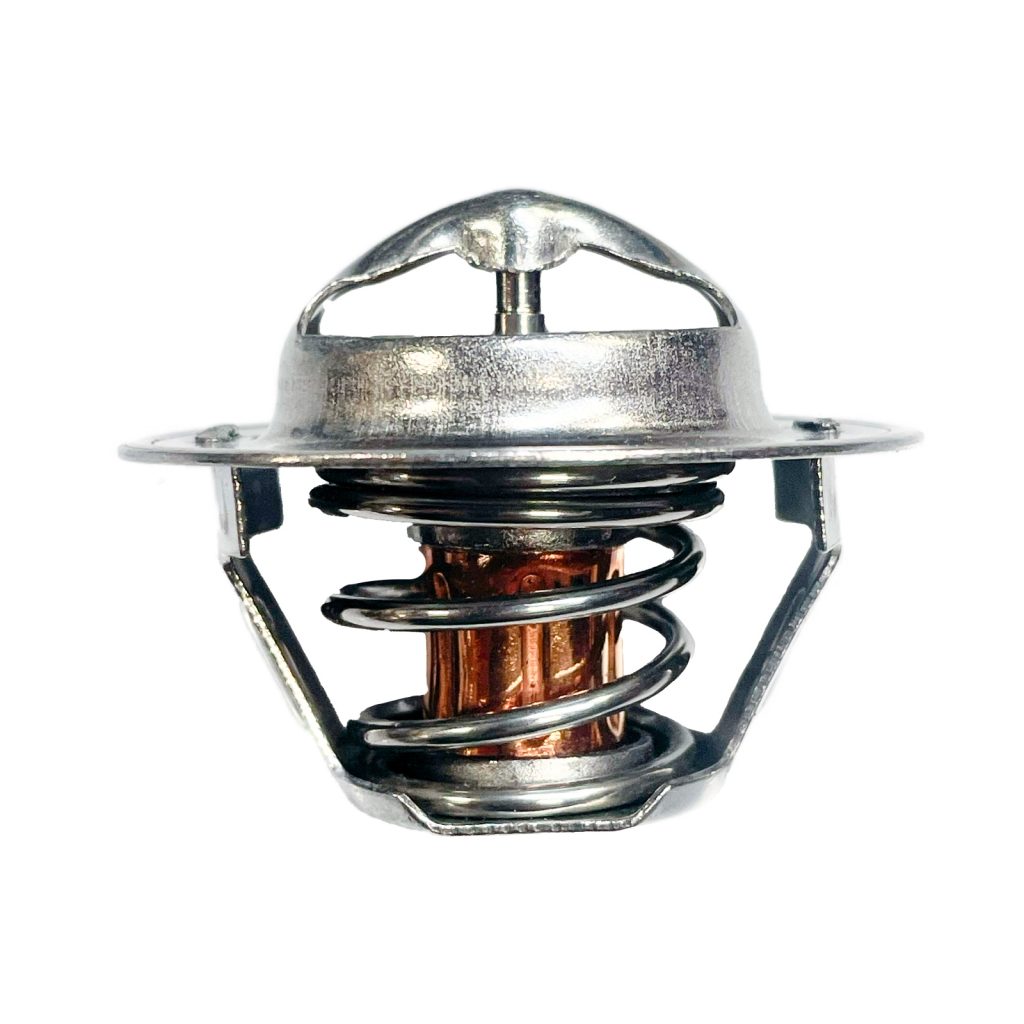
Mitsubishi S3L & S4L Cooling: Thermostat and Water Pump
Mitsubishi S3L & S4L cooling: thermostat, water pump and overheating
The cooling system of your Mitsubishi S3L or S4L keeps the engine at operating temperature and prevents the most costly damage these blocks are known for: a warped head or a blown head gasket caused by overheating. In this article you'll find the cooling specifications and test values from the workshop manual, how to check the thermostat, thermo switch and water pump, and the practical causes of an engine running too hot.
Suitable for the entire series: Mitsubishi S3L, S3L2, S4L and S4L2.
Mitsubishi S3L & S4L cooling system in figures
| Specification | S3L / S3L2 | S4L / S4L2 |
|---|---|---|
| Cooling method | Water-cooled, forced circulation | |
| Coolant in engine | 1.8 liters | 2.5 liters |
| Water pump | Centrifugal pump, ± 30 l/min at 2000 rpm | |
| Thermostat (wax-type) opens | 82 ± 1.5 °C | |
| Thermostat fully open (8 mm lift) | at 95 °C | |
| Thermo switch (overheating) | activates around 111 °C | |
| Cooling fan | Suction type, plastic; 5–7 blades, Ø 320–380 mm | |
The coolant capacity above refers only to the engine itself — the radiator and any hoses on your machine come on top of that.
Mitsubishi S3L & S4L coolant
Use a good long-life coolant (LLC) with the correct antifreeze/water ratio, even in summer, for both frost and corrosion protection. Pay attention to safety: never open the radiator cap on a hot engine — boiling liquid and steam can spray out. Let the engine cool down, open the cap slowly to release the pressure, and only top up once the system is cold. LLC is highly alkaline; collect used coolant and dispose of it properly.
Mitsubishi S3L & S4L: testing and replacing the thermostat
The wax-pellet thermostat starts to open at 82 ± 1.5 °C and is fully open (8 mm valve lift) at 95 °C. A thermostat that stays stuck open causes an engine that runs too cold and sooty; one that stays stuck closed leads to rapid overheating.
How to test and replace the thermostat
- Let the engine cool down and drain enough coolant to access the thermostat housing.
- Remove the thermostat cover and take out the thermostat.
- Place the thermostat in a pan of water with a thermometer and heat it slowly, stirring to keep the temperature even.
- Note the temperature at which the valve starts to open (should be 82 °C) and the temperature at which the valve lift reaches 8 mm (should be 95 °C). If it deviates, replace the thermostat.
- Fit a new thermostat with a new gasket, torque the cover to 16–20 N·m and refill the system.
- Let the engine reach operating temperature and check for leaks and even warming up.
Mitsubishi S3L & S4L thermo switch
The thermo switch is the overheating sensor that triggers the warning light or gauge. You check it by submerging the sensing element in oil and measuring the resistance at 105 °C — this should be roughly 30 MΩ; if it deviates significantly, replace the switch. When installing, torque it to 18.6–26.5 N·m, and the thermo housing to 39.2–49.0 N·m. If your engine runs hot without the warning light coming on, check this switch first before drawing any conclusions.
Mitsubishi S3L & S4L water pump and V-belt
The water pump is a centrifugal pump that circulates approximately 30 l/min at 2000 rpm. You check it by turning the impeller and shaft by hand: they should turn smoothly, without play, noise or binding. If the pump leaks at the weep hole or turns stiffly, replace the complete pump unit — it's a sealed assembly.
The water pump and alternator are driven by the V-belt. Adjust it so that it deflects 10 to 12 mm under approximately 98 N (10 kgf) of pressure. A belt that's too loose makes the pump turn too slowly and causes the engine to overheat. When removing the fan, note the position and arrangement of the spacers so you can refit it correctly.
Why does a Mitsubishi S3L or S4L run hot?
In practice, overheating is the most commonly reported cause of consequential damage to these engines. The most common causes, with solutions:
| Cause | Solution |
|---|---|
| Insufficient coolant / leakage | Top up, check system pressure, inspect hoses and radiator |
| Loose or worn V-belt (pump turns too slowly) | Set tension to 10–12 mm deflection, replace belt if worn |
| Thermostat stuck closed | Test thermostat (opens at 82 °C) and replace |
| Contaminated radiator or cooling fins | Clean/flush inside and outside |
| Water pump leaking or pumping poorly | Check impeller/shaft for smooth operation; replace pump unit |
| No warning during overheating | Test thermo switch (30 MΩ at 105 °C) and replace |
Don't ignore an overheating engine: on these 22.0:1 engines, sustained overheating quickly leads to a warped head, a blown head gasket, or even a crack between the swirl chambers. If the fan belt breaks, stop immediately — without the pump and fan, the engine will overheat within minutes.
Mitsubishi S3L & S4L overheating in practice
Based on the experiences of owners and specialists, overheating stands out as the main source of consequential damage in this engine family — and the application often determines the cause:
- Mini excavators and loaders: the cooling package quickly becomes clogged with dust and crop debris, and airflow in the engine compartment is limited. Keep the radiator and cooling fins clean and check the thermostat, which is often located in or near the water pump housing.
- Generators: prolonged heavy loading raises the temperature. Ensure sufficient cooling capacity and ventilation, and keep a close eye on the coolant level.
- Marine applications (Vetus, Solé): cooling is even more critical here; check the entire cooling circuit regularly.
The chain of consequential damage is always the same: sustained overheating leads to a warped or cracked cylinder head, a blown head gasket (white smoke, coolant in the combustion process) and overheated injectors. So take action at the first signs — the consequential damage costs far more than fixing the cause. For a systematic approach to troubleshooting, see Mitsubishi S3L & S4L troubleshooting.
Mitsubishi S3L & S4L cooling torque specifications
| Component | N·m | kgf·m |
|---|---|---|
| Thermostat cover bolt | 16–20 | 1.6–2.0 |
| Thermo housing bolt | 39.2–49.0 | 4.0–5.0 |
| Thermo switch | 18.6–26.5 | 1.9–2.7 |
Cooling parts in stock: thermostat S3L2/S4L2 (SKU-45004), temperature switch (SKU-910013) and the V-belt (SKU-1240031). Intervened too late? Then the head gasket and cylinder head are ready and in stock.
Frequently Asked Questions
At what temperature does the thermostat of a Mitsubishi S3L/S4L open?
At 82 ± 1.5 °C; fully open (8 mm valve lift) at 95 °C. You test this by heating the thermostat in warm water and reading off the opening temperature.
How much coolant is in the engine?
In the engine itself: 1.8 liters (3-cylinder) or 2.5 liters (4-cylinder). The radiator and hoses of your machine come on top of that. Use a good LLC coolant.
Can I overhaul the water pump separately?
The water pump is a sealed centrifugal pump; if the shaft turns stiffly or it leaks, replace the complete pump unit. Check the impeller and shaft for smooth rotation without play.
What is the most common cause of overheating?
In practice: insufficient coolant, a loose V-belt, a stuck thermostat, or a contaminated radiator. Address it quickly to prevent head and gasket damage.