



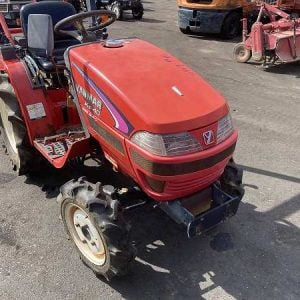
Yanmar Ke Series Troubleshooting: From Starting Problems to Overheating
Won't your Yanmar Ke-1, Ke-1D, Ke-2D or Ke-3D start, does it run irregularly, or does it overheat? This article follows the troubleshooting procedure from the Yanmar Ke series factory manual, supplemented with well-known practical tips for these models — from symptom to cause to solution.
Suitable for the entire series: Yanmar Ke-1, Ke-1D, Ke-2D and Ke-3D.
Yanmar Ke: the starter motor doesn't turn
- Clutch pedal not fully depressed — the safety start switch blocks the starter. This is cause number one, especially for new owners.
- Battery flat or battery fluid too low: top up and fully charge (12V-27Ah).
- Battery terminals loose or corroded: clean, tighten and grease.
- Main fuse blown: replace and find the cause.
- Ignition switch or starter motor faulty: have it tested at the workshop.
Yanmar Ke: the starter turns, but the engine won't start
- Fuel tank (nearly) empty: fill up and bleedthe system.
- Air in the fuel system: bleed at the filter and pump.
- Fuel tap in the closed position ("C"): set to open ("O").
- Ke-1 only: the engine stop knob is still pulled out — push it back in.
- Cold weather: glow plugs worn out — the glow plug light can simply go out while the plugs themselves no longer do anything. Replace all three at the same time.
Yanmar Ke runs irregularly or smokes
- Air in the fuel system: bleed.
- Water in the fuel: drain and refill with fresh diesel; replace the fuel filter.
- Clogged injector nozzle: overhaul or replace.
- Clogged fuel filter: clean or replace the element (every 300 hours).
- Power loss with black smoke: first check the air filter. If power loss persists, have the injectors, valve clearance and compression checked at the workshop (600-hour service points).
Yanmar Ke overheats
- Coolant level too low: top up (3.0 l + 0.4 l sub-tank).
- V-belt loose or damaged: deflection 10–15 mm, otherwise retension or replace.
- Dust screen or radiator fins clogged: clean — daily when working in dry, dusty conditions.
- Engine oil level too low: top up.
- Structural overload: reduce working depth or width by one notch.
Hydraulics: lift doesn't rise or doesn't lower
- Stop/slow-return valve closed: set to open — the most common "fault" of all.
- Transmission oil level too low: top up to level (shared system, 11 l TF-500).
- Air suction on the intake side: check the filter housing and lines, inspect O-rings.
- Clogged hydraulic filter: clean or replace.
- Pump, control valve or cylinder faulty: workshop.
Electrics and brakes
If the lights, indicators or horn don't work, the order is always: bulb → fuse → connectors → earth → switch/flasher unit → battery charge. If the tractor pulls to one side when braking or a brake squeaks, check the pedal play and return springs and grease the pivot points.
Known practical issue: the 4WD front axle
Based on owner experience, the front-wheel drive is the best-known wear point on the D models: worn front axle gears announce themselves with cracking or rattling sounds when turning with 4WD engaged. Fresh front axle oil (2.4 l EP #90, every 300 hours) is the best prevention; if wear has actually occurred, the front axle will need to be overhauled. Disengage 4WD on paved surfaces — it makes a huge difference in reducing wear.
🔧 Parts tip from Shop4trac
- Glow plug Yanmar 3TN63 / 3TN66 / 3TNE68 (SKU-551216) — for slow cold starting.
- Starter motor 12V 0.9 kW (SKU-129035) — if the starter does nothing after checking the pedal, battery and fuse.
- Water pump Yanmar 3TNE68 (SKU-40089) — for leakage or overheating of the Ke-3D.
- Thermostat Yanmar 3TNE68 (SKU-45015) — if the Ke-3D doesn't reach operating temperature or overheats instead.