



Troubleshooting Mitsubishi S3L & S4L problems
Most problems with a Mitsubishi S3L or S4L can be traced with a logical search sequence. Below you'll find the complaints that come up most often in practice and from owners' experiences, each with the likely cause and the solution. Always start with the simple and cheap options, and only then work your way toward the expensive causes.
Suitable for the entire series: Mitsubishi S3L, S3L2, S4L and S4L2.
Mitsubishi S3L & S4L: start your diagnosis here
Work systematically, so you avoid replacing expensive parts that aren't actually faulty:
- Fuel & air: enough clean diesel, tap open, filter not clogged, system bled?
- Preheating & battery: glow plugs in good condition (± 0.55 Ω), sufficient preheating time, battery full and ground clean?
- Cooling & V-belt: coolant level correct, V-belt 10–12 mm, thermostat okay?
- Injection: injectors and injection timing (17° BTDC) correct?
- Compression: measure as the final step — this reveals wear in the block.
Mitsubishi S3L & S4L won't start or starts poorly
| Symptom | Likely cause | Solution |
|---|---|---|
| Won't start cold, lots of cranking | Weak/faulty glow plugs or too short a preheating time | Check glow plugs (± 0.55 Ω) and glow circuit; preheat ± 30 s (12 V) or ± 25 s (24 V), longer in frost |
| Won't start after filter change or running out of fuel | Air in the fuel system | Bleed the system via bleed plug/screws and injection lines |
| Turns over slowly, won't start | Weak battery, poor ground or starter motor | Charge/replace battery, clean ground points, check starter motor and voltage regulator |
| Starts with difficulty, runs unevenly | Worn injectors or misadjusted injection pump | Have injectors tested (opening pressure 14.22–15.00 MPa); pump/timing by a specialist |
| Starts, but immediately dies again | Stop solenoid or fuel supply | Check stop solenoid (ETR/ETS) and lift pump/filter |
Mitsubishi S3L & S4L smoking
| Smoke colour | Likely cause | Solution |
|---|---|---|
| White (cold, disappears when warm) | Unburnt diesel due to weak preheating or air | Check glow plugs and preheating time, bleed the system |
| White (persists, sweetish smell) | Coolant in the combustion: head gasket or crack | Check head gasket, head flatness and swirl chambers |
| Blue on cold start, then less | Oil past valve guides/seals | Check valve guides and valve seals |
| Blue, even when warm | Oil consumption: worn piston rings | Measure compression; consider overhaul of piston rings/cylinders |
| Black under load | Too much fuel or too little air | Check air filter, injection settings and injectors |
Mitsubishi S3L & S4L overheating or losing power
| Symptom | Likely cause | Solution |
|---|---|---|
| Overheating | Too little coolant, loose V-belt, stuck thermostat or dirty radiator | Check coolant level, V-belt (10–12 mm), thermostat (opens at 82 °C) and radiator |
| Too little power | Contaminated air or fuel filter, poor compression or injectors | Replace filters, measure compression, have injectors tested |
| Oil in coolant or vice versa | Blown head gasket or crack in head/block | Replace head gasket; check head and block for flatness and cracks |
Mitsubishi S3L & S4L running unevenly, knocking or vibrating
| Symptom | Likely cause | Solution |
|---|---|---|
| Hard diesel knock / pinking | Injection timing too early or poor injector spray pattern | Have injection timing (17° BTDC) and injectors checked |
| Runs unevenly, misses on one cylinder | One faulty injector or low compression on that cylinder | Check injector and compression per cylinder |
| Vibrates, shakes at idle | Difference in compression/injection between cylinders | Measure compression (difference < 0.29 MPa) and even out injectors |
| Doesn't stop when key is turned off | Stop solenoid or control rod | Check stop solenoid and plunger-control rod clearance (0.15–0.20 mm) |
Mitsubishi S3L & S4L oil pressure and oil problems
| Symptom | Likely cause | Solution |
|---|---|---|
| Oil pressure light on / low pressure | Oil level too low, worn oil pump, relief valve or bearings | Measure level and oil pressure (0.29–0.39 MPa nominal, min. 0.098 MPa idle); check pump/valve/bearings |
| High oil consumption | Worn piston rings or valve guides | Measure compression; consider overhaul |
| Mayonnaise under filler cap | Coolant in the oil (head gasket) | Check head gasket and head/block |
Mitsubishi S3L & S4L compression as the final check
If the checks above come back clean and the engine still runs poorly, measure the compression. Remove the glow plugs, set the throttle lever to STOP and crank each cylinder with a compression gauge:
| Compression (at 290 rpm) | Value |
|---|---|
| Standard | 2.9 MPa (30 kgf/cm²) or higher |
| Limit | 2.6 MPa (27 kgf/cm²) |
| Max. difference between cylinders | 0.29 MPa (3.0 kgf/cm²) |
If you're at or below the limit, or the cylinders vary too much, an overhaul of the block is in order.
Mitsubishi S3L & S4L: known practical issues per application
Besides the general diagnosis, there are a few complaints that owners and specialists report notably often with this engine family. It pays to know them — especially since the application often determines where things go wrong.
Overheating and the resulting damage
The most recurring pattern starts with overheating. A faulty thermostat, too little coolant or a dirty cooling package lets the temperature rise, and with this highly compressed swirl chamber engine, a chain of damage often follows: a warped or cracked cylinder head, a blown head gasket (with white smoke and coolant in the combustion), overheated or burnt injectors and — if oil enters the combustion — blue smoke. The practical experience is clear: act immediately at the first signs of overheating, because the resulting damage is far more costly than the cause.
The application determines where to look first:
- Mini excavators and loaders: the cooling package quickly gets contaminated with dust and crop residue, and the thermostat is often awkwardly located in or near the water pump housing. Check the radiator, the airflow through the engine compartment and the thermostat first here.
- Generators: with prolonged heavy loading, overheating often occurs together with difficult starting and erratic fuel supply.
- Marine applications (Vetus, Solé): cooling is especially critical here; regular checks of the entire cooling circuit are essential.
Difficult starting or stalling due to fuel supply
In tractor and agricultural applications, a commonly reported issue is that the engine starts with difficulty or stalls during operation due to problems in the fuel supply. In practice, this is often resolved by replacing the fuel lines and the lift pump and thoroughly bleeding the system; watch for hairline cracks and air leaks in the supply.
Injection pump and timing
Another recurring point is that the timing marks on the injection pump are difficult to align exactly, resulting in difficult starting and poor running. Since the injection pump is skilled work, if in doubt have the injection timing (17° BTDC) and pump setting checked by a diesel specialist.
Worn or overheated injectors
Finally, injectors that are worn or damaged by overheating are often cited as the cause of power loss, smoke and high fuel consumption. Have the injectors tested for opening pressure and spray pattern and replace them if necessary.
Watch out for grey imports and model confusion
Because this block has been sold under many brand names (Vetus, Solé, Caterpillar, Mahindra, Solis, TYM, Farmtrac and more), confusion between S3L/S3L2 and S4L/S4L2 — and with the older "1" versions — occurs regularly. Replacement parts listed online as "fitting" aren't always correct for your exact version. Part numbers found elsewhere are for reference only: always verify the fit against the nameplate and, where possible, the engine number before ordering.
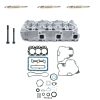
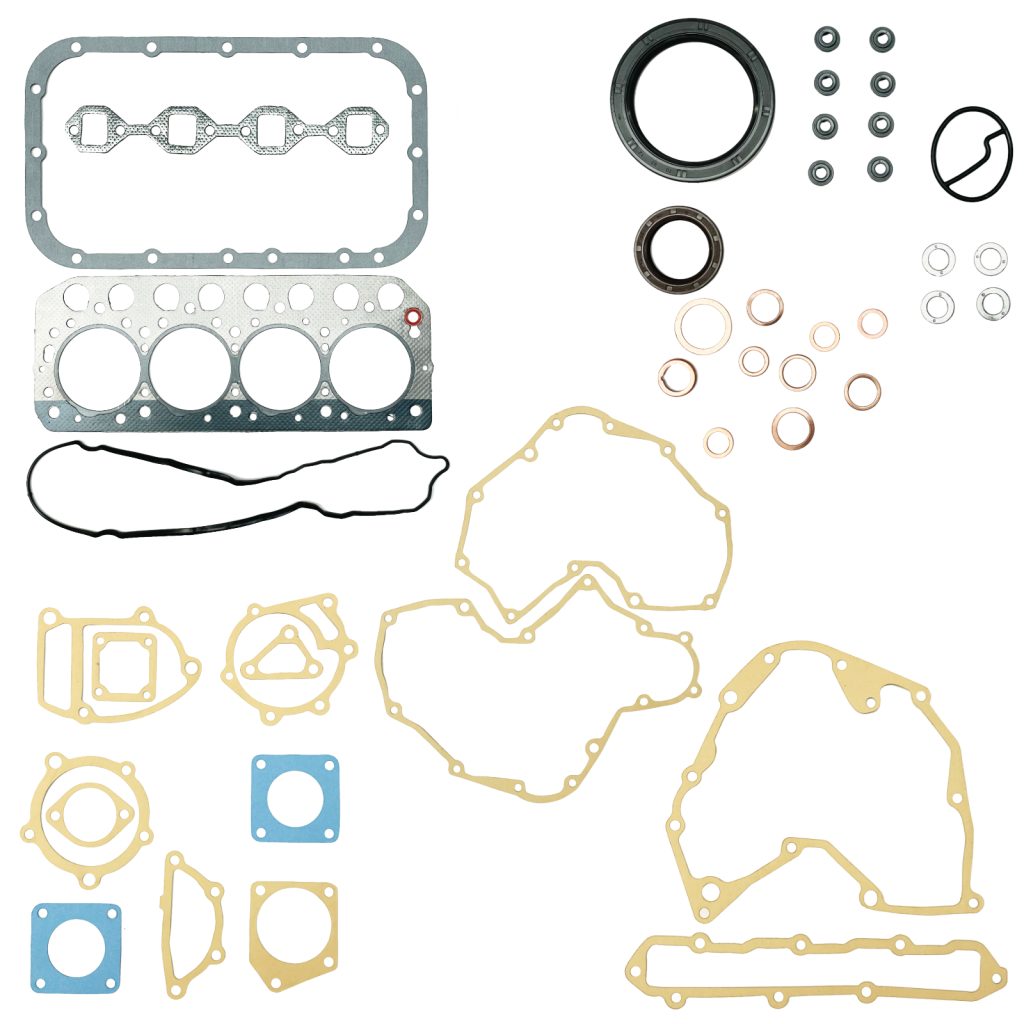
Frequently requested for these complaints: head gasket and complete gasket set, injectors, thermostat, piston rings and, in case of more significant wear, an overhaul kit.
Electrical starting problem? Take a look at the starter motor, alternator and voltage regulator.
Frequently asked questions
My Mitsubishi S4L is blowing white smoke — is that bad?
White smoke that appears cold and disappears when warm is usually unburnt diesel (preheating/air). If the white smoke persists and smells sweetish, coolant is entering the combustion: check the head gasket and the head.
Why does my S3L lose power under load?
Usually a contaminated filter, weak compression or worn injectors. Replace the filters, measure the compression and have the injectors tested.
Why doesn't my engine stop when I turn the key off?
Then the stop solenoid isn't working properly or the control rod is sticking. Check the solenoid (ETR/ETS version) and the clearance between the plunger and the control rod (0.15–0.20 mm).
How much compression should it have?
At 290 rpm, at least 2.9 MPa (30 kgf/cm²), with a limit of 2.6 MPa. The difference between cylinders should not exceed 0.29 MPa.
In which application does the Mitsubishi S4L2 fail most often?
The engine itself is robust; most problems arise from the application. In mini excavators and loaders, a contaminated cooling package and overheating are the biggest culprits, in generators it's difficult starting under heavy load, and in marine applications it's critical cooling. Good maintenance of the cooling and fuel supply prevents the majority of complaints.
Can I just use part numbers from a forum?
Use those for reference only. Due to grey imports and rebadging, the fit varies; always check against the nameplate and engine number before ordering.
{
"@context":"https://schema.org","@type":"FAQPage","mainEntity":[
{"@type":"Question","name":"My Mitsubishi S4L is blowing white smoke — is that bad?","acceptedAnswer":{"@type":"Answer","text":"White smoke that appears cold and disappears when warm is usually unburnt diesel (preheating or air). If the white smoke persists and smells sweetish, coolant is entering the combustion: check the head gasket and the head."}},
{"@type":"Question","name":"Why does my S3L lose power under load?","acceptedAnswer":{"@type":"Answer","text":"Usually a contaminated filter, weak compression or worn injectors. Replace the filters, measure the compression and have the injectors tested."}},
{"@type":"Question","name":"Why doesn't my Mitsubishi stop when I turn the key off?","acceptedAnswer":{"@type":"Answer","text":"Then the stop solenoid isn't working properly or the control rod is sticking. Check the solenoid (ETR/ETS) and the clearance between plunger and control rod (0.15 to 0.20 mm)."}},
{"@type":"Question","name":"How much compression should a Mitsubishi S3L/S4L have?","acceptedAnswer":{"@type":"Answer","text":"At 290 rpm, at least 2.9 MPa (30 kgf/cm²), with a limit of 2.6 MPa. The difference between cylinders should not exceed 0.29 MPa."}},
{"@type":"Question","name":"In which application does the Mitsubishi S4L2 fail most often?","acceptedAnswer":{"@type":"Answer","text":"The engine itself is robust; most problems arise from the application. In mini excavators and loaders, a contaminated cooling package and overheating are the biggest culprits, in generators it's difficult starting under heavy load, and in marine applications it's critical cooling. Good maintenance of the cooling and fuel supply prevents the majority of complaints."}},
{"@type":"Question","name":"Can I just use part numbers from a forum?","acceptedAnswer":{"@type":"Answer","text":"Use those for reference only. Due to grey imports and rebadging, the fit varies; always check against the nameplate and engine number before ordering."}}
]
}
{
"@context":"https://schema.org","@type":"HowTo","name":"Systematically diagnosing a poorly running Mitsubishi S3L or S4L",
"step":[
{"@type":"HowToStep","name":"Fuel and air","text":"Check for clean diesel, open tap, unclogged filter and bleed the system."},
{"@type":"HowToStep","name":"Preheating and battery","text":"Check the glow plugs (± 0.55 Ω), the preheating time and the battery/ground."},
{"@type":"HowToStep","name":"Cooling","text":"Check coolant level, V-belt (10–12 mm) and thermostat (opens at 82 °C)."},
{"@type":"HowToStep","name":"Injection","text":"Have the injectors (14.22–15.00 MPa) and injection timing (17° BTDC) checked."},
{"@type":"HowToStep","name":"Compression","text":"As the final step, measure the compression: minimum 2.9 MPa, limit 2.6 MPa, difference below 0.29 MPa."}
]
}