




Troubleshooting Mitsubishi K3A–K3F Problems
Is your Mitsubishi K3 not starting, smoking white, or running rough? Most faults on this three-cylinder engine can be diagnosed yourself if you work systematically. In this blog, we go through the known issues — symptom, likely cause, and solution — based on the workshop manual and real-world experiences from owners.
Suitable for the entire series: K3A, K3B, K3C, K3D, K3E, K3F, K3H, and K3M. You'll find these engines in, among others, the Iseki TX1410 (K3A) and TX1510 (K3B).
Mitsubishi K3 won't start or starts hard
Diagnose a starting problem in a fixed order: first glow, then fuel, then compression. This way you rule out the cheap causes first.
| Symptom | Likely cause | Solution |
|---|---|---|
| Won't start cold, lots of white smoke when starting | Insufficient preheating or faulty glow coils | Preheat longer; check and replace glow coils and glow relay. Even on warm days, the K3 needs glow plug support. |
| Cranks but won't catch, after fuel system maintenance | Air in the fuel line | Bleed the fuel system (filter and lines) until air-free fuel comes through. |
| Won't start, fuel delivery irregular | Contaminated fuel filter, water in the fuel, or delivery only on one/two cylinders | Clean/replace filter, check tank and lines, have the injection pump and injectors inspected. |
| Good glow and fuel, still starts hard | Low compression | Measure compression (standard 32 kg/cm², service limit around 22 kg/cm²). Too low points to valves, piston rings, or head gasket. |
| Starter motor doesn't turn the engine over | Seized thrust bearing/coupling or weak battery/starter motor | Check battery and connections; if the engine is locked up, inspect the coupling/thrust bearing. |
Mitsubishi K3 smoking or running rough
| Symptom | Likely cause | Solution |
|---|---|---|
| White mist smelling strongly of diesel + misfire | Injector atomizing poorly or incorrect injection timing | Have injectors tested/adjusted (opening pressure 160 kg/cm²) or replace nozzle; check injection timing. |
| White vapor with no diesel smell, coolant level dropping | Coolant entering combustion — head gasket or cylinder head | Check head gasket and cylinder head for flatness; replace head gasket, have head resurfaced if warping exceeds 0.1 mm. |
| Blue smoke, oil consumption | Worn piston rings or valve stem seals | Overhaul: replace piston rings and valve seals, measure cylinder and piston wear. |
| Black smoke under load | Contaminated air filter or excessive fuel delivery | Clean/replace air filter; have injection quantity adjusted. |
| Rough idle, vibration | Uneven injection or incorrect valve clearance | Set valve clearance to 0.25 mm (cold); check injectors and pump. |
Mitsubishi K3 blue smoke and piston rings
Blue smoke means the engine is burning oil along with the fuel, and on these older K3 engines, this is a common complaint. The cause is almost always in the piston rings or the cylinder wall. In practice, you'll see a few recognizable patterns:
- Blue smoke mainly on cold start that decreases after warming up points to reduced oil control due to carbonized or stuck piston rings and glazing of the cylinder wall. In this case, the rings no longer seal properly.
- Stuck rings occur due to carbon buildup in lightly loaded or frequently idling engines, or due to oil that's too thin or of the wrong type getting past the rings. Besides smoke, this also causes compression loss.
- Persistent blue smoke under all conditions combined with oil consumption and low compression means worn rings, cylinder wear, or worn valve stem seals — in that case, an overhaul is needed.
If in doubt, measure the compression (standard 32 kg/cm², service limit around 22 kg/cm²) and oil consumption. If the rings are the culprit, there are two routes: for light carbon buildup, running the engine properly under load with the correct oil quality sometimes helps free up the rings again; for actual wear, you replace the piston rings, usually combined with boring out the cylinder and fitting oversize rings and pistons (0.25 / 0.50 / 0.75 mm). Always replace the head gasket and valve stem seals as part of that job.
How to distinguish a head gasket issue from an injector problem (practical check):
- Smell the exhaust. A sweet, antifreeze-smelling white vapor points to coolant entering combustion (head gasket or cylinder head). A white mist that smells strongly of diesel and is accompanied by a misfire or knocking points to an injector that's atomizing poorly.
- Check the coolant level. If the coolant is dropping, or if you notice a lot of white smoke immediately at the first start (accumulated water that seeped into the cylinder overnight), the head gasket is suspect.
- Test with the radiator cap loose. If the engine runs noticeably cleaner with the cap loosened (no pressure), or if you see bubbling in the radiator's top tank, the head gasket is leaking combustion gases into the cooling system.
- No coolant loss, but diesel smell and knocking? Start with the injectors (clean, have tested/adjusted to 160 kg/cm², or replace) before looking at the injection pump or cylinder head.
Mitsubishi K3 injection timing and knocking noise
If the engine knocks heavily under load or starts poorly when cold, check the injection timing. Set too early causes a sharp, metallic knocking noise that increases with load and sometimes a whitish-gray smoke; set too late causes a difficult cold start and loss of power. Also check the delivery valve holder of the injection pump: it should have an O-ring and a copper seal, which must be tightened to the correct torque. Injection pump wear is rare at low operating hours — always start with timing and injectors before suspecting the pump.
Mitsubishi K3 overheating and charging problems
| Symptom | Likely cause | Solution |
|---|---|---|
| Runs hot | Low coolant, contaminated radiator, stuck thermostat, or slipping V-belt | Check coolant and radiator, replace thermostat (opens at 82 °C), check V-belt tension. |
| Battery drains / charge light stays on | Slipping V-belt, faulty alternator, or regulator | Check V-belt and charging system; test alternator and voltage regulator. |
| Oil leak at the bottom | Missing copper seal on the drain plug or worn oil seal | Replace drain plug seal; check front/rear crankshaft oil seal. |
Note: on grey-import machines, the exact specification sometimes differs from the nameplate. Always check part numbers against your engine's serial number before ordering.
Parts you'll often need for these faults:
- K3 filter set: oil, fuel, and air filter (SKU-100149).
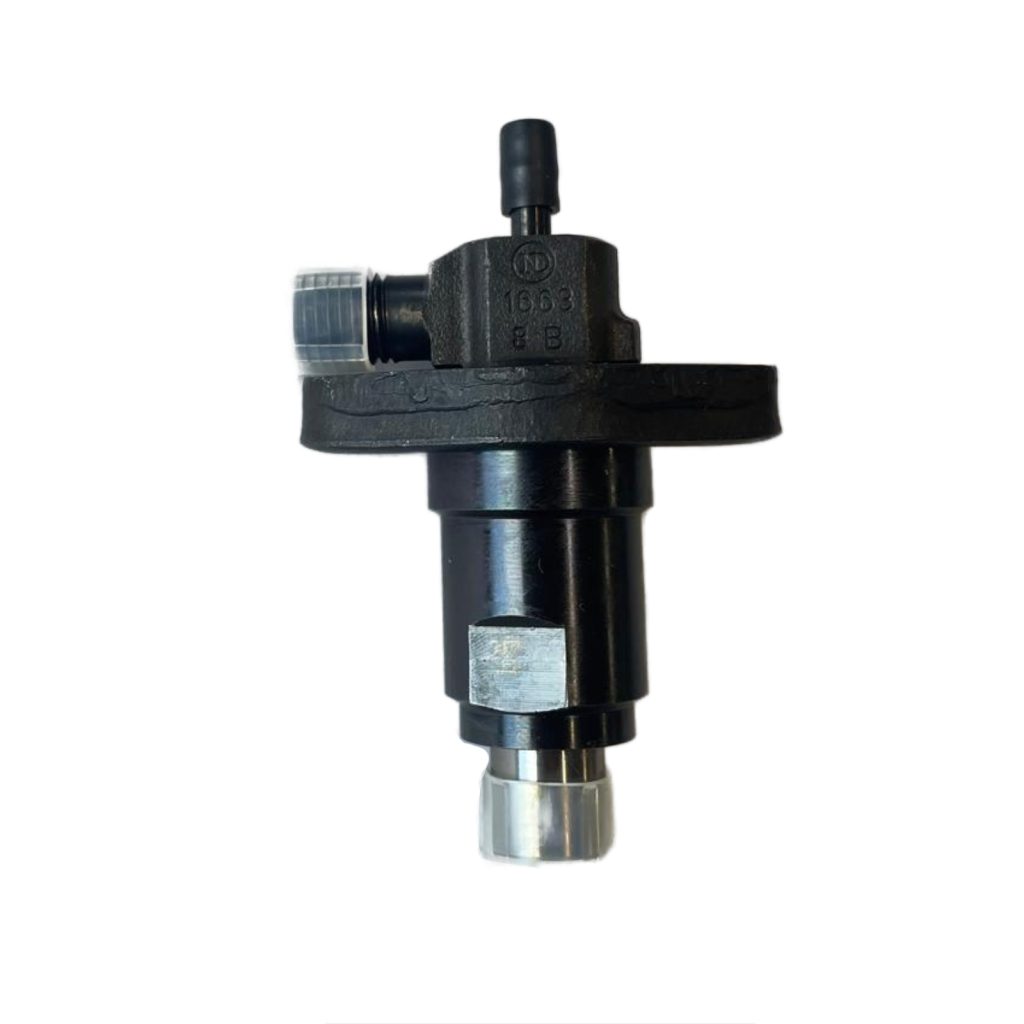
- Complete injector K3B/K3D/K3E (SKU-47023-s) or the DI nozzle (SKU-47003-s).
- Thermostat K3 (SKU-45004) and water pump (SKU-323) for overheating.
- K3 series starter motor (VAR-0027) for starting problems caused by the starter motor.
- K3 series alternator (SKU-1200011) for charging problems (battery draining).
- For blue smoke / overhaul: piston rings, a complete gasket set and valve stem seals (VAR-410006).
Suspect internal damage (low compression or coolant in the oil)? Have the engine properly tested first before doing further work — this prevents unnecessary effort and costs.


