



Iseki TX1410 & TX1510 Buying Advice and Used Tractor Tips
Iseki TX1410 & TX1510 buying advice: what you need to know
Thinking about buying an Iseki TX1410 or TX1510? Then you're choosing a compact, simple, and rock-solid mini tractor that — if well maintained — will keep running for decades to come. In this buying guide, we explain what you get for your money, what the real differences are between the TX1410 and TX1510, what to look out for when buying used, and what you can realistically do with these tractors.
Suitable for the entire series: TX1410, TX1410F (4WD), TX1510, and TX1510F (4WD). Much of this information also applies to the related TX models and the Bolens rebadges.
Iseki TX1410 and TX1510: what are we talking about?
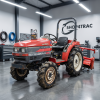
The TX1410 and TX1510 belong to the older generation of the Iseki TX series: light, agile diesel tractors with a three-cylinder engine, a mechanical gearbox, and a simple hydraulic lift system. There are always two versions: a two-wheel drive version (TX1410 / TX1510) and a four-wheel drive version with the added F (TX1410F / TX1510F). The four-wheel drive version is equipped with a differential lock, which makes a world of difference on heavy or wet ground.
The model years fall roughly in the late 1970s to early 1980s (indicative, external source — the year of manufacture is not stated in the original manual). So expect a machine that's forty years old or more: simple in technology, easy to maintain, and with a wide availability of parts.
The key difference between the TX1410 and TX1510
At first glance, the TX1410 and TX1510 look nearly identical, but the real difference lies under the hood. According to the factory specifications (manual page 67), the TX1410 runs on the K3Aengine, while the TX1510 runs on the K3Bengine. Both are water-cooled, upright three-cylinder swirl chamber diesel engines, but they differ in displacement and bore:
| Specification | Iseki TX1410 | Iseki TX1510 |
|---|---|---|
| Engine | K3A | K3B |
| Displacement | 776 cc | 849 cc |
| Bore × stroke | 65 × 78 mm | 68 × 78 mm |
| Power | 14 hp at 2600 rpm | 14.8 hp at 2600 rpm |
| Weight (4WD / 2WD) | 535 / 500 kg | 550 / 530 kg |
That difference in bore (65 mm versus 68 mm) is not a minor detail. It means that many engine parts are not interchangeable between the two models. The head gasket, pistons, and piston rings of a TX1410 do not fit a TX1510, and vice versa. When ordering these parts, always check first which model and engine you have.
Iseki, Bolens, or White: the same tractor under a different name
Iseki built these tractors in Japan, but also supplied them under other brand names for export, such as Bolens (G series) and White Field Boss. If you come across one of these machines, you're essentially looking at the same base model. Do keep in mind: the exact model numbers vary by source and market, so don't blindly rely on a fixed "Bolens = TX number" list — always verify using the serial number and engine.
One distinction is important: the TX1410 and TX1510 have a three-cylinder engine (K3A/K3B), while the older TX1300 and TX1500 have a two-cylinder engine. Engines, gaskets, and even complete transmissions are not interchangeable between the two- and three-cylinder models. The good news: within the three-cylinder TX family, many filters, cooling parts, and electrical components do fit across the entire series.
What can you realistically do with 14 to 15 hp?
The TX1410 and TX1510 are lightweight tractors, and 14 to 15 hp of engine power translates to less power at the PTO. So don't expect a powerhouse, but rather an extremely handy machine for:
- soil cultivation on small to medium-sized plots with a light tiller or plow;
- flail mowing and grass maintenance;
- transport with a trailer or tipper around the yard;
- loading and moving with a light front loader or pallet fork (within lift capacity);
- maintenance of paths, orchards, and nurseries, where the narrow build and small turning circle are invaluable.
The four-wheel drive TX1410F and TX1510F with differential lock offer noticeably more pulling power and grip on heavy or slippery ground. If you're doing serious tilling or working a lot on slopes or wet clay, the F version is worth the investment.
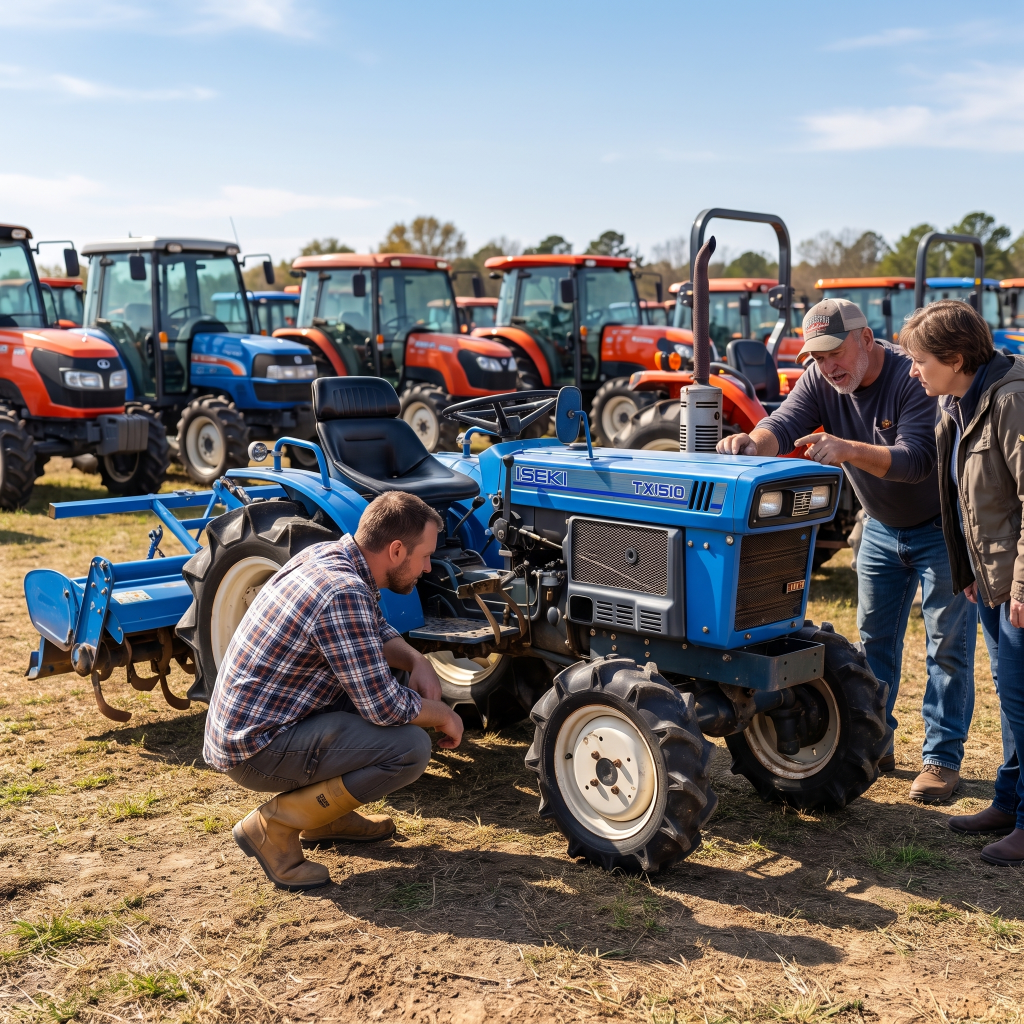
What should you look out for when buying used?
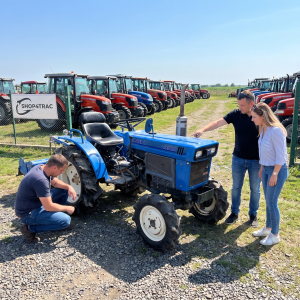
When buying, systematically check these points:
- Engine & cooling: watch for white/oily residue near the head gasket, coolant level, and leaks. Check whether the tractor warms up properly and doesn't overheat — a clogged radiator or a worn water pump is a common cause.
- Starting & compression: does the engine start easily? Difficulty starting despite a good battery and glow plugs often points to low compression from worn piston rings in these older diesels. Also watch for blue smoke (oil consumption) or black smoke (fuel/air filter issue).
- Hydraulics: does the tractor lift smoothly and hold the load up? This series has a suction filter/strainer in the hydraulic circuit — a clogged strainer causes slow or weak lifting.
- Front axle (4WD): check for play and leaks at the front axle and differential. Front axle oil is often overlooked, leading to costly damage.
- Tires & brakes: pay attention to the tire size (which varies by model and drive type) and test whether both brakes engage evenly.
- Completeness: are the grille, headlights, seat, and decals still in good condition? These cosmetic parts are available separately and help determine the value.
Conclusion: who is the TX1410 or TX1510 a good choice for?
The Iseki TX1410 and TX1510 are ideal if you're looking for a reliable, simple, and easy-to-maintain mini tractor for lighter work around the yard, in the orchard, or on a small plot. The technology is straightforward, parts are widely available, and with regular maintenance, these machines will keep serving faithfully for decades. Want more pulling power and grip? Then choose the four-wheel drive F version. In the rest of this knowledge base series, we'll dive deeper into the specifications, maintenance, and operation.
These tractors have the Mitsubishi K3 engine. More about the engine: Mitsubishi K3A–K3F diesel engine: buying advice.