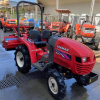





Kubota Aste A-155, A-175 and A-195 Seasonal Maintenance – from Winter Storage to Spring
Kubota Aste seasonal maintenance: winter-ready, spring start-up and tips per season
The Kubota Aste is built for heavy work — but even it struggles in extremes. Harsh frost eats away at the battery and fuel system, summer heat affects the cooling system and oil pressure, and autumn mud takes its toll on the front axle and hydraulics. With a bit of seasonal work, you can keep it running for decades.

Winter storage: what to do when it goes into the shed
Is the Aste going into storage for 2–6 months after the autumn season? Then this is the moment to truly winterize it. A tractor that's "just parked" until March/April without preparation almost always comes out worse than it went in — a dead battery, formed diesel deposits, a moldy fuel-water mixture in the tank, flat-spotted tires.
Winter storage step-by-step plan
- Thoroughly clean the tractor. Caked-on dirt holds moisture = rust. Spray it off, let it dry thoroughly, and blow out damp corners with compressed air. Pay special attention to the chassis, lift hinges, and pedal mechanism.
- Replace engine oil + oil filter. Old oil contains acids and water that attack your engine from the inside during downtime. Fresh oil shields the internal parts.
- Fill the fuel tank completely. An empty tank causes condensation = water in the fuel system. Filling to the brim minimizes this effect.
- Consider a fuel stabilizer (diesel additive) if it will be idle for more than 4 months. Prevents algae growth and oxidation.
- Disconnect or remove the battery. Removing it and charging it in the shed is best. At the very least, disconnect it (ground cable) to prevent parasitic drain. Recharge every 6–8 weeks to prevent sulfation.
- Put the tires on blocks. Long-term flat tires develop flat spots that never fully round out again. Jack it up and place supports underneath.
- Test coolant strength. A 50/50 LLC mixture should protect down to -40°C. Older coolant is often diluted — test with a hydrometer or replace it preventively.
- Cover the exhaust with a cloth or plastic bag (against mice/pests). Remember to remove this again in spring!
- Cover it — but not with plastic on a warm engine. If the engine is still warm and you throw plastic over it, you'll get condensation inside. Only cover it once everything is cold. Use a breathable cloth (an old sheet) instead of plastic.
- Grease the lubrication points. More than usual for long-term storage — the grease protects the metal surfaces against corrosion.
Ideal storage environment
If you have the luxury of a drier, better-ventilated storage space, this means a major lifespan boost for your Aste:
- Dry is more important than warm — a damp shed is worse than a cold but dry one
- Ventilation against condensation — not fully sealed spaces
- Out of direct sunlight for storage longer than 3 months — UV damages plastic and rubber
- Away from salt spreaders combined with an open door — salt in the air = rapid corrosion
- Dry floor — moisture from an uninsulated concrete floor rises upward
Spring start-up: from shed to field
March–April: the ground thaws, work begins. Time to bring the Aste back to life. Reassembling a fully stored tractor takes 30–45 minutes — here's how:
Spring start-up checklist
- Visual inspection first. Check the wiring harness — rodents sometimes chew through insulation. Bird's nest in the exhaust? Moth droppings around the air filter?
- Remove the tractor from the blocks, check tire pressure and top up if needed (1.2–2.0 front, 1.6 rear kgf/cm²)
- Reinstall the battery (or charge it if it was left connected). Measure voltage: ≥ 12.4 V before starting
- Check engine oil level (may already be fresh from the storage service)
- Transmission/hydraulic oil level rear
- Coolant level in the reservoir
- Fuel level + possibly drain the tank outlet (winter water from condensation? let a small amount drain out first)
- Air filter tap it clean
- V-belt check deflection (7 mm) — cold may have loosened it
- Grease nipples check all — one pump per point
- Leak check under the tractor — drips from the transmission, engine, lift cylinder?
First start — approach carefully
- Key to GL, 30–60 seconds of preheating (longer than normal — the engine is cold and damp)
- Start — it should fire up within 5–10 seconds
- Let it idle for a long time (5–10 minutes) at low RPM — the oil pump needs to fill the entire system before you increase the RPM
- Check all functions: brakes L+R, clutch, lift lever up-and-down, 4WD in-out, power steering (BS version), PTO lever
- Short test drive in the yard — 100 meters out, 100 meters back. Listen for unusual noises
- Only start actual work after this warming-up period
Note: won't it start? First check if the fuel shut-off solenoid is stuck (see our troubleshooting blog). This is by far the most common cause after winter storage.
Summer work: the warm months
Summer sun, dry ground, heavy work. The Aste handles it well, but three points need extra attention: cooling, air filter, and fuel quality.
Cooling — the most important summer concern
- Keep the radiator fins clean. Dust, grass fibers, and insects clog the fins and reduce heat transfer. Blow them out regularly with compressed air (from inside to outside)
- Check coolant level daily during intensive work. Evaporation happens quickly in the heat
- V-belt tension — heat stretches rubber. Test regularly (7 mm deflection) and tighten if needed
- Dust on the engine acts as insulation — the engine can then release less heat. Keep it clean
Air filter in dusty conditions
Do you work a lot in dry fields or with a tiller that raises a lot of dust? Check the air filter weekly, not every 200 hours as the schedule prescribes. A clogged filter = the engine gets too little air = black smoke + less power + higher exhaust temperature.
Fuel in summer
Regular summer diesel is fine in summer — no paraffin issues, fewer additives needed. Do pay attention during the switch months (September, March): a half-full tank with winter diesel followed by summer diesel can lead to a cloudy mixture. Preferably fill up completely once a year at the seasonal switch.
Storage between working days
In summer you often work several days in a row. Tips for overnight storage:
- Park the tractor in the shade if possible — the engine cools down faster
- Only turn off the engine once the water temperature is below the middle — let it idle for 2–3 minutes afterward
- Keep the exhaust side away from flammable materials (dry grass, hay) — afterburn happens more often than you'd think
Autumn work: the demolition season and preparation
September–November is often the toughest work season: harvest, tillage, autumn plowing, late-summer work. Working hours pile up, and at the same time you already need to think about winter storage.
Concerns for autumn work
- Thorough service at the start of September — engine oil + filters, transmission if it's due (800 hours)
- Check fuel quality — old fuel from summer may contain algae. If in doubt: run the tank dry and refill with fresh fuel
- Check tire tread — you need grip on wet ground
- Clutch and brake pedal play — demanded more in heavy autumn work, finish them properly
- PTO connection for implements — grease points on universal couplings with every implement change
From summer to winter: the transition
Early November: time to plan the final week. What needs to happen before winter:
- Finish the last heavy tasks
- Refuel with winter diesel (or additive) for the final working days
- One week before storage: a thorough wash
- Day before storage: check all levels + inspections
- Storage day: see winter checklist above
Snow and ice: winter use
If you do use the Aste in winter (snow clearing, driving around animal feed), that's fine — as long as you've prepared it for it:
| Winter use — do's | Winter — don'ts |
|---|---|
| Let the engine warm up for 10 minutes before load | Give it full throttle immediately at -10°C |
| Keep the air intake clean (no ice or snow) | Sucking up snow through the air filter |
| ROPS up for extra visibility | Driving in the dark with a folded-down ROPS |
| Coolant -40°C strength | Using only water (freezes!) |
| Winter diesel + additive | Summer diesel at -5°C (paraffin flakes) |
| Tire tread ≥ 3 mm | Bald worn tires on ice |
| Battery kept fully charged | Starting with < 12 V |
After winter use: rinse off the salt
If you've driven on roads treated with road salt: always hose it down thoroughly afterward. Salt crystals eat through steel and aluminum within days. Pay special attention to:
- Underside of the chassis + front axle
- Brake components
- Electrical connections (battery terminals, cable holders)
- Rims and the inside of the tires
Frequently asked questions
Do I really need to disconnect the battery for winter?
At minimum, disconnect it (remove the ground clamp), preferably remove it from the tractor and charge it indoors. A battery that sits at 0% for 4 months often permanently loses capacity. Recharging it for a few hours every 6–8 weeks keeps it healthy.
Can I leave the Aste outside in winter?
You can, but it's not ideal. If you really must: (1) under a carport or lean-to is much better than open air, (2) a cover tarp to keep out rain and moisture, (3) tires on blocks, (4) battery disconnected, (5) coolant strength absolutely -40°C. Expect more spring problems (frozen clamps, moldy seat, rusted-stuck bolts) than with storage in a dry shed.
When should I change the engine oil — before or after storage?
Before storage. Old oil contains acids and water from combustion that attack the engine metal during downtime. Fresh oil is chemically clean and protective. In spring you then won't need to do anything with the oil — just check the level.
My Aste started fine in November. Now in March, not at all. Normal?
Very common. Check these three suspects: (1) battery nearly dead after 4 months of rest — charge or replace it, (2) fuel shut-off solenoid stuck — see troubleshooting, (3) fuel filter clogged with condensation water — replace the filter and bleed the system. Don't skip step 3, even if 1 and 2 seem resolved.
Should I run the Aste briefly every month in winter?
Opinions differ. Arguments for: bearings stay lubricated, the battery stays charged, you spot problems early. Arguments against: brief running (below operating temperature) causes condensation in engine oil and the fuel system — worse than not running it at all. If you do it: let it run under load for at least 30 minutes so everything really reaches temperature. Not 5 minutes of idling. For most owners without perfect facilities, full storage (with all the steps above) is the safer option.
How do I check if my coolant is still good?
Three ways: (1) hydrometer — most accurate, buy one for € 10–15 at an auto parts store, (2) optical refractometer — more professional but more expensive, (3) test strips — cheaper, less accurate. Color alone is not reliable; even old (but still tinted) coolant may no longer have antifreeze protection.
Annual planner: seasonal maintenance in one overview
| Period | Action |
|---|---|
| March | Out of storage — start-up checklist, replace filter set if not already done during storage |
| April | First intensive use — watch for leaks, abnormalities |
| May-June | Summer routine — clean radiator, air filter check |
| July-August | Heat routine — check coolant level weekly, V-belt tension, remove dust |
| September | Autumn service — engine oil, filters, lubrication, adjustments |
| October | Autumn use — tires, PTO, lift lubrication |
| November | Prepare for winter storage — see checklist |
| December-February | Either stored (monthly check), or winter use with the correct diesel + extra preheating |
Conclusion: a tractor is like a companion
Invest a few hours per season in your Aste and it will give you years of trouble-free work in return. Skip winter preparation, or drive in summer without a coolant check? Then you're asking for problems. And on a 30+ year old tractor whose original price has long since become irrelevant due to inflation, maintenance truly pays for itself. maintenance schedule in the same place. The hour-based services and the seasonal tasks overlap — around September-October your engine oil change often coincides with an autumn service. That way you don't have to do the same thing twice.