



Solis 20 & 26 implements with hydraulics & PTO (MVL3E/MVS3L2)
Solis 20 & 26 hydraulics, PTO and implements: what can you do with them?
How much can you realistically do with a Solis 20 or Solis 26 ? In this blog we explain the hydraulics, the power take-off (PTO) and the lift system, and which implements suit the power output. This way you choose the right implement and avoid overloading the tractor.
Suitable for the entire series: Solis 20, Solis 20XL, Solis 26, Solis 26XL and Solis 26HST.
Solis 20 & 26 power take-off (PTO)
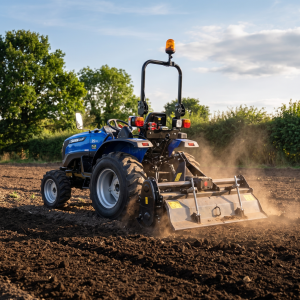
The PTO drives your implements. There's a clear difference between the models here: the Solis 20 has a multi-speed PTO, while the Solis 26 has the standard 540-rpm PTO plus an economy setting (540E) for more efficient operation.
| PTO | Solis 20 | Solis 26 |
|---|---|---|
| Type | Type-1 | Type-1 |
| Speeds | 630 / 930 / 1605 rpm @ 2700 rpm | 540 @ 2565 ERPM + 540E @ 2083 ERPM |
The 540E setting on the Solis 26 delivers the same 540 PTO revolutions at a lower engine speed. This saves fuel and reduces noise during lighter PTO jobs such as mowing.
Solis 20 & 26 lift system and hydraulics
Both tractors have a three-point lift system (Category 1) with position control. The Solis 26 lifts up to 600 kg; the Solis 20 falls below that at around 499 kg (indicative, external source). The Solis 20's hydraulic pump delivers 14 litres per minute at rated speed.
- Setting the lowering speed: with the response valve (see the operating blog) you control how quickly the lift lowers. Turning it fully closed locks the lift for transport.
- Lift links: the lift links are mechanically adjustable to level the implement.
- Keep the lift lever down when you're not using an implement.
What can you do with 20 or 26 hp? Distinguishing PTO power and pulling power
The stated engine power (18-20 hp for the Solis 20, 26 hp for the Solis 26) is not the same as what's available at the PTO or drawbar. Some is lost in the drivetrain. In practice, this means:
- Solis 20 (subcompact): excellent for mowing grass, a light flail mower, a small tiller, a transport trailer and earthmoving on a garden or nursery scale. Keep implements light and compact.
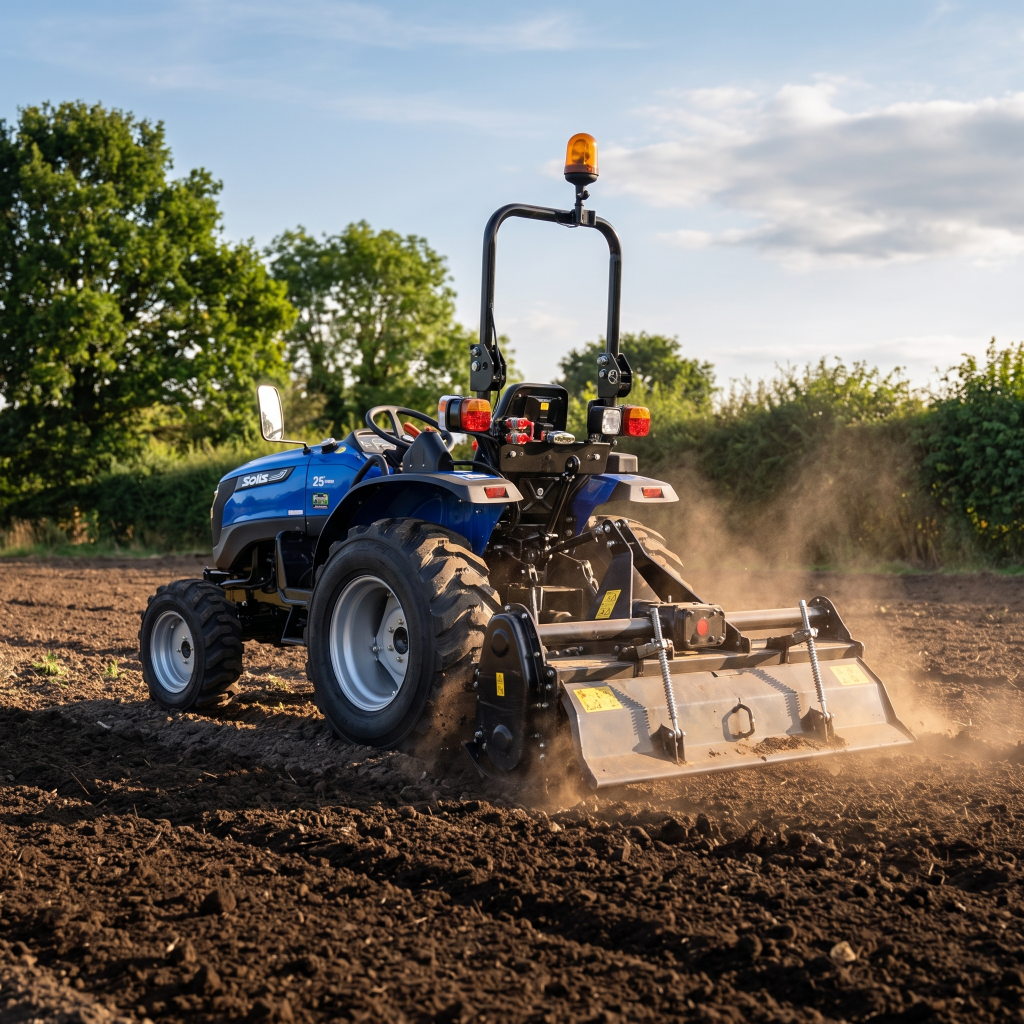
- Solis 26 (compact): more margin — a larger mower or flail mower, a tiller, a small box scraper/dozer blade and a light plough. The extra horsepower and higher weight provide more pulling power and stability.
Solis 26 suitable implements (from the manual)
The Solis 26 manual gives concrete maximum sizes for implements. A handy guideline:
| Implement | Max. size | PTO/ERPM |
|---|---|---|
| Rear lawn mower | 122 cm wide, 130 kg | 2000-2300 |
| Flail mower | 110 cm wide | 2000-2300 |
| Rotary cutter | 110 cm wide, 130 kg | 540 PTO @ 2565 ERPM |
| Box blade | 125 cm wide, 150 kg | 2000-2300 |
| Bottom plough | 14 inch (single furrow) | 2000-2300 |
Solis 20 & 26 front axle ballasting
During heavy lift or front loader work, the front becomes light, reducing steering and stability. Front ballast (front weights or wheel weights) keeps the tractor balanced and the front axle on the ground. The Solis 20 comes standard with a set of front weights. Never load the tractor more than necessary, and only attach loads at the designated points.
(Implement sizes are from the Solis 26 manual; power values marked as indicative where applicable.)