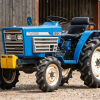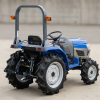




Iseki TH185-TH265 Operation and Starting
Suitable for the entire series: Iseki TH185, TH205, TH215, TH235, TH255 and TH265. These tractors have two possible dashboard versions (cabin or safety frame), each with a slightly different starting procedure. Below is the operation as described in the factory manual.
Ignition switch: cabin version
停止 (Stop) → ACC (engine off, radio works) → 運転・予熱 (Run / automatic preheating) → 始動 (Start, springs back to Run). With this version, the electronics automatically control the preheating as soon as you turn to the Run position.
Ignition switch: safety frame version
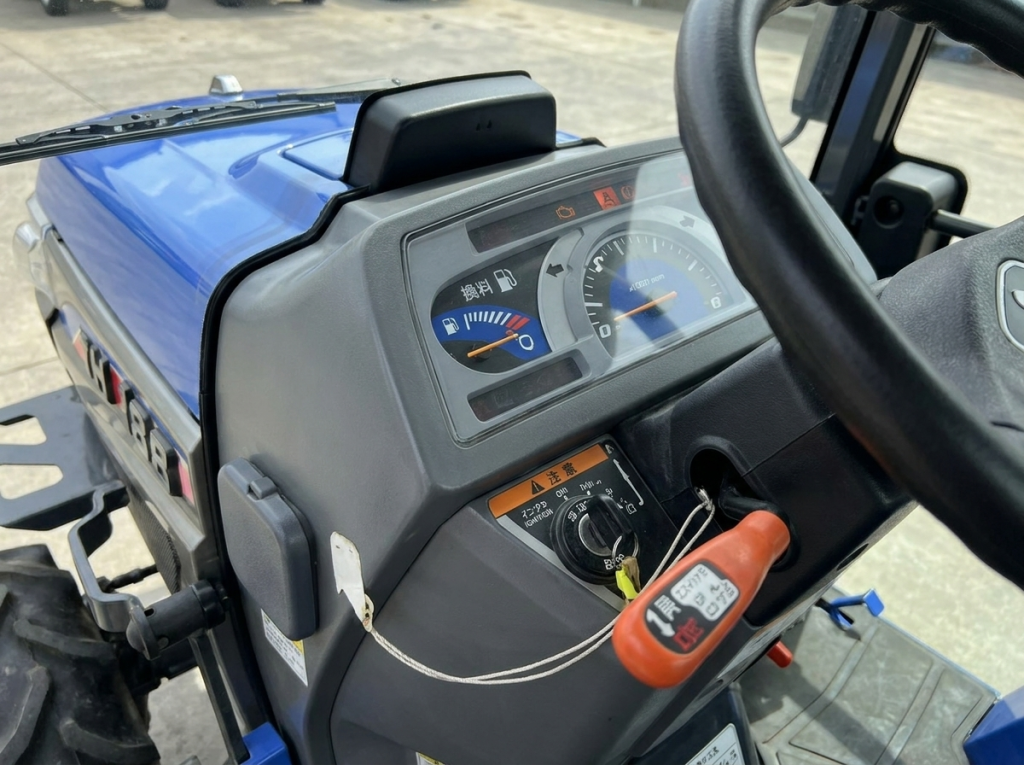
切 (Off) → 入 (On, engine running) → preheat symbol (hold for 5 seconds) → 始動 (Start, springs back to On). With this version, you hold the key on the preheat symbol yourself for 5 seconds before switching to start.
Warming up after starting
The manual gives a specific warm-up time depending on the outside temperature — don't skip this step, especially in cold weather:
| Outside temperature | Warm-up time |
|---|---|
| ≥ 0°C | 5-10 minutes |
| 0°C to -10°C | 10-20 minutes |
| -10°C to -20°C | 20-30 minutes |
| ≤ -20°C | ≥ 30 minutes |
Dashboard and indicator lights
The instrument panel includes: a fuel gauge with low-fuel warning (below approximately 2 liters), an hour meter, a combined speedometer/tachometer, a coolant temperature gauge, an oil pressure warning, a battery charge warning, a brake pedal disengaged warning, a Super Full Turn indicator, a 4WD indicator, turn signal indicators, a preheat indicator (cabin), and on the electronic Q version also auto-lift, auto-brake, multi and automatic plow depth indicators.
Shifting gears
Standard version: main lever (1-2-3-4) combined with the auxiliary switch (super-low/low/high) — together 12 forward/reverse gears, using the clutch pedal. G version: linear shift lever for forward-neutral-reverse, combined with an 8-position clutchless main shift and the same 3-position auxiliary switch — together 24 gears, without using the clutch pedal.
Practical tip for cold-start issues
Experience from owners of comparable Iseki compact tractors reveals a recognizable pattern: JDM tractors often have a smaller battery than what you're used to in the Netherlands, which can lead to slow cranking in freezing conditions. Combine this with somewhat too thick winter oil, and starting becomes difficult. Practical solutions: a battery with higher cold cranking amps (CCA), 0W30 engine oil in winter, and strictly following the warm-up table above. A poor ground connection between the battery and starter motor is also a known, easily overlooked cause of slow starting in related Iseki models — check this connection if in doubt.