



Importing tractors from Japan – How does it actually work and how do they get to Europe in a container?
The Ultimate Guide to Importing Japanese Tractors
Importing tractors from Japan is a niche market that presents both challenges and significant advantages. Japanese tractors are uniquely designed for the domestic market and are exclusively used within Japan. This sets them apart in terms of quality and functionality compared to tractors from other countries, such as India, where build quality often falls short. In this guide, we’ll walk you through the process of selecting, importing, and selling these exceptional Japanese mini tractors.
Why choose Japanese tractors?
Japanese tractors are primarily built for working in rice fields, designed for precision and durability under tough conditions. Here’s what makes them unique:
1. Exclusive for Japanese market:
These tractors are manufactured specifically for Japan, with Japanese manuals and innovative features like Kubota’s “Monroematic,” which allows for precise rear lift adjustments, or Iseki’s sharp-turning functionality that doesn’t rely on brakes.
2. Incredible durability:
Japanese manufacturers such as Kubota , Iseki , Yanmar , Mitsubishi , Hinomoto , Shibaura , Satoh and Suzue are known for their reliability.
Renowned manufacturers such as Kubota, Iseki, Yanmar, Mitsubishi, Hinomoto, Shibaura, Satoh, and Suzue are synonymous with reliability.
Compared to Indian-made tractors, which often have a shorter lifespan and inferior build quality, Japanese tractors stand out. Models like the Kubota B7001, Iseki TA, or Shibaura SD are leagues ahead.
3. Meticulous Care by Japanese Farmers:
Japanese farmers are known for their precision and care, ensuring tractors are often sold with original paint, low operating hours, and meticulous maintenance. Tractors in poor condition are usually refurbished in Eastern Europe and marketed as “new,” often with questionable repairs beyond cosmetic improvements.
How does the import process work?
Our process begins in Japan, sourcing tractors from regions like North Kanto and Tottori, which have abundant supplies of used mini tractors.
1. Selection via auctions
At auctions in Japan, tractors are offered with a detailed description of the condition and any defects. This gives a reliable picture of what you are buying. When selecting, we pay attention to:
1) Original paint (no repainted machines).
What you want to avoid is a tractor that has been sprayed or something like that. Then it is no longer possible to determine whether the tractor was actually in good condition. Of course, a good paint does not always mean that the tractor is technically in order, but it does give an idea.
2) Number of operating hours.
With good maintenance you sometimes see Iseki tractors with 8000/9000 operating hours. However, experience shows that it is best to buy tractors from Japan between 1000 and 2000 operating hours. Here too, the condition makes and stands of it, since these operating hours can of course also be corrected by dealers.
3) Defects such as leaks, compression problems and wear.
A video shows whether there are any problems. You can see the radiator and whether pressure is building up in the cooling system. This is of course not entirely reliable, but it does give a good picture. Leaks at axles and/or compression problems are correctly indicated. What is important is to look at the smoke that the tractor produces. White smoke results in piston rings and therefore oil consumption and black smoke can indicate problems with the fuel pump or injectors.
4) The quality of the components, such as the axles, coupling and lifting mechanism.
These are things that are mentioned less, but should be checked on site upon receipt of the container. We are mainly talking about, for example, a thrust bearing that makes noise when the clutch pedal is depressed. Things like the rear lift are reported if they cause problems. It is often visible, since the tractors are sold with a cultivator.
Export of domestic?
It is crucial to distinguish between:
-
Export tractors:
These are relatively cheaper, but the technical condition leaves much to be desired. These are tractors that often show defects and are brought to the market cheaply.
From Japan there are of course also traders who want to get rid of tractors with problems. Japanese customers do not accept tractors with paint damage, broken grills or missing bodywork. It is the tractors with ‘work’ that they prefer to see go abroad.
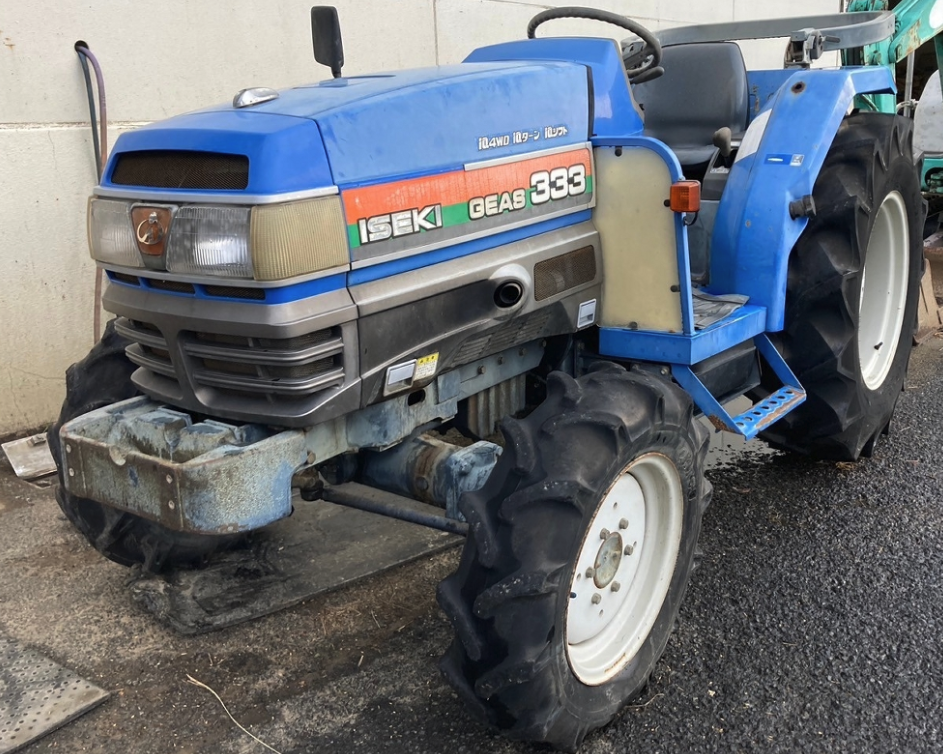
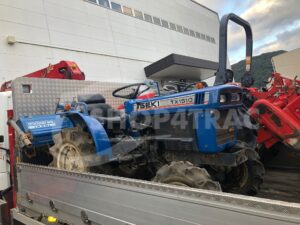
Typical Export tractor
2. Domestic tractors:
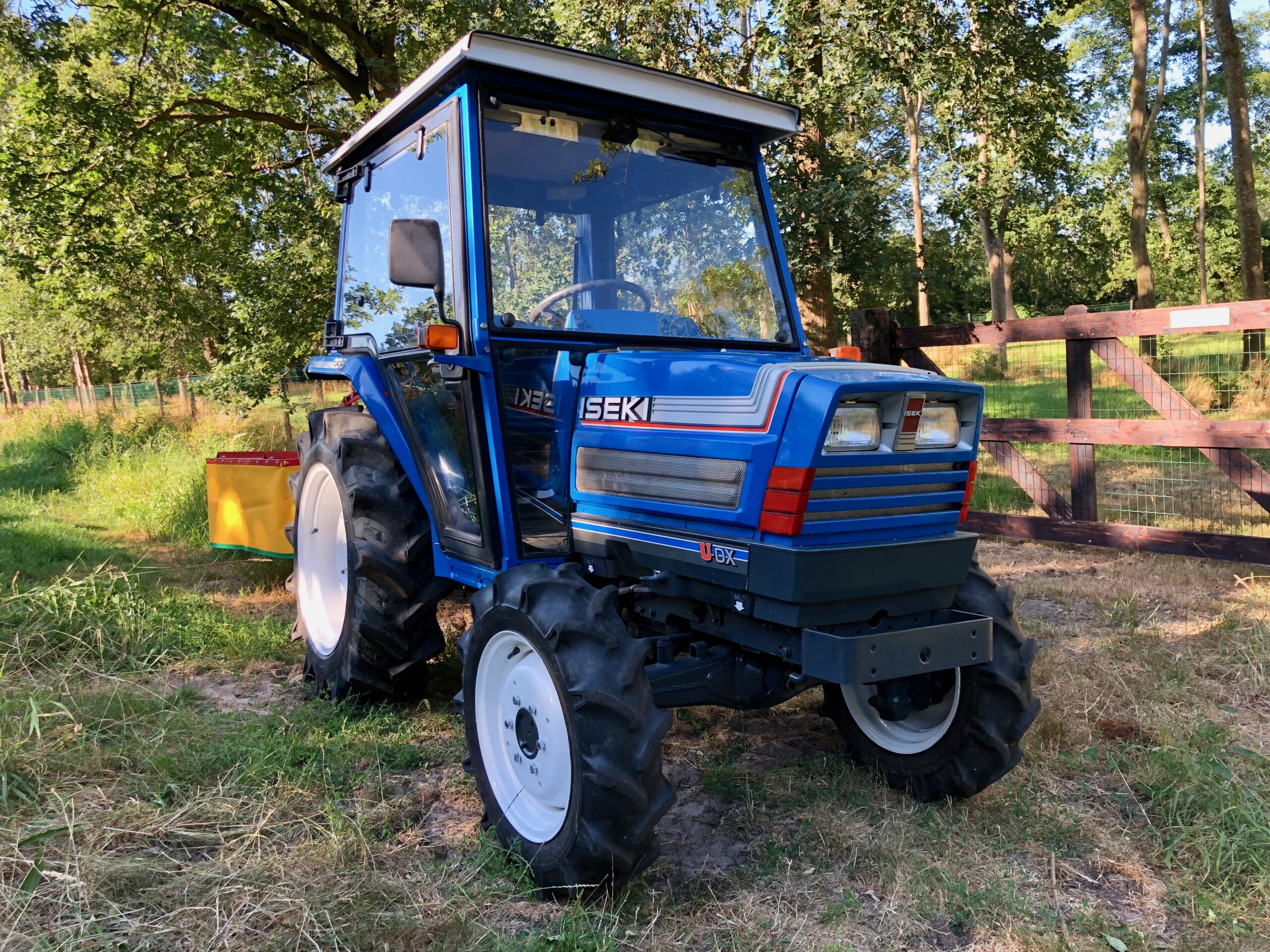
What are these domestic tractors? These are tractors for the Japanese domestic market. This means that the Japanese still consider them suitable for their own use. These mini tractors are often well maintained and have no known defects. Sometimes it is also special to see how European machines look compared to a tractor from Japan of the same age. The Japanese are incredibly economical and careful with their tractors!
Loading the container
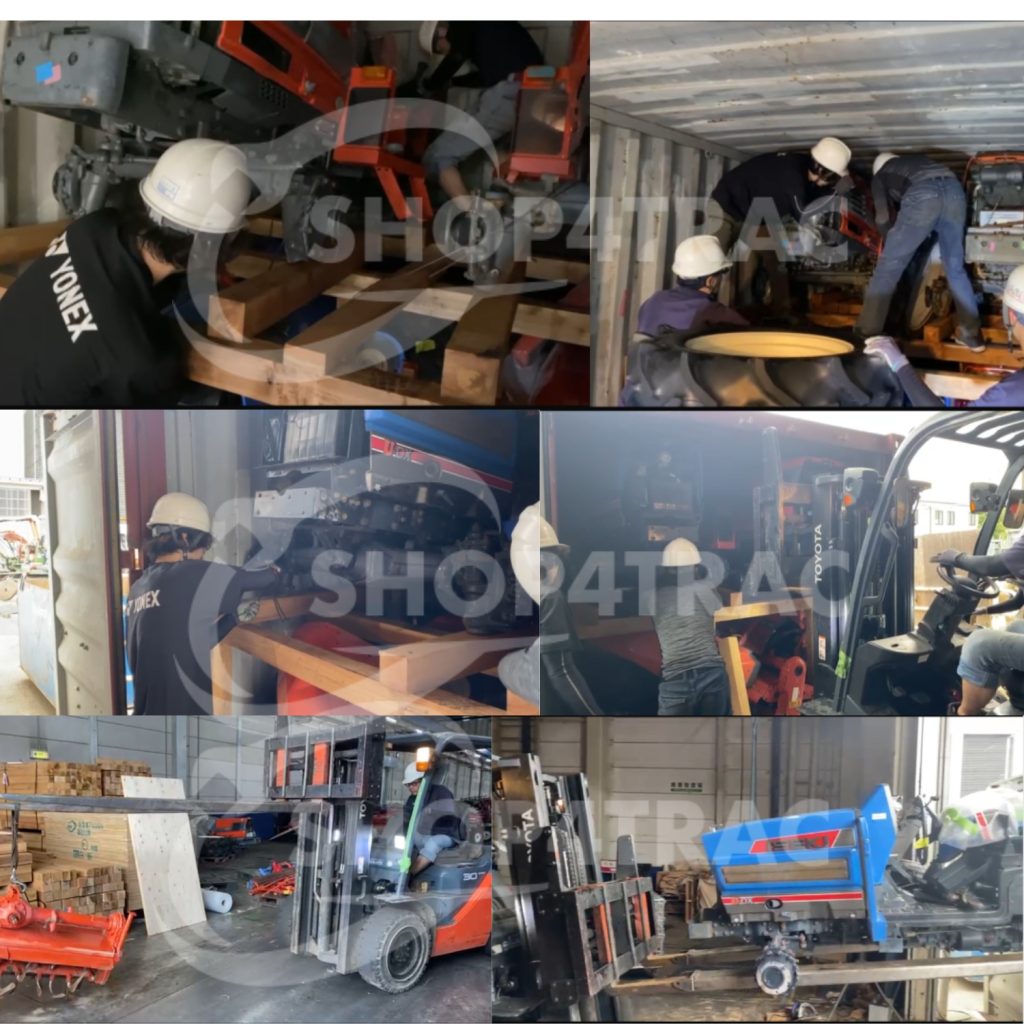
How do those tractors get from Japan to the Netherlands, Germany or Europe, for example? This is done via the ocean. The tractors are loaded into containers and then transported to the countries in question by ship. Below is a general explanation of how this works.
Importing a single tractor is not economically feasible. We load the tractors in containers:
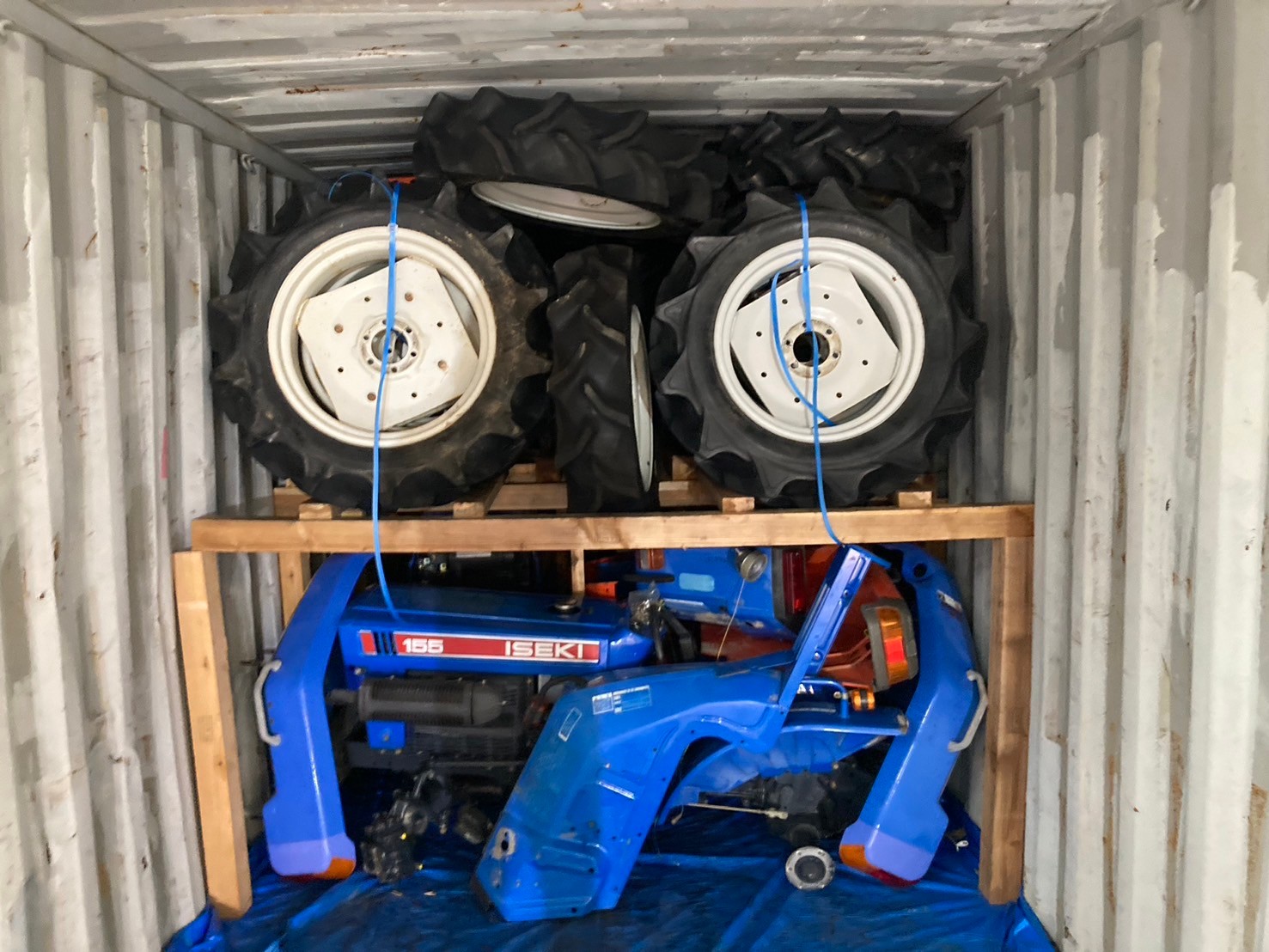
• 20FT container: 8 tractors.
• 40FT container: 15-18 tractors.
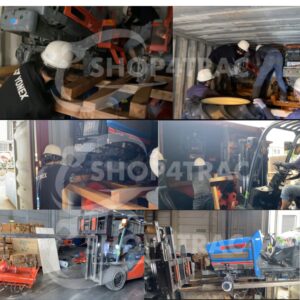
The loading process is incredibly cool to watch. That’s why we added the youtube video to share this with you. Lean startup is a personal favorite as a book to read. This shows how the Japanese work and how efficiently these people work. Nothing but respect for the speed and precision that they apply when loading the containers. It seems that they load a 40ft container with wood and all in 3-4 hours. Personally we are trying to achieve this record by emptying the container, but this has not yet succeeded.
Before buying imported tractors from Japan, check the following things!
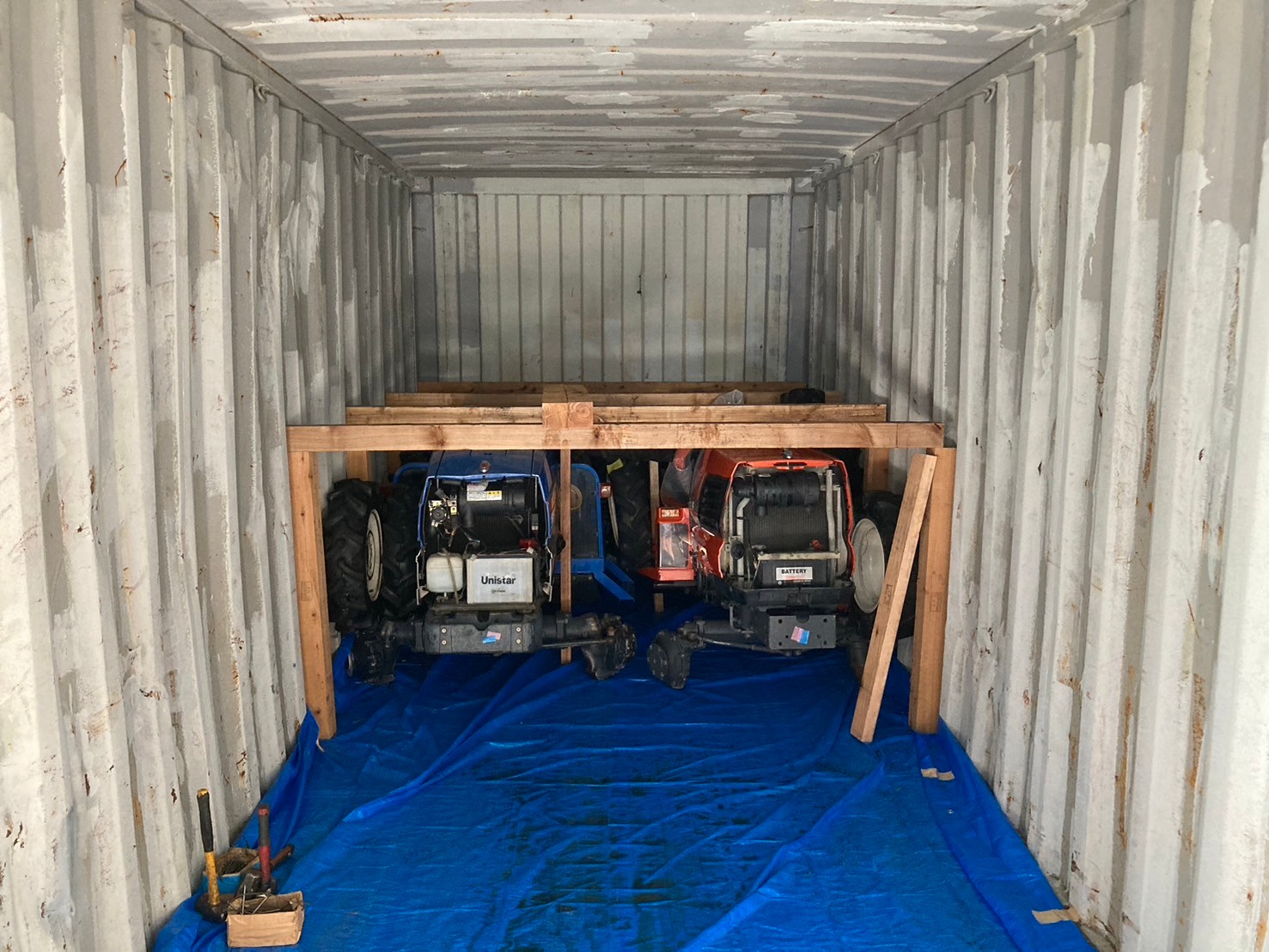
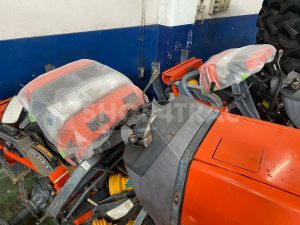
As can be seen from the photos, the tractors have been dismantled to make the most of the space in the container. This means that they have to be reassembled in Europe or any other country of receipt. During reassembly, an inspection must be carried out to ensure that all parts are in order and that oil leaks can be discovered. A dealer with a long-term vision will replace this, a short-term dealer who mainly offers ‘scrap’ will offer tractors without inspection at auctions or distribute them via intermediaries. Therefore, always make sure to buy tractors from a mini tractor dealer who buys the tractors themselves, so that you are guaranteed that the dealer knows what he is talking about. The tractors always have a report from Japan where the current technical condition is known.
Common points of interest that can occur with mini tractors
1. Cooling water system:
Check for pressure and leaks (cylinder head gasket).
- Through the cooling water system it is often easy to discover whether a tractor has problems with the head gasket or the cylinder head. However, a crack in the cylinder head can only appear when the engine is really warm. Also always pay attention to whether there is cooling water on the radiator to prevent high costs for the radiator.
2. Coupling:
No background noise, even when pressing the pedal.
- Common problems are high clutch engagement due to wear, jerky tractor drive away due to a bad clutch plate or the noise when pressing the clutch pedal. This is often the release bearing.
3. Lighting :
Important, especially on tractors with cabs.
- Lighting is relatively easy to repair, but try to avoid buying a tractor with defective light covers or the like, as an original part is often difficult to obtain. Shop4trac can supply bulbs for every brand.
4. 4WD:
The four-wheel drive must function properly and make no noise.
- Common problems with the Iseki TL for example is a four-wheel drive that breaks down. It is therefore important to test the 4wd for strange noises. And to prevent problems, do not drive on the street with the 4wd engaged!
5. Front axle:
Check that the oil has been changed and is present to prevent major damage.
- We often hear from customers that things have broken in the front axle. This can be due to moisture that has entered the axles due to the Japanese rice fields that are often under water. Another important fact is leakage of seals, which means that there is no more oil in the front axle. Always replace the oil if you have the possibility with 80W90 front axle oil. We also sell this in the shop!
6. Rear lift:
The up and down movement of the lift must be done with full force and speed
- The rear lift is crucial when it comes to a tractor. Everything is hung behind it, from mower to tiller etc. Some tractors are equipped with advanced electric lift controls. Not an issue in itself, but it is better to test all options to prevent problems.
- Always pay attention to the speed at which a lift lowers, can be set too slow, but can also indicate a stuck plunger. For example very well known from the iseki tu1400 – T1500 and TU1600
- Hydraulic pump defect is also known, check the hydraulic filter first. A defective pump can lead to jerky to no pressure in the system
7. Front loader
Worn front axle and worn front loader bushings
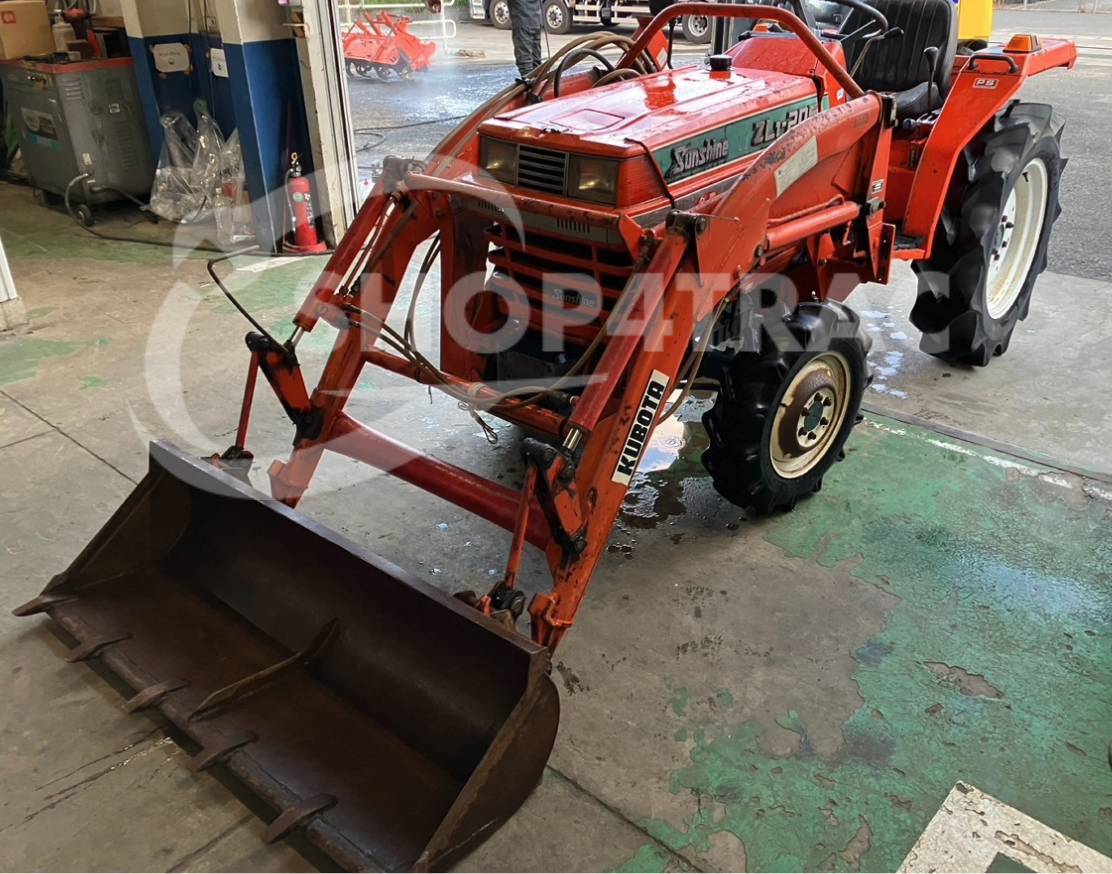
- From experience it is better not to buy a tractor with original front loader from Japan. These front loaders often lift very little and do not reach the right height. In addition, they are often very long and swing far out.
- In addition, it is not a good omen for the front axle and all rotating parts if the tractor is equipped with an original front loader. Steering balls etc. are often very worn together with bearings of the front axle.
- Try to prevent this by purchasing a separate tractor with a good quality new front loader. And also maintain the tractor, such as lubricating things.
Important facts about mini tractor dealers!
Many European dealers buy cheap ‘Export Tractors’ from Japan and resell them without telling the whole story. Often you hear: “We didn’t know there were defects.” This is simply incorrect. At auctions in Japan all defects are always clearly stated.
In addition, traders sometimes try to save costs by dubious practices, such as repainting old tractors to make them look like new. This not only damages confidence in the industry, but can also lead to unexpected costs for the buyer.
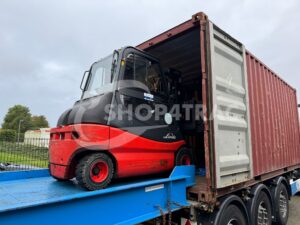
Why a Domestic tractor is the better choice – Domestic tractor from Japan. Which is actually meant for the internal market of Japan
A Domestic tractor is designed for the high quality standards of the Japanese market. This means:
• Longer lifespan:
These machines often require less maintenance.
• Original parts:
No cheaper replacements that wear out faster.
• Reliability:
The chance of defects is much smaller than with export models.
The Mini Tractor Trade: A Growing Market
The mini-tractor trade is growing rapidly. More and more people are seeing the benefits of these compact but powerful tractors. Unfortunately, this also attracts traders who want to cash in on dubious practices. Think of concealing defects, poor repairs, and cheap solutions that cause more problems in the long run.
From practical experience, but also from selling parts, we know w
Conclusion: Japanese tractors – a smart investment
Importing tractors directly from Japan offers numerous advantages:
- Unparalleled quality
The tractors produced in the late seventies such as the Iseki Ts, Tx and for example Kubota B6000 or L1500 are of such quality. That is no longer made nowadays, looking at the current supply as mentioned above from India. An Iseki TA Landleader for example has techniques to block the rear wheels and turn very sharply by making a front wheel turn faster. They are so advanced that it is simply bizarre. And now in 2025 everything still works properly as it should, provided that the tractors are in good condition with not too many hours (1000-2000 operating hours). Of course there are many more types and models, but we mention this as an example.
- Better prices
Tractors from Japan often do not have rear lights and are not equipped with an EU type approval. This means that the application for a license plate is a lot more difficult. These are also factors that make the tractors generally cheaper than European versions of these tractors. In addition, the supply of tractors from Japan is also larger than those from Europe. Examples of this are, for example, an Iseki TA530, which you see more often in countries such as Germany, France or Scandinavia. However, in comparison this is an Iseki TA250 or TA270 as a Japanese version. The only difference is that European tractors often have a switchable PTO via a button. With tractors imported from Japan, the PTO is often switched off via the clutch pedal.
- Transparency about the condition of the tractors
We find it very important that customers know what to expect with a mini tractor. As Shop4trac, we provide information about maintenance and parts, but we find it annoying when people buy ‘a pig in a poke’ and therefore a tractor with problems. We like to help prevent this, so that people really enjoy their tractor.
If you have any questions about such tractors or if you want parts for such tractors, we are happy to help you with the right information or parts via Blogs or a webshop.