



Iseki TE4270 winterizing & spring start-up
Iseki TE4270 seasonal maintenance — from winter storage to spring start-up
Every season asks something different of your Iseki TE4270. Below are practical tips, based on the maintenance and operating instructions from the manual, supplemented with hands-on experience.
Winterizing (autumn)
- Check the antifreeze. The radiator holds 7 liters; top up with antifreeze where needed so the system is frost-resistant. Frozen coolant cracks the block and radiator.
- Take care of the battery. Fully charge the battery (N70P, 12 V 52 Ah); fully charged electrolyte has a specific gravity of ±1.26 at 20°C. In severe cold, the manual recommends removing the battery and storing it in a warm place — this makes starting the next morning much easier. When disconnecting, disconnect the negative cable first .
- Full fuel tank. A full tank prevents condensation and therefore water in the fuel system.
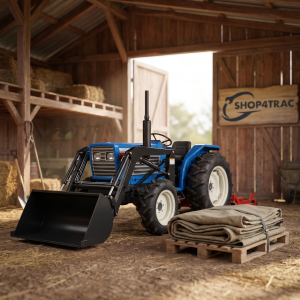
- Cleaning and greasing. Remove implements, grease bare parts, and store the tractor dry and covered.
- Lubricating. If you've worked in wet/flooded terrain, grease all nipples before storage.
Starting up after winter storage (spring)
- Check fluids. Check engine oil (on level ground, 3 min after shutting off), transmission, front axle, and steering oil, and coolant.
- Connect the battery. When reinstalling, connect the positive terminal first , then the negative — this prevents short-circuiting with tools.
- Tire pressure and tires check for cracks and pressure. You can find the correct tire pressure on the sidewall of the tire or in the manual for your model.
- Warming up. After a long period of standing still, let the engine gradually come up to temperature before working under load.
- Test everything. Check lights, horn, brakes (evenly!), clutch, and hydraulics before use.
Summer — preventing overheating

- Keep the radiator grille clean; grass, chaff, and insects clog it quickly and reduce cooling.
- Check the coolant level more often in hot weather and during heavy work.
- Check the V-belt: a slipping belt causes the water pump to run poorly.
Wet conditions (autumn/spring)
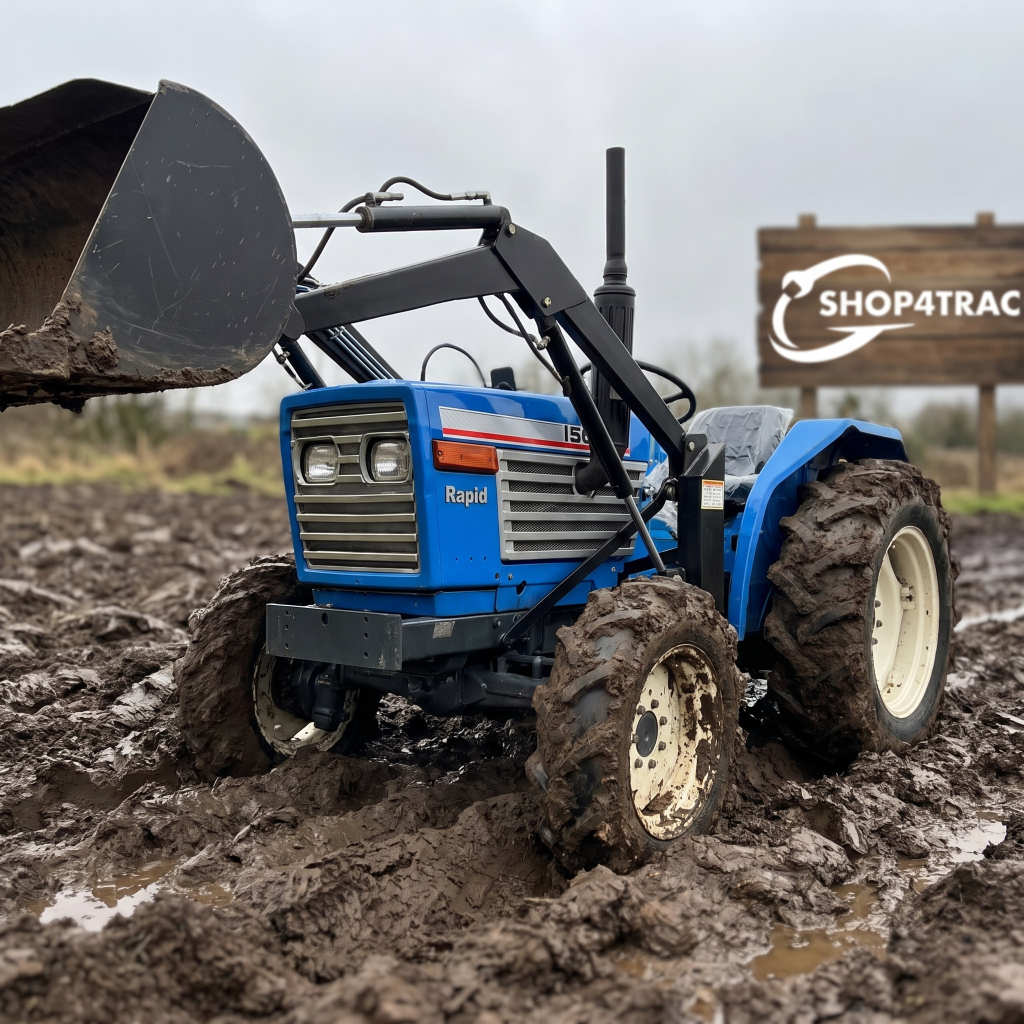
- Grease extra. After working in mud or flooded ground, re-grease the nipples every time — water washes the grease away.
- Engage 4WD for grip on wet/slippery ground, and use the diff-lock only briefly and while driving straight ahead.
💡 Shop4trac tip: Plan a spring service with a fresh filter set: oil filter (SKU-014) and fuel filter (SKU-150002). We also keep antifreeze and a battery charger in stock.